The extreme climatic conditions of the Arabian Peninsula, particularly in the urban centers of Dubai and Sharjah, demand a sophisticated approach to air conditioning. In a region where ambient temperatures routinely exceed 45C and can reach 55C , the performance of your cooling system is a matter of both comfort and health. Maintaining these units requires more than just occasional care; it necessitates specialized o general ac maintenance dubai and o general ac maintenance sharjah to combat rapid degradation from atmospheric dust and coastal salinity. This guide provides a technical analysis of o general ac service dubai and o general ac service sharjah, outlining the engineering standards required for o general ac repair dubai and o general ac repair sharjah. By prioritizing o general split ac maintenance dubai and o general split ac maintenance sharjah, residents can avoid catastrophic failures and ensure peak performance. Whether you need a certified o general ac technician dubai or a skilled o general ac technician sharjah, regular o general ac cleaning dubai and o general ac cleaning sharjah are the best ways to keep your home cool. Furthermore, ensuring a proper o general ac gas refill dubai or o general ac gas refill sharjah is essential for long-term reliability. To help you secure the best o general ac maintenance dubai and the best o general ac maintenance sharjah, we have compiled this comprehensive guide, covering everything from emergency o general ac repair dubai to emergency o general ac repair sharjah. By investing in professional o general ac servicing dubai and affordable o general ac maintenance sharjah, you can protect your investment and maintain a healthy indoor environment.
Thermodynamic Realities of the UAE Climate and HVAC Performance
The efficiency of a refrigeration cycle is fundamentally governed by the temperature differential between the evaporator and the condenser. In the UAE, the “T3” tropical design condition is the industry standard, requiring systems to maintain operation at an outdoor temperature of 46C. O General units are engineered with CPTA (Cooling Power for Tropical Application) technology, specifically designed to withstand these peaks and remain functional even at 52C to 55C. Despite this robust engineering, environmental factors in Sharjah and Dubai introduce significant mechanical resistance.
According to data from the Dubai Electricity and Water Authority (DEWA), cooling accounts for approximately 60% to 70% of the total electrical load during the summer. This systemic load is exacerbated by the accumulation of fine desert sand and atmospheric dust, which act as thermal insulators when deposited on heat exchanger fins. Professional servicing must therefore prioritize the restoration of heat transfer efficiency through specialized cleaning protocols.
| Environmental Factor | Impact on O General System | Maintenance Priority |
| High Ambient Heat (>50C) | High head pressure and compressor stress | Condenser coil cleaning and airflow optimization |
| Fine Sand and Dust | Clogged filters and reduced evaporator efficiency | Monthly filter change and bi-annual deep cleaning |
| Coastal Salinity | Galvanic corrosion of aluminum fins | Application of anti-corrosive coatings (Blue Fin) |
| High Relative Humidity | Bio-sludge accumulation in condensate drains | Drain line flushing and antimicrobial treatment |
Engineering Specifications and the O General Technical Advantage
O General systems utilize specialized components to achieve resilience in hyper-tropical environments. The Hyper Tropical Compressor, for instance, features a high-torque motor and advanced hardened materials to ensure longevity under continuous high-load operation. Furthermore, the transition to R32 refrigerant in modern series has improved the Energy Efficiency Ratio (EER) while reducing the Global Warming Potential (GWP),.
The maintenance requirements for these systems are dictated by their specific design features, such as the Coanda airflow technology and long-reach delivery systems (up to 25 meters in some models). To maintain these performance benchmarks, technicians must ensure that the fan motor static pressure is correctly calibrated and that the internal blower wheels are free from grime that can cause imbalances and vibration.
Mechanical Resilience Features
O General’s “Strong Blue Fin” technology is a critical engineering response to the high salinity found in coastal Sharjah and Dubai. This hydrophilic coating prevents the buildup of corrosive salts and ensures that water droplets (condensate) slide off the fins easily, reducing the risk of mold growth and fin decay. Maintenance in coastal areas involves regular inspection of these coatings to ensure they have not been compromised by abrasive sandstorms.
Comprehensive Maintenance Protocols for Split and Ducted Systems
The maintenance of O General units is bifurcated into routine custodial care and advanced technical servicing. Neglecting these protocols leads to a “domino effect” of component failure, where a simple clogged filter eventually causes compressor burnout due to liquid slugging or overheating.
The Filtration and Evaporator Interface
In the dusty environment of Sharjah and Dubai, air filters should be cleaned or replaced every 2 to 4 weeks during peak usage. When filters are obstructed, the internal static pressure of the indoor unit increases, forcing the fan motor to consume more electricity while simultaneously reducing the air volume moved across the cooling coils. This reduction in airflow can cause the evaporator temperature to drop below 0C, leading to ice formation.
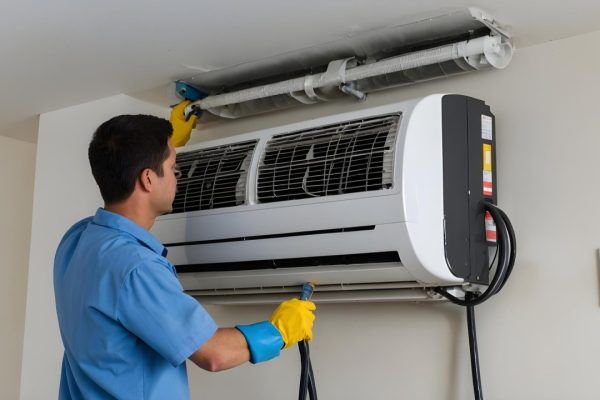
Professional cleaning involves a deeper level of intervention than mere filter washing. Technicians must use specialized chemical agents to penetrate the deep layers of the evaporator coil, removing microbial biofilms and compressed dust that typical vacuuming cannot reach. This is particularly vital in neighborhoods like Dubai Marina or Sharjah Al Majaz, where humidity facilitates the growth of mold within the unit’s internal chassis.
Condenser Unit Optimization
The outdoor unit is the primary site of heat rejection. In the Sharjah Industrial Area, for instance, the air is laden with heavy particulates and oily residues that can coat the condenser coils. If heat cannot be rejected efficiently, the refrigerant remains in a high-pressure gaseous state rather than condensing into a liquid, which significantly increases the workload on the compressor. Maintenance must include pressurized coil washing to ensure the unit can “breathe” at the design-rated CFM (Cubic Feet per Minute).
| O General Model Series | Tonnage | Rated EER (T3) | Primary Maintenance Focus |
| Standard Inverter Split | 1.5 – 3.0 Ton | 8.80 – 9.20 | Filter hygiene and sensor calibration |
| Ducted Split Series | 1.5 – 5.0 Ton | 8.80 – 9.20 | Duct integrity and static pressure balance |
| Tropical Window Series | 1.5 – 2.0 Ton | 7.50 – 8.50 | Chassis vibration and drain clearing |
| VRF Systems | Variable | High | PCB health and refrigerant balancing |
Advanced Diagnostics: Error Codes and System Fault Interpretation
Modern O General AC systems are equipped with micro-computers that monitor thermal sensors, pressure switches, and electrical draw. When a malfunction occurs, the system utilizes error codes to assist technicians in troubleshooting. These codes are critical diagnostic data points that prevent unnecessary part replacements.
Technical Breakdown of Error Codes
The following table outlines the most common fault codes encountered in the UAE. Understanding these codes is essential for diagnosing “no cooling” scenarios in the peak of summer.
| Error Code | Fault Description | Probable Mechanism | Required Technical Intervention |
| E1 | Communication Error | Signal loss between indoor/outdoor PCB | Inspect control wiring and terminals |
| E2 | Indoor Coil Sensor Fault | Open or short circuit in thermistor | Resistance testing and sensor replacement |
| E3 | Indoor Fan Motor Fault | Motor stall or capacitor failure | Inspect fan bearings and capacitor |
| E6 | Compressor Overload | Thermal trip due to high head pressure | Clean condenser coils/check refrigerant |
| E8 | Refrigerant Leakage | Low suction pressure detected | Leak detection and precision gas refill |
| E9 | Drain Error | High water level in the drain pan | Flush drain line and test condensate pump |
| F1 | Room Temp Sensor Fault | Malfunctioning air intake sensor | Sensor calibration or replacement |
The Physics of Refrigerant Management: R32 and R410A
Refrigerant is the thermodynamic medium of the cooling system. A common misconception in the local market is that AC gas must be “topped up” annually. In a correctly installed and maintained system, the refrigerant remains in a hermetically sealed loop. If a system requires a gas refill, it is symptomatic of a mechanical breach in the copper lines or flare joints.
The Professional Gas Refill and Leak Repair Protocol
A professional gas refill must follow a rigorous technical protocol to ensure the long-term survival of the compressor. Simply adding gas to a leaking system introduces air and moisture, which leads to acid formation.
- Diagnostic Leak Detection: Using electronic halogen sniffers, UV dye, or nitrogen pressure testing to locate the breach.
- Mechanical Repair: Brazing the copper leak or replacing faulty flare nuts.
- Triple Evacuation: Utilizing a high-vacuum pump to remove all non-condensable gases and moisture. In the UAE’s humidity, moisture reacts with Polyolester (POE) oil to form hydrofluoric acid, which etches the motor windings of the compressor.
- Micron Verification: The system must reach and hold a vacuum of 500 microns to be considered “dry”.
- Charging by Weight: Using digital scales to add the exact mass of R32 or R410A specified by the manufacturer. Modern inverter compressors are highly sensitive to overcharging, which can cause liquid slugging and mechanical failure.
Regional Nuances: Maintenance Challenges in Dubai and Sharjah
The geographical distribution of O General units across Dubai and Sharjah introduces specific environmental challenges. Neighborhoods with higher coastal exposure, like Al Khan or Jumeirah, experience different failure modes than inland industrial areas.
Coastal Salinity and Galvanic Degradation
Residents in Al Majaz or Dubai Marina require maintenance that focuses heavily on anti-corrosive measures. Atmospheric salt reacts with the aluminum condenser fins, leading to “white rust” and eventually brittle fins that crumble when touched. Specialized servicing includes the application of protective waxes or hydrophilic coatings to extend the life of these coastal units.
Humidity and Biological Growth
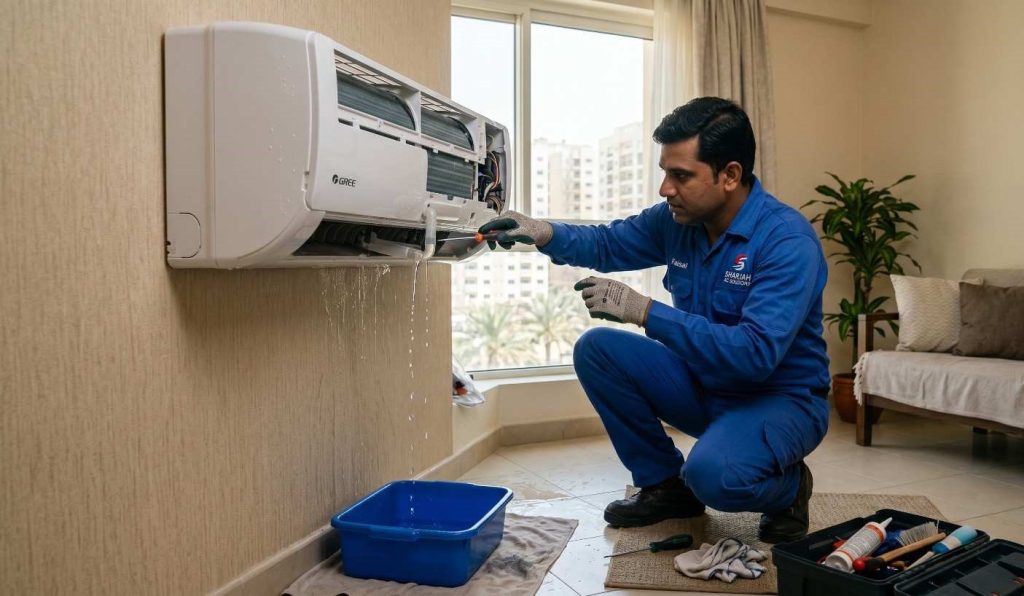
The high humidity of Sharjah’s coastal strip often leads to the “dirty sock syndrome,” where biological growth on the evaporator coil produces foul odors. Emergency repairs frequently involve clearing “sludge” from drain lines that has backed up into the unit, causing water leaks in bedrooms or offices.
| Location | Environmental Challenge | Maintenance Strategy |
| Dubai Marina | High Salinity/Humidity | Coil coating and bi-annual sanitization |
| Sharjah Industrial Area | Heavy Dust/Oil Particulates | Monthly filter wash and pressurized condenser cleaning |
| Arabian Ranches | High Heat/Sand | Protection of outdoor unit from direct sun and sand |
| Al Nahda (Sharjah) | High Density/Duty Cycle | Regular electrical audits and capacitor checks |
Economic Analysis: The ROI of Preventative Maintenance
The financial implication of neglecting maintenance in Dubai and Sharjah is significant. Based on the “Slab Tariff” system utilized by DEWA and SEWA, an inefficient AC unit can push a household into a higher billing bracket, resulting in a 30-50% increase in monthly utility costs.
Energy Savings and DEWA/SEWA Bill Reduction
Research indicates that regular maintenance can reduce cooling-related energy consumption by up to 25%. For a typical 3-bedroom villa in Dubai, where summer DEWA bills can range from 1,200 to 2,000 AED, this translates to a saving of approximately 300 to 500 AED per month. The ROI (Return on Investment) for an Annual Maintenance Contract (AMC) is typically reached within the first 3 to 6 months of the summer season.
| Maintenance Action | Potential Energy Saving | Impact on System Lifespan |
| Monthly Filter Cleaning | 5% – 15% | Reduces blower motor strain |
| Professional Coil Deep Cleaning | 15% – 25% | Prevents compressor overheating |
| Correcting Refrigerant Charge | 10% – 20% | Maximizes thermodynamic efficiency |
| Sealing Duct Leaks | 20% – 30% | Ensures 100% of cool air reaches rooms |
Advanced Installation and Why it Matters for Maintenance
A significant portion of maintenance issues stem from substandard installation. If an O General unit is installed without a proper vacuum or if the copper pipes are not correctly sized, it will suffer from chronic underperformance throughout its life.
Technical Installation Benchmarks
Professional installation must adhere to the following standards:
- Copper Pipe Sizing: Ensuring the gauge matches the tonnage to prevent pressure drops.
- Insulation Integrity: Using high-quality rubber insulation to prevent “sweating” and water damage.
- Vibration Isolation: Installing the outdoor unit on rubber pads to prevent the transmission of compressor hum through building walls.
- Static Pressure Balancing: For ducted systems, ensuring ductwork matches the specific static pressure of the O General fan motor.
Emergency Repair Management during Heatwaves
When the mercury hits 50C, an AC failure is an emergency. The thermal load on building structures in Dubai and Sharjah means that indoor temperatures can rise to dangerous levels within hours of a system failure.
Signs of Imminent System Failure
Homeowners should look for the following “red flags” that necessitate emergency repair:
- Weak Airflow: Often a sign of a failing capacitor or a severely clogged evaporator coil.
- Strange Noises: Hissing suggests a gas leak, while grinding suggests fan bearing failure.
- Warm Air from Vents: Indicates a compressor lockout or total refrigerant loss.
- Repeated Circuit Breaker Tripping: A sign of an electrical short or a “grounded” compressor motor.
Professional providers in Sharjah and Dubai offer 24/7 support with rapid response times to address these critical issues, ensuring that the household or business is not left without cooling during peak heatwaves.
Closing Remarks: Sustaining O General Excellence
The longevity and performance of O General AC units in the demanding environments of Dubai and Sharjah are fundamentally linked to the quality of maintenance they receive. Through a combination of monthly consumer-level filter care and bi-annual professional technical servicing, these systems can provide high-efficiency cooling even when outdoor temperatures approach 55C. The integration of advanced diagnostics, precision refrigerant management, and regional-specific environmental protections ensures that O General remains the primary choice for climate control in the UAE. For residents and business owners, the transition from reactive repair to proactive maintenance is the most effective strategy for ensuring comfort, health, and economic efficiency in one of the world’s harshest climates.