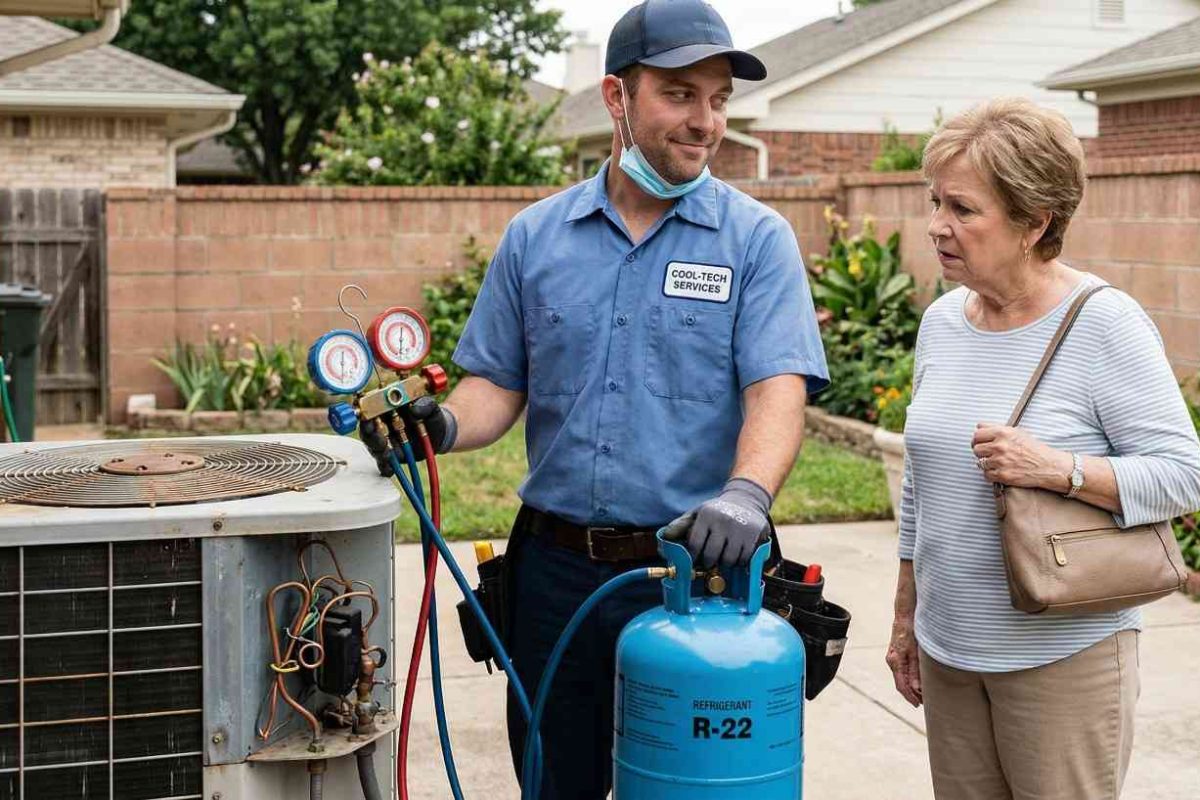
The sweltering heat of summer arrives, and suddenly, your air conditioner the silent hero of your home starts blowing lukewarm air. You call a technician, hoping for a quick fix. Within minutes of arriving, they hook up a manifold gauge, shake their head solemnly, and deliver the diagnosis: “Your unit is low on gas. You need a refill.”
It sounds simple, right? Like putting petrol in a car. You pay the fee, the air feels cooler for a few weeks, and the technician goes on their way. But here is the cold, hard truth: Air conditioners do not “consume” gas. If your technician is suggesting a refill without addressing the root cause, you aren’t just losing money you are likely being scammed.
In this deep dive, we’re going to pull back the curtain on the industry’s most common “quick fix” and reveal the three things your technician is desperately hoping you don’t find out.
1. The Myth of the “Empty” Tank
The most fundamental piece of misinformation in the HVAC world is the idea that refrigerant (often called “gas”) is a fuel. In a car, the engine burns gasoline to create motion. In a barbecue, the propane is burned to create heat. Naturally, we assume an AC works the same way.
However, an air conditioner is a closed-loop system. The refrigerant cycles between the evaporator coils (indoors) and the condenser coils (outdoors), changing from liquid to gas and back again to move heat from inside your home to the outside. In a perfectly sealed system, the refrigerant level should remain the same for 10, 15, or even 20 years.
Understanding the AC Gas Refill Service Trap
When a technician suggests an AC Gas Refill Service, they are often treating a symptom rather than the disease. If your system is low on refrigerant, there is a leak. Topping up the gas without finding and sealing that leak is the equivalent of pouring water into a bucket with a hole in the bottom. It might stay full for an hour, but you’ll be right back where you started soon enough.
Unscrupulous technicians love the “refill” because it creates a recurring revenue stream. They know the gas will leak out again in three months, and they know you’ll call them back when it does. This cycle can continue until your compressor the heart of the unit burns out from the strain of running with improper pressure.
2. The Danger of “Topping Off” Different Refrigerants
Not all “gas” is created equal. Depending on the age of your unit, it likely uses either R-22 (an older, phased-out HCFC) or R-410A (the more modern HFC). These two chemicals are not interchangeable. They operate at vastly different pressures and use different types of lubricating oils.
A major part of the “Gas Refill” scam involves technicians using “drop-in” replacements or mixing gases to save money. Here is why your technician won’t tell you the risks:
- Chemical Incompatibility: Mixing R-22 with a cheaper substitute can cause the oil in your compressor to sludge up. This “acid burnout” destroys the internal components of your AC, turning a simple repair into a total system replacement.
- The Environmental Cost: R-22 is highly damaging to the ozone layer. If a technician refills a leaking R-22 system without fixing the leak, they are essentially venting ozone-depleting substances directly into the atmosphere—which is illegal in many jurisdictions.
- Efficiency Loss: Even if the unit runs, mixed or improper refrigerants will never reach the thermodynamic efficiency the manufacturer intended. Your electricity bill will skyrocket because the unit has to work twice as hard to achieve the same cooling effect.
The technician won’t tell you this because explaining the chemistry takes time, and selling you a generic “top-off” is fast, easy cash.
3. The “Gauges Don’t Lie” Deception
One of the most convincing parts of the scam is when the technician shows you their gauges. “See that needle? It should be at 65, but it’s at 40. You’re low.”
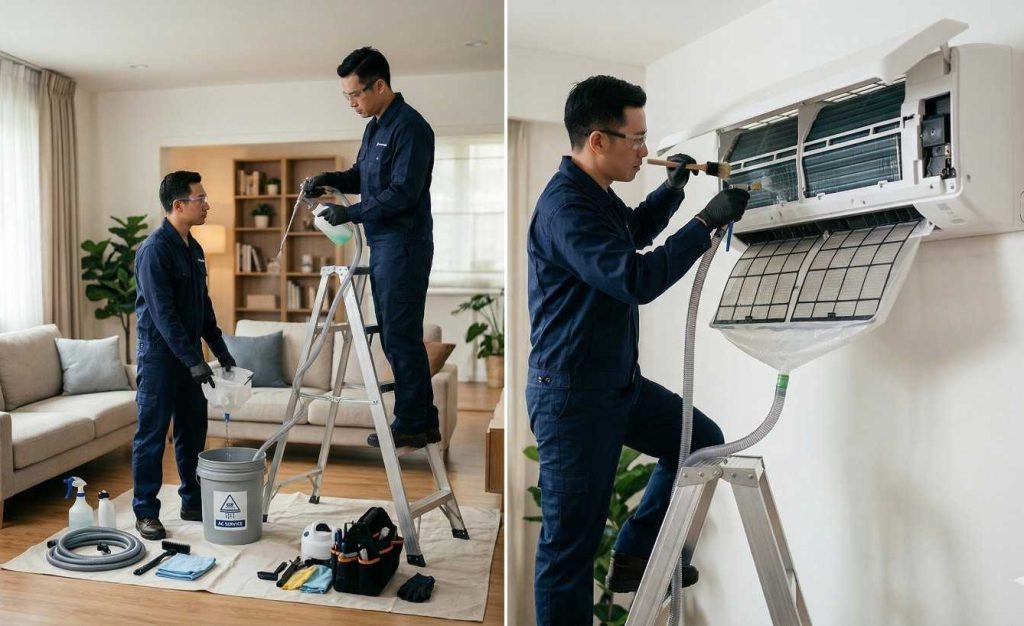
While the needle might indeed be at 40, a low-pressure reading does not automatically mean the gas is low. This is the ultimate “technician’s secret.” Several other issues can mimic the symptoms of low refrigerant, and an honest pro will check these before reaching for the gas canister:
Dirty Air Filters and Coils
If your air filters are clogged or your indoor evaporator coils are covered in dust, air cannot flow over the coils. This causes the refrigerant to stay too cold, which drops the pressure in the system. A technician can “solve” this by adding more gas, which temporarily raises the pressure, but now your system is overcharged. An overcharged system can lead to liquid refrigerant entering the compressor (slugging), which will shatter the internal valves instantly.
Failed Components
A bad capacitor, a failing fan motor, or a restricted TXV (Thermal Expansion Valve) can all cause pressure readings that look like a gas shortage. By jumping straight to a refill, the technician avoids the hard work of electrical diagnostics and mechanical troubleshooting.
The Temperature Factor
Refrigerant pressure is directly tied to ambient temperature. If a technician measures your gas on a relatively cool morning, the pressure will naturally be lower than on a 40°C afternoon. A deceptive technician will use these natural fluctuations to convince a homeowner that they are “a little low” and need a “boost.”
How to Protect Your Wallet and Your AC
Now that you know the secrets, how do you handle your next service call? Knowledge is your best defense. If a technician tells you that you need a gas refill, ask these three specific questions:
- “If the gas is low, where is the leak?” Force them to acknowledge that the system is leaking. If they say, “It just evaporates over time,” thank them for their time and call a different company. Gas does not evaporate from a sealed system.
- “Can you show me the superheat and subcooling readings?” Don’t worry if you don’t know what these mean—just asking shows you aren’t an easy target. These are advanced measurements that tell a technician exactly how the refrigerant is performing. A scammer will likely stumble over this question.
- “Have you checked the airflow and cleaned the coils first?” Ensure the mechanical basics are covered before any chemicals are added to your unit.
The Innovative Future of AC Maintenance
We are entering an era where AI-integrated sensors and smart thermostats can monitor the “health” of your refrigerant cycle in real-time. Soon, your AC will be able to alert you to a microscopic leak before your home even gets warm. Until then, stay vigilant.
An air conditioner is a precision machine, not a bottomless pit for expensive gases. By refusing to fall for the “Gas Refill” scam, you save money, protect the environment, and ensure that your home stays cool for many summers to come. Remember: a great technician fixes leaks; a scammer just hides them.