The geographic positioning of Sharjah along the Arabian Gulf creates an atmospheric environment that is uniquely hostile to conventional mechanical cooling systems. While the United Arab Emirates is globally recognized for its extreme thermal gradients, the coastal corridor of Sharjah introduces a specific set of variables high salinity, extreme humidity, and fine-grained mineral dust that distinguish it from inland desert regions. In these coastal districts, the air conditioning system is not merely a luxury of comfort but a critical component of the building’s life-support infrastructure. However, the standard maintenance protocols used in many parts of the world, which focus on simple filter replacement and surface-level cleaning, are fundamentally inadequate for the challenges posed by Sharjah’s littoral atmosphere.
The interplay between heat and moisture in the Sharjah coastal zone is a primary driver of HVAC degradation. During the peak summer months, ambient temperatures frequently exceed 45 degree celcius, placing immense thermal stress on compressors and condenser units. Simultaneously, the proximity to the sea drives relative humidity levels to 80% or higher, creating a constant state of condensation within the air handling units (AHUs) and fan coil units (FCUs). This moisture acts as a binding agent for atmospheric particulates, transforming dry desert sand into a tenacious, abrasive sludge that adheres to internal components. Consequently, the air conditioning system undergoes a physical and chemical transformation that surface cleaning cannot reverse.
The infrastructure of Sharjah, particularly in high-density areas like Al Majaz and Al Khan, consists of sealed, high-rise buildings that rely entirely on mechanical ventilation. In these structures, the HVAC system functions as a closed loop, recirculating air and any contaminants it contains. Without a specialized approach to cleaning that addresses the deep recesses of the ductwork, these buildings can quickly become reservoirs for biological and chemical pollutants.
The Necessity of Specialized HVAC Interventions in Coastal Sharjah
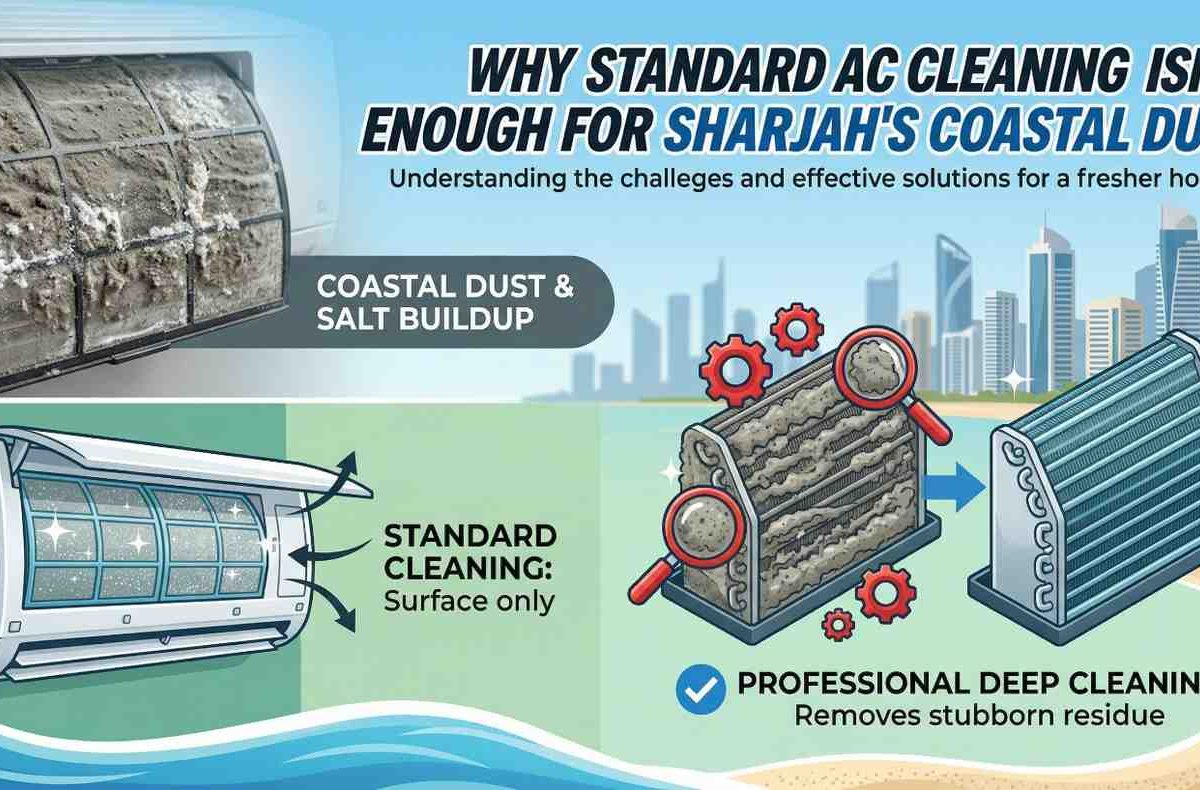
The implementation of professional AC Duct Cleaning Sharjah services is no longer a matter of elective maintenance but a structural necessity for building longevity and occupant health in the coastal UAE. Standard maintenance routines typically stop at the filter or the face of the evaporator coil, leaving the vast majority of the air distribution system unaddressed. In the Sharjah context, where fine particulates and salt crystals penetrate deep into the mechanical infrastructure, a surface-level approach fails to mitigate the root causes of system inefficiency and indoor air quality (IAQ) degradation.
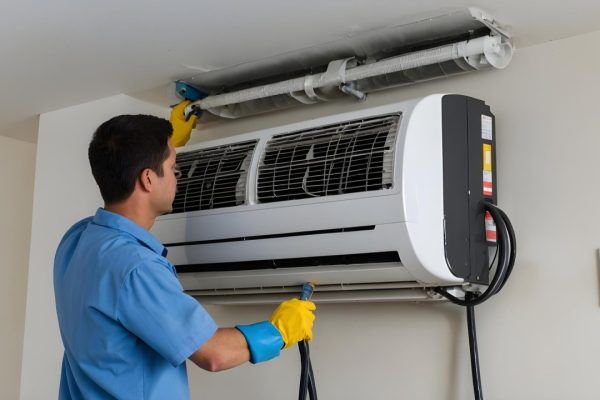
Traditional “service” often involves washing the plastic filters and perhaps a quick vacuuming of the visible parts of the indoor unit. However, the reality of the Sharjah environment is that the “invisible” portions of the system the internal supply and return ducts, the blower fan assembly, and the rear of the cooling coils accumulate the most hazardous debris. The fine sand particles transported by Shamal winds are often smaller than 10mu m, allowing them to bypass standard filters and settle in areas where air velocity drops, such as bends in the ductwork or behind plenum boxes.
| Maintenance Level | Scope of Work | Outcome in Coastal Sharjah |
| Standard Cleaning | Filter wash, surface wipe, basic inspection | Temporary airflow boost; fails to address mold or deep dust |
| Deep Chemical Service | Coil flushing, drain line clearing, electrical testing | Restores efficiency; removes biofilm and sludge |
| Professional Duct Restoration | Robotic inspection, mechanical agitation, sanitization | Eliminates internal reservoirs of mold, salt, and allergens |
The specialized nature of these interventions is driven by the fact that Sharjah’s coastal dust is chemically reactive. When salt-laden dust is trapped in a humid duct, it creates a persistent corrosive environment that eats away at the galvanized steel of the ductwork and the copper of the coils. A standard cleaning does nothing to neutralize these chemical reactions. In contrast, advanced restoration services incorporate specialized cleaning agents and robotic tools that physically extract the contaminants while applying protective barriers to prevent future accumulation.
Physicochemical Analysis of Coastal Particulates and Sand Composition
To understand why standard cleaning fails, one must analyze the specific composition of the debris found within Sharjah’s HVAC systems. The dust in the Northern Emirates is not a uniform material; it is a complex mixture of terrestrial minerals, marine aerosols, and anthropogenic pollutants. Research into sand and dust storms (SDS) in the region reveals that the primary constituent is silica (SiO_2), typically in the form of quartz. However, the coastal proximity enriches this dust with high concentrations of sodium, chloride, magnesium, and calcium.
These mineral particles are categorized by size, with clay-sized particles being less than 4 \mu m and silt-sized particles ranging from 4 to 62.5mu. The smaller the particle, the more likely it is to remain suspended in the air and travel deep into an HVAC system. In Sharjah, PM_{2.5} and PM_{10} levels can spike significantly during atmospheric events, reaching concentrations that exceed 15,000 \mu g/m^3 in severe storms. These particles are not merely inert; their sharp, angular structure makes them physically abrasive to moving parts like fan bearings and blower motors.
| Constituent | Origin | Chemical Impact on AC |
| Silica (Quartz) | Desert Sand | Abrasive wear on fan motors and bearings |
| Sodium Chloride | Sea Spray | Highly corrosive; attracts moisture to metal surfaces |
| Calcium/Magnesium | Marine/Soil | Forms hard scale on coils when combined with moisture |
| Organic Matter | Skin/Textiles | Provides nutrient source for fungal growth |
| Heavy Metals (Ni, Zn, Cr) | Industrial/Traffic | Potential health risk through long-term inhalation |
The hygroscopic nature of the sea-salt component is particularly critical. Sodium chloride ($NaCl$) is an “attractor” of water. When these particles settle on an AC coil, they pull moisture from the humid Sharjah air even when the system is not in operation. This creates a permanent film of brine on the metal surfaces, leading to a constant state of chemical activity that standard cleaning which uses simple water or basic soaps—cannot effectively neutralize. The result is a cycle of crusting and corrosion that requires high-pressure chemical dissolution to remove.
Electrochemical Corrosion Mechanisms in Marine Atmospheres
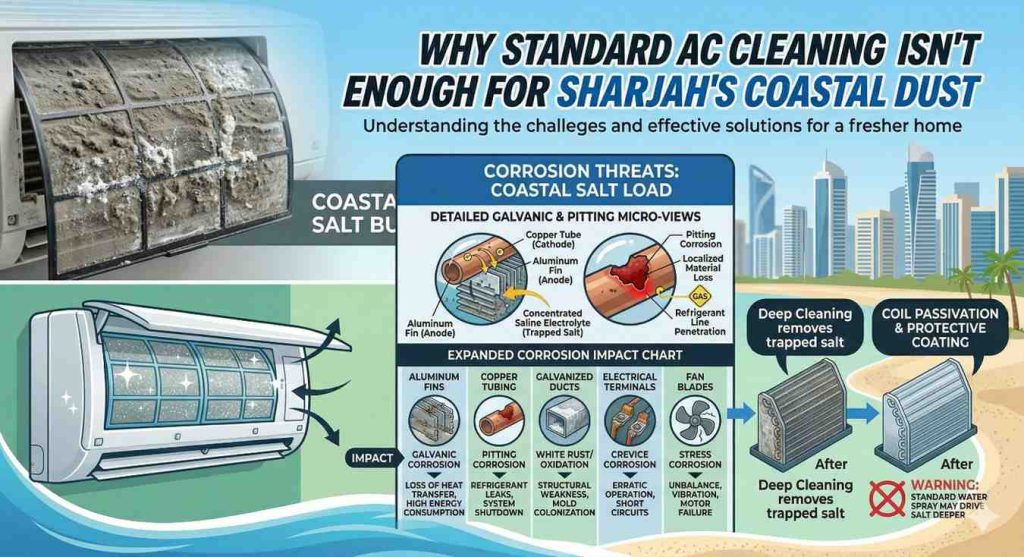
The most damaging effect of coastal dust on Sharjah AC units is the acceleration of electrochemical corrosion. This process occurs when different metals (such as the copper tubing and aluminum fins of a cooling coil) are exposed to an electrolyte (saltwater). In the high-humidity coastal environment, the salt-laden dust trapped between the fins of the coil acts as a sponge, holding a concentrated saline solution against the metal. This initiates galvanic corrosion, which can rapidly deteriorate the thin aluminum fins, reducing their surface area and, consequently, the heat exchange capacity of the unit.
Pitting corrosion is another significant threat. Unlike uniform surface rust, pitting creates localized, deep craters in the metal. In an AC system, these pits can eventually penetrate the copper refrigerant lines, leading to gas leaks that are often difficult and expensive to repair. Standard cleaning processes often involve spraying water on the coils, but if this is done without a full understanding of the coastal salt load, it may actually drive the salt deeper into the gaps between the fins, exacerbating the problem.
| Component | Corrosion Type | Operational Failure Mode |
| Aluminum Fins | Galvanic/Surface Oxidation | Loss of heat transfer; high energy consumption |
| Copper Tubing | Pitting Corrosion | Refrigerant leaks; system shutdown |
| Galvanized Ducts | White Rust/Oxidation | Structural weakness; mold colonization |
| Electrical Terminals | Crevice Corrosion | Erratic operation; short circuits |
| Fan Blades | Stress Corrosion | Unbalance; vibration; motor failure |
Second-order insights suggest that the corrosion process in Sharjah is not merely a summer phenomenon. During the winter, when AC units are used less frequently, the trapped salt remains active. Coastal winters in the UAE maintain a higher relative humidity than inland areas, and without the constant flow of condensate to “wash” the coils, the salt crystals can concentrate and harden, creating a “winter salt crust” that is extremely difficult to remove in the spring. This underscores the need for a bi-annual service strategy: one before the summer heat and one after the peak humidity season to remove the salt load.
Biological Colonization and the Pathophysiology of Indoor Air
The interior of a Sharjah AC duct system provides a near-perfect environment for microbial growth: a dark, enclosed space with constant moisture and an abundant supply of organic nutrients. The high humidity of coastal Sharjah ensures that the evaporator coils and drain pans are almost always wet. When fine desert dust which contains organic fragments like dead skin cells and pollen mixes with this moisture, it forms a sticky “biofilm” or sludge. This biofilm is more than just dirt; it is a complex ecosystem of bacteria, fungi, and mold.
Common fungal species isolated from HVAC systems in the UAE include Aspergillus, Penicillium, and Cladosporium. These molds reproduce by releasing microscopic spores into the airflow, which are then distributed throughout the building. For the occupants of Sharjah’s apartments and offices, this means that every breath they take is potentially laden with biological allergens. Studies have shown a high prevalence of asthma and allergic rhinitis among UAE residents, with poor indoor air quality identified as a significant contributing factor.
| Biological Agent | Source/Location | Health Impact |
| Mold Spores | Damp duct linings/insulation | Triggers asthma attacks, coughing, wheezing |
| Bacteria (Biofilm) | Stagnant condensate in drain pans | Produces musty odors; potential for respiratory infection |
| Dust Mites | Accumulated dust in ducts | Skin rashes, nasal congestion, eye irritation |
| Endotoxins | Fragmented bacterial cell walls | Systemic inflammation, “Sick Building Syndrome” |
The pathophysiology of poor IAQ in the UAE is exacerbated by the fact that buildings are heavily sealed to maintain cooling. This limits the “air changes per hour” (ACH) and allows pollutants to reach high concentrations. Furthermore, the pressurization of high-rise buildings can create “cross-contamination pathways,” where air from contaminated ceiling voids or service shafts is pulled into the living spaces through gaps in the ductwork. Standard cleaning, which fails to seal these leaks or disinfect the internal surfaces, leaves these biological pathways active.
Robotic Restoration and Advanced Mitigation Technologies
The transition from standard cleaning to professional restoration in Sharjah is characterized by the adoption of robotic technology. Standard manual cleaning is physically limited by the reach of the technician and the intricate geometry of modern ductwork. In contrast, robotic systems allow for a comprehensive “source removal” approach, which is the only method recognized by the National Air Duct Cleaners Association (NADCA) as truly effective for HVAC restoration.
Robotic systems in the UAE are typically categorized into inspection robots and cleaning robots. Inspection robots utilize 4K cameras and LED arrays to map the interior of the ductwork, providing building owners with high-definition video evidence of contamination levels before and after the service. Cleaning robots are more robust, featuring interchangeable brush heads (nylon for standard dust, wire for salt crusts) and high-pressure air whips that can dislodge even the most stubborn biofilm.
| Technology | Function | Advantage over Manual Cleaning |
| Remote Camera Robots | Visual inspection and diagnostics | Reaches hidden areas; provides proof of work |
| Rotary Brush Robots | Mechanical agitation of debris | Consistent 360-degree cleaning of internal duct walls |
| Negative Air Machines | Dust containment and extraction | Prevents dislodged dust from entering the room |
| UV-C Germicidal Lamps | Continuous microbial sterilization | Neutralizes DNA of mold and bacteria on the coil |
| Fogging Machines | Application of antimicrobial agents | Ensures total coverage of internal duct surfaces |
Innovative technologies like UV-C air purification are increasingly being integrated into Sharjah’s high-end HVAC systems. By installing germicidal lamps (typically at a $254 nm$ wavelength) inside the AHU or ductwork, building managers can continuously disinfect the circulating air and prevent the growth of mold on the cooling coils. This is particularly effective against biofilm formation, as the UV-C light disrupts the DNA and RNA of microorganisms, preventing them from reproducing. When combined with professional AC Duct Cleaning Sharjah, these technologies transform the HVAC system from a potential health hazard into an active air purification asset.
Economic Modeling of Energy Efficiency and Utility Expenditure
The financial implications of neglecting deep AC cleaning in Sharjah are severe, manifesting primarily through increased energy consumption and premature system failure. Air conditioning is the single largest consumer of electricity in the UAE, often accounting for 70% or more of a household’s utility bill during the summer. When a system is fouled with coastal dust and salt, its efficiency drops precipitously. A layer of dust on the evaporator coil acts as an insulator, preventing the refrigerant from absorbing heat from the air. This forces the compressor to run for longer cycles to achieve the set temperature.
Research conducted in the GCC suggests that even minor fouling can lead to a $20\% – 30\%$ increase in energy use. For a large villa or commercial building in Sharjah, this inefficiency can translate into thousands of dirhams in excess SEWA charges every year. Furthermore, the high head pressure caused by dirty condenser coils puts excessive strain on the compressor motor, which is the most expensive component of the system to replace.
A case study on residential duct sealing and cleaning in the region demonstrated that restoring a system to its design specifications can reduce monthly energy bills by up to 30\%. In Sharjah’s coastal districts, where the salt load is high, the return on investment (ROI) for professional duct cleaning is often realized within a single summer season through energy savings alone. Proactive maintenance also extends the lifespan of the equipment by 20 – 25, delaying the massive capital expenditure required for a total system replacement.
Regulatory Standards and Institutional Compliance Frameworks
The maintenance of HVAC systems in Sharjah is governed by a framework of local regulations and international standards designed to protect public health and ensure energy security. The Sharjah Municipality (SCM) provides clear guidelines for the disinfection and cleaning of buildings, particularly in the wake of global health events like the COVID-19 pandemic. These guidelines mandate the use of approved chemical agents and emphasize the importance of maintaining clean, pathogen-free environments in residential and commercial properties.
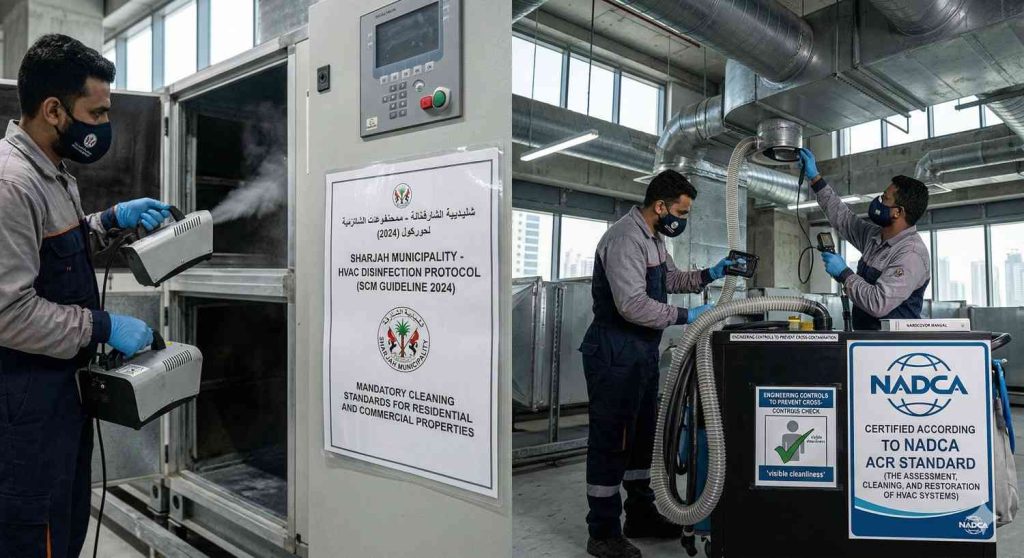
At the international level, the National Air Duct Cleaners Association (NADCA) provides the ACR Standard (Assessment, Cleaning, and Restoration of HVAC Systems). This standard is the “gold protocol” for the industry and is frequently cited in UAE tender documents and facility management contracts. The NADCA standard requires that all components of the HVAC system be cleaned to a “visible” level of cleanliness and that specialized engineering controls be used to prevent cross-contamination during the cleaning process.
| Standard/Regulation | Authority | Key Requirements |
| NADCA ACR | International (NADCA) | Source removal under negative pressure; video verification |
| ASHRAE 62.1 | International (ASHRAE) | Ventilation for acceptable indoor air quality |
| SCM Health & Safety | Sharjah Municipality | Use of UAE-approved disinfectants; site cleanliness |
| ISO 9001:2015 | International (ISO) | Quality management systems for service providers |
| SEWA Efficiency | Sharjah (SEWA) | Guidelines for reducing AC-related energy waste |
Compliance with these standards is especially critical for commercial facilities in Sharjah, such as hotels, hospitals, and schools, where the density of occupancy increases the risk of airborne disease transmission. For these entities, regular duct cleaning often performed on an annual or bi-annual basis is a key component of their Environmental, Social, and Governance (ESG) goals and is necessary for maintaining their trade licenses and safety certificates.
The Future of HVAC Protection: Antimicrobial Coatings and Beyond
As the challenges of Sharjah’s coastal environment evolve, so too do the solutions used to protect HVAC systems. The current frontier of maintenance involves the application of advanced antimicrobial coatings to internal surfaces after a deep cleaning has been performed. These coatings provide a long-term defense against the biological colonization that typically follows a standard cleaning.
One of the most effective technologies currently available in the UAE market is silver-ion antimicrobial protection. Products such as Silver Bullet AM utilize a zeolite carrier to manage the slow release of silver ions, which disrupt the metabolism of microbes and prevent them from reproducing. These coatings are EPA-registered and have been proven 99.9% effective against a wide range of bacteria, molds, and fungi, including Salmonella, E. coli, and Staph.
Another innovative approach uses calcium hydroxide (lime) as an active ingredient. Coatings like Caliwel BNA utilize the naturally high pH of lime to create an environment where microorganisms cannot survive. These coatings are ZVOC (zero volatile organic compounds) and are particularly suitable for sensitive environments like nurseries, hospitals, and the homes of allergy sufferers in Sharjah.
Third-order insights suggest that the future of HVAC maintenance in Sharjah will likely integrate these coatings with “smart building” sensors. By using real-time monitoring of CO_2, VOCs, and particulate matter, building managers can move from a fixed-schedule maintenance model to a condition-based model. This ensures that deep cleaning and re-coating are performed exactly when needed, optimizing both indoor air quality and operational expenditure.
Synthesis and Strategic Recommendations for Sharjah Properties
The research demonstrates that the coastal environment of Sharjah creates a “perfect storm” of stressors for air conditioning systems. The combination of abrasive mineral dust, corrosive sea-salt aerosols, and high microbial pressure means that standard cleaning protocols are not only ineffective but may, in some cases, be detrimental by failing to address the underlying chemical and biological threats. To maintain a safe, efficient, and cost-effective indoor environment, a paradigm shift in maintenance is required.
For homeowners and facility managers in Sharjah, the following strategic recommendations are derived from the current scientific and industrial evidence:
- Move Beyond the Filter: Recognize that the ductwork is the “lungs” of the building. A filter wash is a superficial fix that does not address the 90% of the system where contaminants accumulate.
- Adopt a Bi-Annual “Salt-Pulse” Schedule: Coordinate deep cleaning with the seasonal shifts in humidity. An April/May service prepares the system for the summer thermal load, while an October/November service removes the salt and mold accumulated during the humid months.
- Demand Source Removal: Only work with contractors who utilize NADCA-standard negative pressure extraction and robotic verification. Without proof of cleaning, the service is often incomplete.
- Invest in Long-term Barriers: Apply antimicrobial coatings and install UV-C irradiation in high-humidity units. These technologies pay for themselves by reducing the frequency of cleaning and preventing the odors and health issues associated with microbial growth.
- Monitor and Seal: Use professional services to identify and seal duct leaks. Leaky ducts in Sharjah act as vacuums, pulling in humid, salt-laden air from unconditioned spaces, which accelerates both corrosion and mold growth.
By moving from a reactive “break-fix” model to a proactive “restoration and protection” model, Sharjah’s residents can ensure that their air conditioning systems provide the cooling, health, and efficiency they were designed to deliver, despite the challenges of the coastal desert environment.