United Arab Emirates, where summer temperatures frequently soar above 45°C, air conditioning is not a luxury it is a life-sustaining necessity. Historically, this reliance on cooling has come at a high environmental cost, with HVAC systems accounting for a significant portion of the nation’s energy consumption and carbon emissions. However, the landscape is shifting. Driven by the UAE Energy Strategy 2050 and the recent Federal Decree-Law No. 11 of 2024, which mandates strict greenhouse gas emissions reporting by May 2026, a new era of eco-friendly cooling has arrived.
Modern central AC systems are no longer just about blowing cold air; they are sophisticated, data-driven solutions designed to minimize environmental impact while maximizing human comfort. From AI-optimized thermostats to low-GWP refrigerants, the cooling industry in the UAE is undergoing a green revolution that is fundamentally resizing the carbon footprint of the desert’s urban centers.
The Evolution of Sustainable HVAC Technology in the Emirates
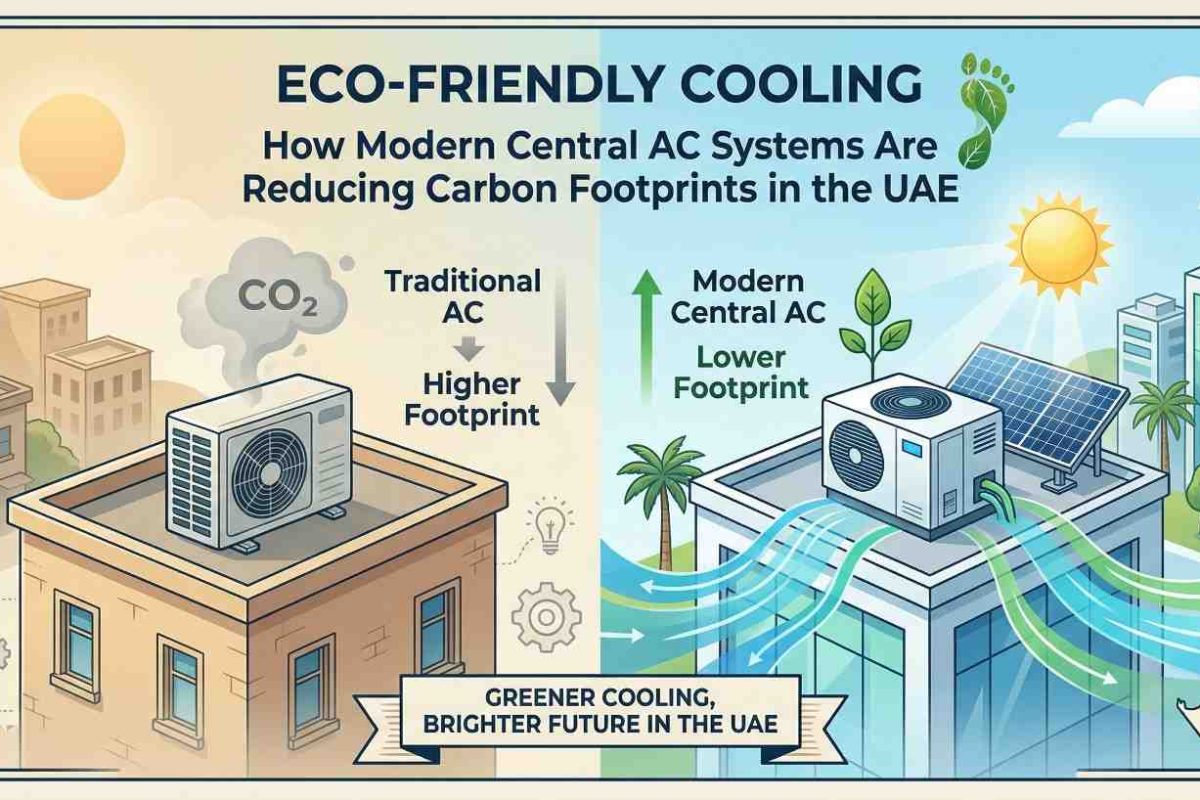
The transition toward eco-friendly cooling is rooted in a move away from “brute force” cooling where systems run at a single, high-energy speed regardless of the actual demand. Traditional systems were notorious for being “on or off,” leading to massive energy spikes and mechanical wear. Modern central systems have replaced this archaic model with Variable Refrigerant Flow (VRF) and Inverter Technology.
Unlike older units, inverter-driven compressors can adjust their speed to match the precise cooling load of a building. This prevents the energy-intensive “startup” cycles and allows the system to maintain a consistent temperature using a fraction of the power. In a region where AC units operate nearly year-round, these incremental efficiencies aggregate into massive reductions in a building’s overall carbon footprint.
The Role of Professional Maintenance and Central AC Services in Sharjah
Sustainability is not just about the hardware; it is about how that hardware is managed over its lifecycle. In the Northern Emirates, the demand for high-efficiency cooling has led to a surge in specialized expertise. When seeking reliable Central AC Services in Sharjah, residents and business owners are increasingly prioritizing providers who offer eco-conscious maintenance plans.
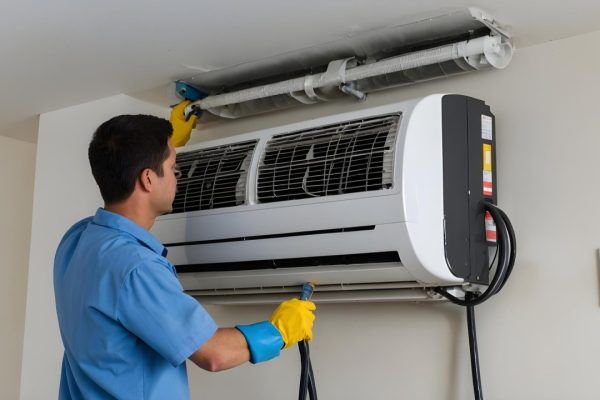
Proper maintenance is a critical pillar of environmental stewardship. A central AC system with dirty coils or leaking ducts can consume up to 30% more energy to achieve the same cooling effect as a well-maintained unit. Professional services in Sharjah now focus on:
- Precision Duct Sealing: Ensuring that 100% of the cooled air reaches its destination without escaping into ceiling voids.
- Eco-Friendly Chemical Cleaning: Using biodegradable agents to clear cooling coils, improving heat exchange efficiency without introducing toxins into the local water table.
- Refrigerant Management: Modern service providers are trained to handle new-generation refrigerants like R-32, which have a significantly lower Global Warming Potential (GWP) compared to the older R-22 or R-410A gases.
AI and Smart Thermostats: The Brains Behind the Green Cooling
One of the most innovative leaps in reducing the UAE’s carbon footprint is the integration of Artificial Intelligence (AI). Modern central AC systems are now being paired with AI-driven smart thermostats that do far more than just schedule “on” and “off” times.
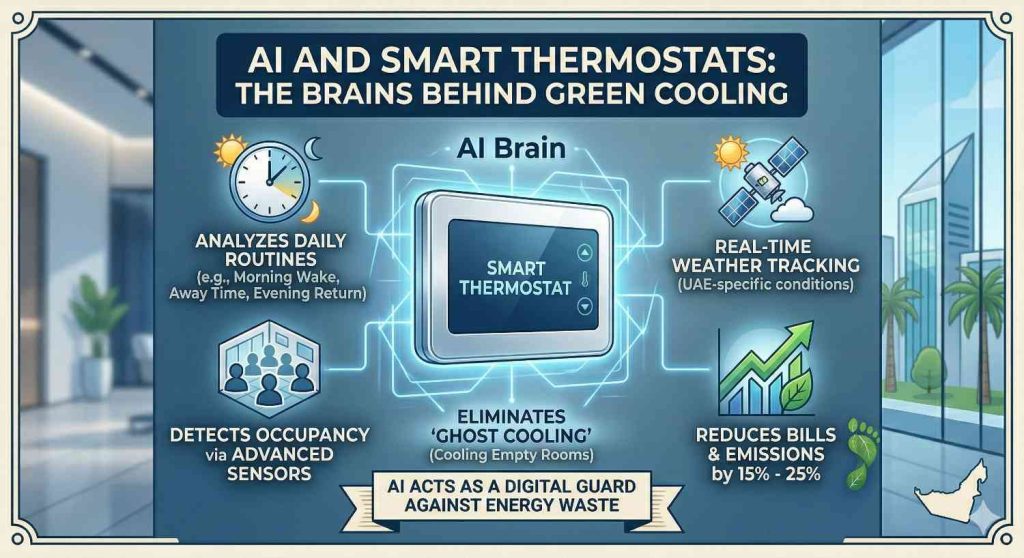
These systems analyze daily routines, track outdoor weather conditions in real-time, and even detect occupancy through advanced sensors. In a large villa or commercial office in Dubai or Sharjah, this means the system can automatically throttle back cooling in unoccupied zones, potentially reducing energy bills and emissions by 15% to 25%. By eliminating “ghost cooling” the cooling of empty rooms AI acts as a digital guard against energy waste.
Beyond Air: The Shift to Solar-Assisted and Geothermal Systems
As the UAE accelerates its path toward Net Zero, innovative cooling methods that go beyond traditional electricity are gaining traction. Solar-assisted HVAC systems are particularly well-suited for the Middle East, where solar irradiance is among the highest in the world. These systems use thermal collectors to assist the cooling process or PV panels to power the compressor directly, potentially offsetting 30% to 60% of a system’s total energy usage.
Additionally, Energy Recovery Ventilators (ERVs) are becoming standard in modern UAE construction. These devices capture the “coolness” from stale indoor air before it is exhausted outside and use it to pre-cool the hot, humid fresh air coming in from the outdoors. This “recycling” of energy ensures that the central AC doesn’t have to work as hard to maintain the desired indoor climate.
Compliance and the Future of Cooling in 2026
The push for eco-friendly cooling is no longer just a voluntary “green” choice; it is becoming a regulatory requirement. With the UAE Federal Decree-Law No. 11 taking full effect in May 2026, commercial buildings must provide auditable data on their Scope 2 emissions—largely driven by AC electricity consumption.
This regulatory pressure is driving a massive wave of VFD (Variable Frequency Drive) retrofitting for older buildings. Adding a VFD to an existing HVAC motor can reduce power consumption by nearly 50% if the motor speed is reduced by just 20%. For the UAE, this represents one of the fastest and most cost-effective ways to slash urban carbon emissions.
Conclusion: A Cooler, Greener Future
The narrative of air conditioning in the UAE is changing. It is shifting from a story of environmental burden to one of technological triumph. By combining advanced engineering, smart AI controls, and professional Central AC Services in Sharjah, the UAE is proving that it is possible to maintain a high standard of living in an extreme climate without compromising the health of the planet.
As we move toward 2026 and beyond, the adoption of these modern central cooling systems will remain the single most effective tool in the nation’s arsenal to reduce its carbon footprint and achieve a truly sustainable future.