The geographical positioning of Sharjah along the Arabian Gulf creates an atmospheric environment that is uniquely hostile to conventional mechanical cooling systems. In this region, air conditioning is not a luxury but a life-sustaining infrastructure, with systems operating continuously for ten to twelve months of the year. While much attention is traditionally paid to thermodynamic loads and dust filtration, the destructive role of solar ultraviolet radiation on the physical and structural integrity of outdoor condensing units is frequently underestimated.
The solar irradiance in the United Arab Emirates can reach peaks of approximately 1400 Watts per square meter during the summer months. This extreme solar energy, consisting of high-energy UV-A and UV-B wavelengths, acts as a continuous catalyst for chemical, physical, and electrical degradation of outdoor air conditioning components. When combined with ambient temperatures exceeding 45 degrees Celsius and high coastal humidity, ultraviolet radiation systematically compromises polymer insulation, electrical wiring sheaths, structural casings, and thermodynamic heat rejection capacities.
To prevent catastrophic system failures and preserve thermodynamic efficiency during peak summer heat, a comprehensive understanding of UV-induced degradation pathways is essential. Property owners and facility managers must recognize these vulnerabilities to implement targeted protective strategies. For those managing residential or commercial properties in the region, securing professional air con programs is a critical step in mitigating these climate-induced risks.
The Thermodynamics of Arid Coastal Solar Radiative Stress: Why AC Maintenance Sharjah is Essential
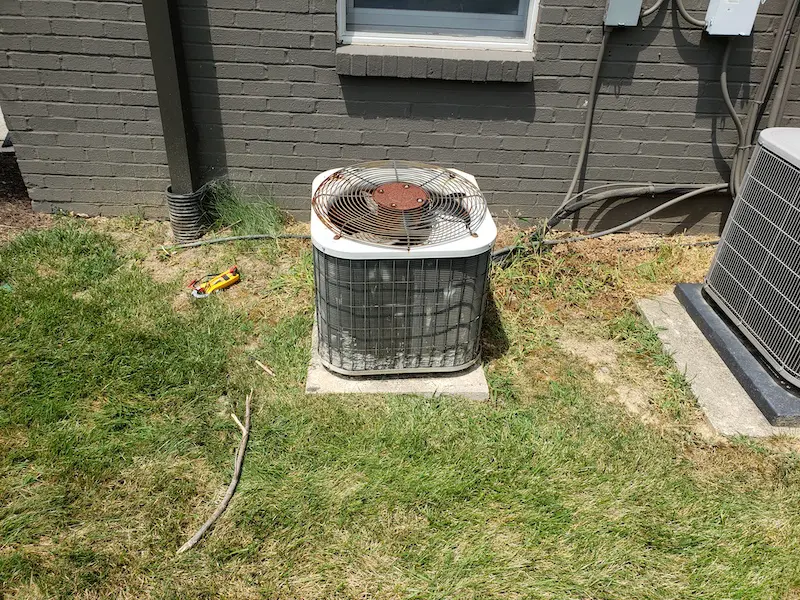
The outdoor condensing unit of an air conditioning system is designed to reject heat from the indoor environment to the outdoor ambient air. However, the physical placement of these units on unshaded rooftops, balconies, or open ground areas exposes them to intense, uninterrupted solar radiation. This exposure introduces two distinct forms of thermal and radiative stress: direct solar heat gain, also known as insolation, and photochemical degradation via ultraviolet radiation.
Direct solar radiation heats the galvanized steel and polymer casings of outdoor condensing units, raising their surface temperatures to 60 degrees Celsius or higher. This localized heating elevates the temperature of the microclimate immediately surrounding the condenser. Because the rate of heat transfer from the refrigerant to the ambient air is directly proportional to the temperature difference between the two mediums, an elevated ambient microclimate severely restricts the unit’s heat rejection capacity.
At the same time, ultraviolet radiation breaks down materials at a molecular level. Unlike visible light, which primarily generates thermal energy, ultraviolet radiation possesses sufficient photon energy to disrupt covalent bonds within polymers, elastomers, and protective coatings. This process, known as photodegradation, initiates a cascade of material failures that ultimately compromise the operational safety and efficiency of the entire system. Establishing a strict regimen of AC maintenance Sharjah helps identify these structural compromises before they culminate in total system breakdowns.
Molecular Mechanics of UV-Induced Material Failure: When to Call an AC Technician Sharjah
Photodegradation of Cable Jackets and the Need for Split AC Repair Sharjah
The electrical control and power delivery systems of outdoor condensing units rely heavily on polymer-insulated wiring. Standard electrical cables are typically sheathed in polyvinyl chloride or synthetic rubbers. When subjected to prolonged UV-A and UV-B exposure under high ambient temperatures, these polymers undergo photo-oxidation.
The ultraviolet photons excite the polymer chains, causing chain scission and cross-linking. This molecular alteration manifests physically as surface chalking, discoloration, and eventual loss of plasticizers, leading to severe material embrittlement. As the polymer chains lose their flexibility, thermal expansion and contraction cycles cause the brittle sheath to split and crack.
This cracking leads to a complete breakdown of the material’s dielectric strength. Cracks in the outer and inner insulation sheaths expose the copper conductors to atmospheric moisture and salinity, causing electrical short circuits, current leakage, and frequent tripping of circuit breakers. These electrical failures are highly prevalent in older, unshaded systems. If a system begins experiencing sudden electrical disruptions, consulting a certified AC technician Sharjah is vital to diagnose cracked wiring before the compressor motor sustains permanent damage. When these electrical faults occur in split units, initiating professional split AC repair Sharjah is critical to restoring safe operation.
UV Degradation of Refrigerant Line Insulation and Central AC Maintenance Sharjah
Refrigerant lines carrying low-temperature, gaseous refrigerant from the indoor evaporator to the outdoor compressor must be insulated to prevent heat gain from the ambient air. In the United Arab Emirates, the two primary materials used for this insulation are closed-cell elastomeric nitrile rubber and polyethylene foam.
Polyethylene foam is highly susceptible to ultraviolet molecular breakdown. Without a specialized ultraviolet protective coating or mechanical cladding, polyethylene insulation exposed to Sharjah’s sun will degrade, crumble, and strip away entirely within two to three years. Elastomeric nitrile rubber offers superior ultraviolet resistance and thermal performance, but it also undergoes slow photodegradation, requiring ultraviolet-resistant paint or reflective foil wraps to ensure long-term durability.
When insulation degrades and exposes the bare copper refrigerant lines, multiple system-wide issues emerge. The cold refrigerant line absorbs massive amounts of heat from the sun-drenched environment, forcing the compressor to work harder to achieve the desired cooling effect. This thermal gain can reduce overall cooling efficiency by 20% to 240%. Furthermore, the exposed cold pipe condenses humid air instantly, leading to persistent moisture, accelerated copper corrosion, and potential mold growth. For commercial properties, regular central AC maintenance Sharjah ensures that these lines are checked and re-insulated with appropriate high-density materials.
| Insulation Material | Thermal R-Value (per inch) | Moisture Resistance | UV Resistance (Unprotected) | Recommended Applications in Sharjah |
| Elastomeric Foam (Nitrile Rubber) | R-3 to R-4 | Excellent (Closed-cell structure prevents vapor ingress) | Moderate (Requires UV coating or cladding for long-term outdoor exposure) | Outdoor AC coolant lines, chilled water pipes, and unconditioned spaces |
| Polyethylene Foam | R-2 to R-3 | Good | Poor (Rapidly degrades, cracks, and crumbles under direct sunlight) | Strictly indoor hot/cold water pipes or dry, shaded environments |
| Glass Fiber (Fiberglass) | R-4 to R-5 | Poor (Requires protective outer jacket to prevent moisture saturation) | Good (Fibers are inert to UV, but binder resins can degrade) | Industrial high-temperature lines or heavily jacketed duct systems |
Assessing the Thermodynamic Impact on Compressors: Diagnosing a Split AC Not Cooling Sharjah
Understanding Thermal Overload and the Urgency of Same Day AC Service Sharjah
The compressor is the thermodynamic heart of the air conditioning system. When ultraviolet radiation and intense solar heat raise the surface temperature of the condensing unit, the compressor is subjected to immense mechanical and thermal loads.
Under normal operating conditions, a condenser rejects heat to the air flowing through its aluminum fins. However, when the metal casing absorbs solar radiation, the internal cabinet temperature rises, elevating the saturated condensing temperature of the refrigerant. According to the laws of thermodynamics, a higher condensing temperature increases the pressure ratio across the compressor. This requires the compressor to consume more electrical power to compress the refrigerant gas to the necessary condensing pressure, directly increasing monthly energy bills.
Prolonged operation under these high-pressure, high-temperature conditions can cause the compressor to reach its maximum thermal limit. This triggers the internal thermal overload switch, causing the compressor to shut down unexpectedly to prevent terminal burnout. This cycle of overheating and shutting down, combined with ultraviolet-weakened electrical contacts, significantly reduces the operational lifespan of the compressor from an average of fifteen years to just five to six years.
When a system fails to maintain indoor comfort, it is highly likely that solar degradation has exacerbated underlying component wear. Property owners encountering a split AC not cooling Sharjah situation should immediately book a same day AC service Sharjah to evaluate compressor health, as early intervention can prevent the need for an expensive full system replacement.
Mitigating High Pressure Failures with Professional AC Gas Refill Sharjah
Another critical consequence of extreme solar heating on the condenser is the destabilization of refrigerant pressures. Direct sunlight on the condenser housing heats the liquid and gaseous refrigerant inside the coils, raising the standing and operating pressures of the system. If the refrigerant charge is even slightly incorrect, this thermal expansion can cause the system to exceed its high-pressure safety limits, triggering automatic shutdowns.
Additionally, micro-leaks caused by thermal cycling are common in sun-baked units, leading to a steady loss of refrigerant. This drop in pressure forces the compressor to run longer cycles, leading to rapid overheating. Certified technicians must perform a professional AC gas refill Sharjah using specialized manifold gauges to precisely balance the refrigerant charge according to the ambient microclimate.
Siting and Shading Engineering: Debunking Shading Myths via Duct AC Maintenance Sharjah
Airflow Dynamics and Why a Duct AC Not Cooling Sharjah Requires Strategic Siting
A common misconception in the HVAC industry is that building a simple wooden or plastic shade directly over an outdoor condensing unit will dramatically improve its operating efficiency. However, extensive scientific research conducted by institutions such as the Florida Solar Energy Center and the Kuwait Institute for Scientific Research has debunked this assumption.
The thermodynamic performance of an air-cooled condenser is driven almost entirely by the temperature of the entering ambient air, not the temperature of the outer metal cabinet. A typical 3-ton residential air conditioner moves an immense volume of air—approximately 2800 to 3000 cubic feet per minute. This equates to roughly 170,000 to 180,000 cubic feet of air drawn through the condenser coils every hour. Because of this rapid, high-velocity airflow, any localized shading structure cannot cool the massive volume of air entering the unit. The empirical data shows that shading the condenser alone yields an efficiency increase of only 1% to 3%.
Furthermore, improper shading can actually degrade system performance and damage the compressor. If a shade screen, lattice, or solid cover is positioned too close to the unit, it restricts critical airflow. Modern condensers typically discharge hot exhaust air vertically from the top of the unit. If a solid cover is placed directly above, the hot exhaust air is trapped and forced back into the condenser intake coils. This recirculation of superheated air rapidly drives up condensing pressures, causing severe system inefficiency and compressor failure.
For commercial or larger residential systems, investing in duct AC maintenance Sharjah is essential to assess if air recirculation or restricted ventilation is contributing to a duct AC not cooling Sharjah state. Rather than constructing restrictive physical covers, strategic siting during installation is the optimal engineering approach.
Environmental Synergy: Salt Air Corrosion, Sand Erosion, and Split AC Service Sharjah
Sharjah’s geographic environment represents a complex, multi-factor weathering system. The destructive impact of ultraviolet radiation does not occur in isolation; instead, it acts synergistically with high coastal humidity, airborne salinity from the Arabian Gulf, and heavy desert dust storms.
Coastal areas in Sharjah, such as Al Majaz, Al Khan, and Al Nahda, experience severe humidity and salt-laden sea breezes. When salt particles land on aluminum condenser fins, they attract atmospheric moisture to form a highly corrosive electrolytic film. Ultraviolet radiation accelerates this process by degrading any protective polyurethane or acrylic coatings applied to the coils, exposing the raw aluminum and copper beneath. The resulting galvanic and pitting corrosion thin the coil walls, eventually causing refrigerant micro-leaks.
Additionally, during dry summer windstorms, fine desert sand is blown across these degraded surfaces. The abrasive sand physically erodes remaining protective sheaths, while dust particles lodge within the corroding aluminum fins, creating a thick, insulating layer of grime. This multi-layered degradation requires professional intervention. Arranging a preventative split AC service Sharjah ensures that deep chemical cleaning is applied to safely dissolve salt crusts and clear accumulated sand without damaging the delicate, ultraviolet-weakened metal fins.
Strategic Preventative Engineering: Finding the Best AC Repair Sharjah
To counteract the relentless solar and environmental weathering in Sharjah, property owners must move from reactive repairs to proactive engineering and maintenance. Implementing a structured, multi-layered preventative strategy is the only way to guarantee operational reliability throughout the year.
Sourcing Emergency AC Repair Sharjah and 24/7 AC Repair Sharjah Services
When an outdoor condensing unit fails abruptly in the middle of a Sharjah summer, the indoor temperature can escalate to dangerous levels within hours. This makes immediate access to emergency AC repair Sharjah and 24/7 AC repair Sharjah services a necessity. Certified emergency technicians are equipped with diagnostic tools to quickly identify whether the breakdown was caused by a tripped compressor thermal overload, a blown start capacitor due to excessive solar heat, or a short circuit in the ultraviolet-damaged control wiring. Having a reliable partner that provides rapid, round-the-clock service ensures that these critical faults are resolved safely and efficiently.
To assist property managers in identifying solar and environmental failures early, the following diagnostic matrix correlates visible symptoms with their root physical causes and required professional interventions :
| Observed Symptom | Primary Physical Cause | Secondary Environmental Driver | Required Technical Intervention |
| System blowing warm air; compressor does not engage | Thermal overload switch tripped due to compressor overheating. | Direct solar insolation raising cabinet temperature above 60 degrees Celsius. | Clear surrounding airflow blockages. If failure persists, secure an emergency AC repair Sharjah to inspect compressor winding resistance. |
| Frequent circuit breaker trips during peak heat | Dielectric breakdown and cracking of UV-exposed PVC wire insulation. | Accelerated chemical aging of polymer sheaths under high ambient temperatures. | Schedule a professional AC repair near me Sharjah to trace electrical leakage and replace degraded wiring with UV-stabilized conductors. |
| Excessive condensation or ice forming on refrigerant lines | Loss of insulation due to UV-induced embrittlement and disintegration of foam. | High ambient humidity interacting with unprotected cold copper pipes. | Completely strip degraded insulation, install closed-cell elastomeric rubber insulation , and wrap with UV-resistant cladding. |
| Gradual loss of cooling capacity with rising energy bills | Reduced heat transfer due to sand accumulation and salt-crust corrosion on fins. | High-humidity coastal winds interacting with airborne desert dust. | Arrange a split AC maintenance Sharjah or AC service near me Sharjah service for professional chemical coil descaling and deep cleaning. |
| Unusual grinding, rattling, or squealing noises from outdoor unit | Fan motor bearing failure or fan blade damage. | UV degradation of internal rubber gaskets and excessive operational vibration. | Turn off the system immediately to prevent terminal motor burnout and contact a certified technician for fan motor or blade replacement. |
Professional Restoration and AC Service Near Me Sharjah
When ultraviolet degradation, coastal salinity, and extreme heat compromise an outdoor cooling system, prompt and professional engineering intervention is required. Since 2005, the team of certified HVAC engineers at Air-Con.ae has served as Sharjah’s most trusted partner for residential, commercial, and industrial air conditioning care.
Headquartered opposite the Cricket Stadium in Industrial Area 6, Sharjah, Air-Con.ae provides a comprehensive suite of preventative and restorative cooling solutions designed specifically to withstand the unique meteorological challenges of the Arabian Gulf. Every service is carried out by licensed, municipality-certified technicians utilizing original, high-grade parts backed by a comprehensive 90-day service warranty.
Whether a property requires a routine AC gas refill Sharjah after leak repairs, a structured annual AC maintenance Sharjah contract, or a rapid emergency AC repair Sharjah to address a failed compressor during mid-July heat, the engineering teams are equipped to deliver rapid, lasting results. By executing rigorous, step-by-step diagnostic and cleaning protocols, Air-Con.ae ensures that systems maintain peak thermodynamic efficiency, reducing monthly electricity consumption and extending the operational lifespan of expensive mechanical equipment.
For property owners looking to safeguard their HVAC investments, searching for the best AC repair Sharjah or finding a reliable AC repair near me Sharjah leads directly to the proven expertise of Air-Con.ae. Rather than risking system safety with uncertified, cheap AC service Sharjah options that fail to use ultraviolet-stable materials or certified technicians, investing in precision engineering is the most cost-effective path to long-term comfort and mechanical reliability.
Why does UV radiation cause AC wire insulation to crack, and what are the safety risks?
Ultraviolet radiation contains high-energy photons that physically break the molecular bonds in standard PVC and rubber cable jackets, a process known as photodegradation. Over time, this molecular breakdown causes the wire sheathing to lose its flexibility, leading to severe cracking and peeling.
The primary safety risks include short circuits, electrical fires, and complete component failure when exposed conductors come into contact with rain or humid, salty coastal air. For property owners, securing prompt split AC repair Sharjah at the first sign of brittle or frayed wires is critical to preventing damage to the expensive compressor motor.
Does shading an outdoor AC condenser significantly reduce energy bills?
No, scientific field studies have proven that shading the condensing unit alone is essentially ineffective, providing a modest efficiency improvement of only 1% to 3%. Because condensers draw in an immense volume of air (typically 170,000+ cubic feet per hour), the system’s performance is driven by the general ambient temperature of the region, not the temperature of the metal casing.
A much more effective strategy is shading the entire building using reflective window films, external blinds, or strategic landscaping. This reduces the building’s overall heat gain, which significantly lowers the workload on the air conditioner.
What is the difference between elastomeric rubber and polyethylene insulation under direct sunlight?
Elastomeric closed-cell nitrile rubber offers excellent thermal R-values and high moisture resistance, making it ideal for preventing condensation in humid coastal environments. However, it still requires ultraviolet-resistant coatings or protective cladding to prevent gradual solar degradation.
In contrast, polyethylene foam is highly vulnerable to ultraviolet radiation. If left unprotected in direct sunlight, polyethylene quickly disintegrates, cracks, and crumbles within two to three years, leaving copper refrigerant pipes completely exposed to thermal heat gain and corrosion.
How often should AC units in Sharjah be serviced to prevent solar and environmental damage?
In cooler climates, annual maintenance is often sufficient. However, due to Sharjah’s extreme summer temperatures (exceeding 45 degrees Celsius), heavy sandstorms, and corrosive coastal salt air, AC systems should be professionally serviced at least twice a year—ideally once in the spring (April/May) and once in the autumn (October/November).
Regular servicing should include deep coil cleaning to remove sand and salt crusts, diagnostic electrical checks, and inspections of all pipe insulation and seals.
What happens if an outdoor AC unit’s ventilation is restricted by a cover or shade?
Restricting a running or standby condenser’s airflow is highly destructive and far worse than direct sun exposure. Modern outdoor units discharge hot exhaust air vertically from the top. If a tight cover, solid wooden shade, or dense foliage block this exhaust path, the superheated air is trapped and recirculated back into the intake coils.
This rapid heat buildup causes thermodynamic inefficiency, trips the circuit breakers, and can quickly burn out the compressor or fan motor. Always maintain at least 1 meter of clear space around the unit.
Where should I look for specialized split AC repair near me Sharjah if my fan motor fails?
When a condenser fan motor fails due to ultraviolet degradation or excessive heat stress, it is vital to contact a highly qualified service provider. Sourcing specialized split AC repair near me Sharjah through a certified platform like Air-Con.ae guarantees that a technician will arrive within 30 minutes to diagnose the fault. Licensed technicians carry certified replacement parts and specialized testing gear to safely restore the split system’s electrical and mechanical integrity.