In the United Arab Emirates, the air conditioner is not merely a luxury; it is a life-sustaining necessity. For nearly ten months of the year, residents spend upwards of 90% of their time indoors. While we rely on these systems to shield us from the relentless desert heat, a growing body of evidence suggests that the very systems designed to keep us comfortable might be making us ill. This phenomenon is known as Sick Building Syndrome (SBS), and at the heart of the issue lies the dark, hidden network of your home: the AC ductwork.
1. The Invisible Connection: AC Ducts and Your Health
Most people view their air conditioning system as a simple cooling machine. However, it functions more like the lungs of a building. It inhales indoor air, cools it, and exhales it back into your living spaces. When the “airways” (the ducts) are clogged with dust, debris, and microorganisms, the air you breathe becomes a carrier for pollutants.
In the UAE, the environmental conditions are unique. High humidity levels, particularly in coastal areas, combined with fine desert sand, create a “perfect storm” inside AC ducts. When moisture from the cooling coils meets the organic dust trapped in the ducts, it creates a breeding ground for bacteria and fungi. This isn’t just a matter of a “dusty house”; it is a significant health risk that can lead to chronic respiratory issues, fatigue, and headaches.
2. Defining Sick Building Syndrome in the UAE Context
Sick Building Syndrome describes a situation where occupants experience acute health effects that seem to be linked to time spent in a building, but no specific illness or cause can be identified. Symptoms often improve shortly after leaving the building. In the UAE, SBS is frequently tied to poor Indoor Air Quality (IAQ) resulting from neglected ventilation systems.
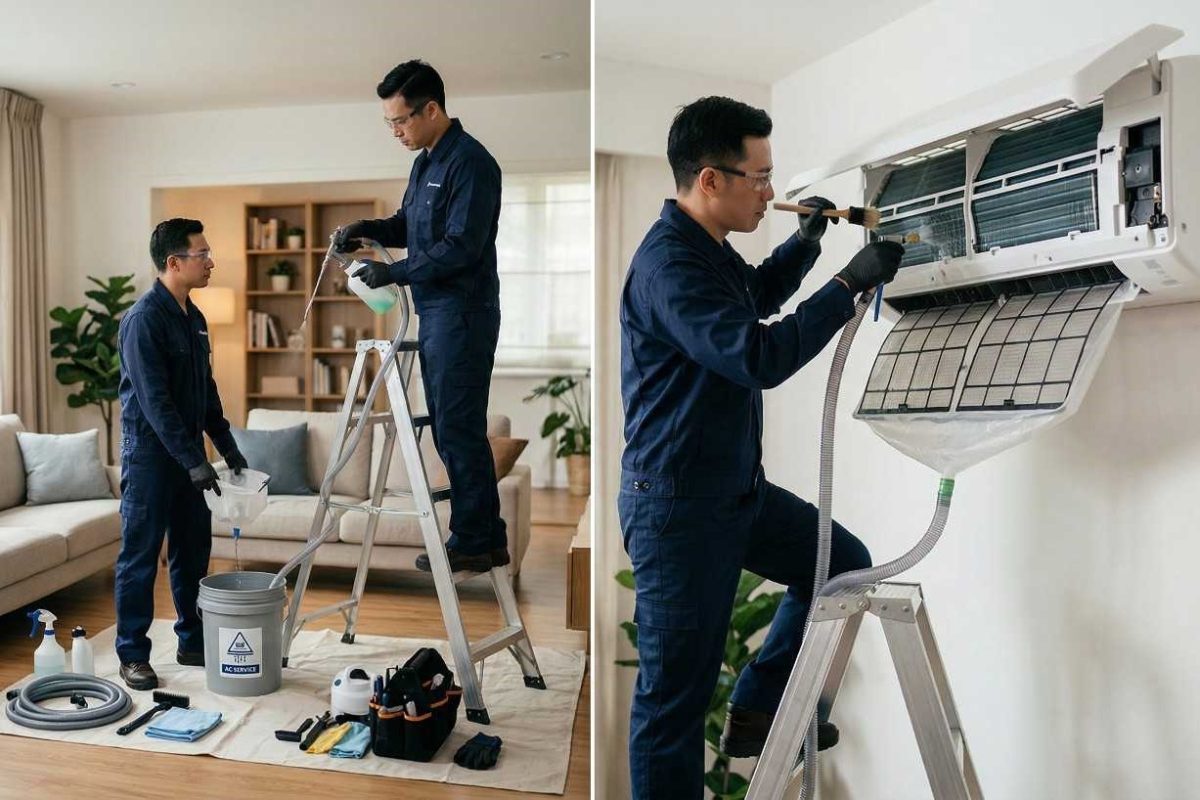
If you find yourself suffering from unexplained sneezing, watery eyes, or throat irritation only when you are at home or in the office, your ventilation is likely the culprit. To combat this, many residents are turning to professional AC Duct Cleaning Services in Sharjah to ensure that the internal components of their cooling systems are free from the microbial colonies that trigger these symptoms. Without a deep mechanical cleaning, these contaminants continue to recirculate, turning a modern apartment into a health hazard.
3. The Science of Contamination: What’s Hiding in Your Vents?
To understand why dirty ducts make you sick, we must look at what accumulates inside them over time. It is not just “sand.” A typical duct system in a UAE household can contain:
- Particulate Matter (PM2.5): Fine dust particles that can bypass the throat and nose and enter directly into the lungs.
- Mold Spores: Thriving in the dark, damp corners of the AC plenum, mold releases spores that are highly allergenic.
- Skin Cells and Pet Dander: These organic materials provide the “food” for dust mites and bacteria.
- Volatile Organic Compounds (VOCs): Chemicals from cleaning products or paints that get trapped and concentrated within the ductwork.
When the AC blower turns on, it acts as a delivery system for these pollutants. Instead of fresh, filtered air, you are receiving a concentrated dose of allergens.
4. The Humidity Factor: Why the Middle East is Unique
In temperate climates, duct cleaning might be recommended every 3 to 5 years. In the UAE, the rules change. The extreme temperature differential between the scorching outdoor heat and the chilled indoor environment leads to heavy condensation.
When your AC system is not perfectly calibrated or when the insulation in the ducts begins to degrade, moisture accumulates. Standing water in drain trays or dampness on duct liners leads to the growth of “black mold” (Stachybotrys chartarum) and Legionella bacteria. These aren’t just allergens; they are pathogens that can cause serious lung infections and systemic inflammation.
5. Recognizing the Red Flags: When to Call the Pros
How do you know if your AC is the reason for your lethargy or cough? There are several physical signs to watch for within your property. If you see visible dust buildup on the vent grills (the “black streaks” on the ceiling), or if there is a persistent musty odor when the unit starts up, the system is compromised.
Beyond the ducts, mechanical failure often exacerbates air quality issues. If your unit is struggling to dehumidify the air or making strange noises, it may require a comprehensive home ac repair to ensure the internal components are functioning correctly and not contributing to moisture buildup. A faulty compressor or a clogged drainage line can lead to stagnant water, which directly feeds the SBS cycle. Timely repair and cleaning are the two pillars of a healthy indoor environment.
6. Respiratory Impact: From Allergies to Asthma
For children and the elderly in the UAE, the impact of dirty AC ducts is even more pronounced. Pediatricians in the region have noted a correlation between the summer months when AC usage is at its peak and an increase in childhood asthma flare-ups.
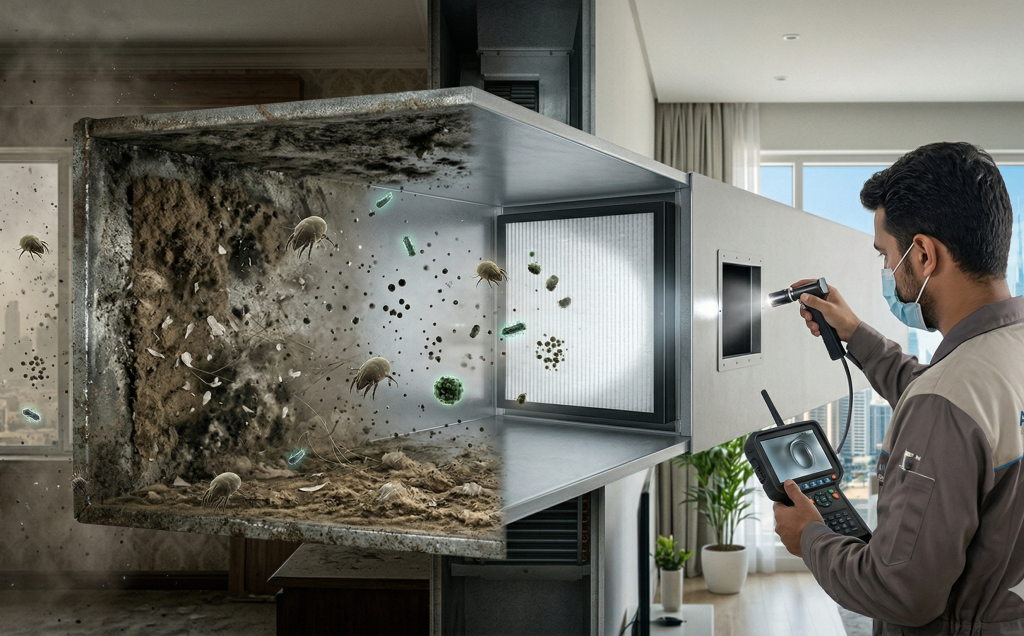
Micro-particles trapped in the ducts act as “triggers.” For someone with sensitive airways, breathing in mold spores for 8 to 10 hours a night while sleeping is enough to induce chronic bronchial inflammation. This can lead to a cycle of medication that only treats the symptoms without ever addressing the root cause: the air supply itself.
7. The Economic Cost of Sick Building Syndrome
SBS doesn’t just affect health; it affects the wallet. In a corporate environment, poor indoor air quality leads to “presenteeism” where employees are at work but underperforming due to headaches and fatigue and increased sick leave.
In a residential setting, a dirty AC system is an inefficient one. When ducts are restricted by debris and cooling coils are coated in grime, the system must work harder to reach the desired temperature. This leads to:
- Higher DEWA/Sewa bills.
- Frequent mechanical breakdowns.
- Shortened lifespan of the AC unit. Investing in professional cleaning and maintenance is actually a cost-saving measure in the long run.
8. Innovative Solutions: Beyond the Vacuum
The industry for air quality has evolved. It is no longer enough to just “vacuum” the vents. Modern, high-quality services now utilize a multi-stage approach to eradicate SBS:
- Robotic Inspections: Using remote-controlled cameras to see deep into the ductwork to identify mold colonies.
- HEPA Filtration: Utilizing High-Efficiency Particulate Air vacuums that ensure the dust removed from the ducts isn’t simply blown back into your room.
- UV-C Germicidal Lights: Installing ultraviolet lights inside the AHU (Air Handling Unit) to kill bacteria and mold on the coils before they can enter the ducts.
- Sanitization: Applying hospital-grade, non-toxic biocides to the interior of the ducts to prevent future microbial growth.
9. DIY vs. Professional Cleaning: A Word of Caution
Many homeowners attempt to clean their AC vents by wiping the outer grills or spraying perfume into the intake. This is not only ineffective but can be dangerous. Spraying moisture or household cleaners into the vents can actually provide the moisture mold needs to grow.
Professional cleaning requires specialized “brush and vacuum” technology that creates negative pressure within the duct system. This ensures that every ounce of loosened debris is extracted out of the building, rather than being pushed further into the rooms.
10. Creating a Long-Term Air Quality Strategy
Ending Sick Building Syndrome requires a shift in mindset. We must treat our AC systems with the same hygiene standards we apply to our water supply. A healthy home strategy should include:
- Quarterly Filter Cleaning: You can do this yourself every 3 months.
- Annual Deep Duct Cleaning: A professional extraction of all internal contaminants.
- Humidity Control: Ensuring your home stays between 40% and 55% humidity to discourage mold.
- Regular Inspections: Checking for leaks in the ductwork that might be sucking in attic dust or hot, humid air.
Conclusion: Breathe Easy in the Emirates
The link between our health and our cooling systems is undeniable. As we continue to build more airtight, energy-efficient buildings in the UAE, the “trapping” of indoor pollutants becomes an even greater risk. You shouldn’t have to feel sick in your own home or office.
By understanding the mechanics of Sick Building Syndrome and taking proactive steps—such as scheduling professional inspections and ensuring your system is mechanically sound—you can transform your indoor environment. High-quality air is not a luxury; it is the foundation of a healthy life. Don’t let your AC make you sick take control of your ductwork today and experience the difference that truly clean air can make.
If you are looking for expert assistance in restoring your home’s air quality, visit Air-Con.ae for specialized solutions tailored to the UAE climate.