The meteorological landscape of the United Arab Emirates underwent a definitive paradigm shift in April 2024, when the nation experienced the most significant rainfall event since records began in 1949. This historic deluge, characterized by over 250 mm of rain falling within a single 24-hour window, transformed the hyper-arid desert environment into a landscape of widespread inundation, challenging the structural and mechanical integrity of urban infrastructure. For residents and facility managers, the most critical victim of this environmental volatility was the heating, ventilation, and air conditioning (HVAC) infrastructure. In a region where internal climate control is a fundamental necessity rather than a luxury, the degradation of AC systems due to floodwater intrusion represents a significant threat to health, property, and economic stability. This report provides an exhaustive technical analysis of post-flood HVAC care, emphasizing the necessity of professional intervention through specialized services such as those offered by air-con.ae, and explores the evolving standards of ac cleaning service and localized search trends like ac service near me in a post-disaster economy.
The Meteorological Catalyst: Analyzing the April 2024 Event
The unprecedented scale of the April 2024 floods was the result of a complex convergence of atmospheric phenomena. A potential vorticity streamer, a Red Sea Trough, and an upper-level jet stream merged to facilitate the transport of warm, moisture-saturated air from the Arabian Sea into the lower atmosphere over the UAE. This phenomenon was further exacerbated by sea surface temperatures that tracked approximately 2°C above the 20-year average, providing the thermal energy required for deep convection. The resulting storms were not the product of cloud seeding, as confirmed by meteorological experts, but were instead an expression of natural climate variability intensified by human-induced climate change, which has made such events approximately 30 times more likely to occur in the region.
The impact was most severe in densely developed urban corridors. High-resolution satellite data from Sentinel-2 captured the extent of the flooding, revealing that in Dubai alone, approximately 6.4% of the built-up area was inundated. Areas like Al Quoz suffered disproportionately due to connectivity issues and the concentration of critical infrastructure, leading to prolonged water stagnation. For HVAC systems, this stagnation meant that outdoor condensing units and, in some cases, indoor air handlers were submerged in a mixture of rainwater, silt, and “Black Water” contaminants for days.
Recorded Precipitation and Infrastructure Impact (April 2024)
| Location | Rainfall (mm) | Impact on Infrastructure |
| Khatm Al Shakla (Al Ain) | 254.8 | Record-breaking; widespread residential damage |
| Dubai Airport | 144.0 | 1,500+ flights delayed/cancelled; runways inundated |
| Sharjah | >100.0 | Severe stagnation; community health concerns from biohazards |
| Abu Dhabi (Border Area) | ~48.0 | Flooding in 5% of targeted residential/industrial areas |
Mechanical and Thermodynamic Vulnerabilities of Submerged Systems
Air conditioning systems are engineered for the UAE’s specific environmental challenges, primarily pervasive dust, high ambient humidity, and extreme heat. However, their design parameters do not account for total or partial submersion. The internal components of a split or central AC unit including the compressor, fan motor, and intricate copper tubing are designed to be weather-resistant, not waterproof.
When floodwaters rise between 10 and 15 inches, they reach the critical threshold where electrical components and moving mechanical parts are housed. Silt accumulation drastically reduces the effective surface area and the coefficient of transfer, forcing the system to operate at higher pressures and temperatures to achieve the same cooling effect.
Component-Level Damage Mechanisms
The degradation of an HVAC system post-flood is not merely superficial. It involves several distinct mechanical and chemical processes that can lead to immediate or delayed failure.
- Compressor Integrity: The compressor is the heart of the refrigeration cycle. If a unit is submerged while operational, water can be drawn into the internal mechanisms through breached seals. If the unit was stationary, the primary risk is the intrusion of silt into the terminal box, leading to electrical grounding. Furthermore, if the unit shifts due to the force of moving water, the copper refrigerant lines can experience stress fractures, leading to a loss of charge.
- Fan Motor Lubrication: Fan motors in outdoor units are typically sealed, but prolonged submersion can allow water to penetrate the bearings. This washes away specialized lubricants and introduces abrasive silt, leading to increased friction, motor overheating, and eventual seizure.
- Aluminum Fin Distortion: The delicate aluminum fins on the condenser and evaporator coils provide the surface area required for heat exchange. Flood debris and high-pressure water surges can bend these fins, a condition that restricts airflow and reduces the system’s Energy Efficiency Ratio (EER).
- Refrigerant Contamination: A breach in the copper lines during a flood can introduce moisture and non-condensables into the refrigerant circuit. Moisture reacts with the refrigerant and oil to form acids, which can dissolve motor windings and cause internal corrosion a process often referred to as a “compressor burnout”.
Electrical Systems and the Risks of Premature Activation
The most immediate danger following an HVAC flood event is electrical in nature. UAE power grids are robust, but the synergy of water and high-voltage electricity is lethal. Floodwaters are often laden with salt and minerals, which increase their conductivity. If power is restored to a damp HVAC system, the result is often a series of short circuits that can destroy circuit boards, sensors, and the compressor itself.
The Role of Circuit Breakers and Capacitors
During a storm, power surges and lightning strikes are common. A tripped breaker is often the first sign that the HVAC system has been compromised. In the UAE climate, the intense power demand of summer already puts significant stress on capacitors the components that provide the initial “start” boost for the compressor and fan motors. Post-flood, these capacitors can become moisture-laden or damaged by voltage spikes, leading to a failure of the system to engage even if the main power is restored.
Technicians providing ac service must conduct a thorough electrical diagnostic, checking the amperage draw of the motors and the microfarad readings of the capacitors against the manufacturer’s nameplate specifications. Any deviation suggests internal damage that must be rectified before the system can be safely put back into service.
Microbiological Proliferation: The Silent Post-Flood Threat
While mechanical and electrical issues are immediate, the microbiological impact of a flood can persist for months. The UAE’s high humidity, which frequently exceeds 70% in the summer months, provides the ideal environment for fungal and bacterial growth within the damp, dark recesses of an HVAC system.
“Black Water” and Decontamination Requirements
Flood cleaning is categorized by the level of contamination. The April 2024 floods frequently involved Category 3 “Black Water,” which contains sewage, chemicals, and hazardous pathogens. Standard cleaning methods are insufficient for this level of contamination. Professional decontamination involves the application of broad-spectrum biocides designed to penetrate porous surfaces and neutralize organisms like E. coli and various mold spores at a molecular level.
Mold Species and Health Risks in the UAE
The air conditioning system, if not properly sanitized after a flood, becomes a delivery mechanism for airborne spores. Studies in Dubai and Abu Dhabi have identified several prevalent mold species that thrive in poorly maintained HVAC systems post-water damage.
| Mold Genus | Preferred Substrate | Health Risks |
| Aspergillus | Duct insulation, accumulated dust | Respiratory infections, allergic reactions |
| Cladosporium | Condensate drain pans, moist coils | Triggers asthma attacks, chronic coughing |
| Penicillium | Wet drywall near air handlers | Sinusitis, headaches, skin irritation |
| Stachybotrys (Black Mold) | Saturated insulation, wood | Mycotoxin poisoning, neurological symptoms |
The prevalence of these species is particularly concerning given that 1 in 5 people in the UAE already suffer from some form of respiratory issue. For vulnerable groups including children, the elderly, and pregnant women exposure to mold-infested air can lead to severe complications, making a comprehensive ac cleaning service an essential health intervention.
Defining the Standard for Professional AC Cleaning Service
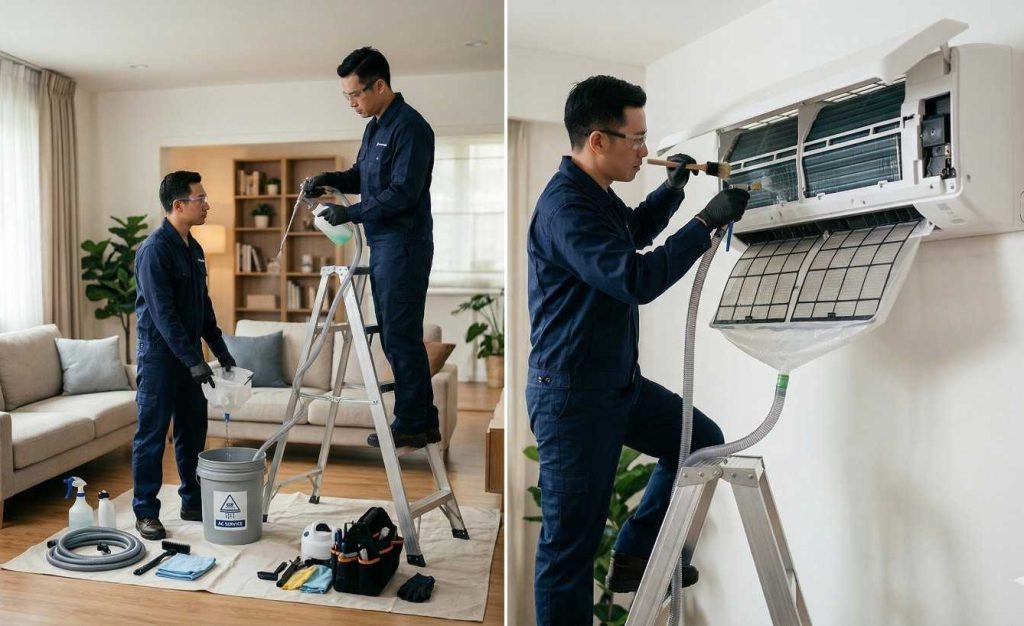
A standard maintenance visit is insufficient in the aftermath of a flood. A professional ac cleaning service post-storm must follow a rigorous, industrial-grade protocol to ensure both mechanical efficiency and biological safety. Platforms like air-con.ae provide access to the specialized expertise required for this process.
The Restoration Sequence
- High-Volume Extraction and Silt Removal: The first step involves removing standing water and the “fine” sediments left behind by the receding flood. Professionals use industrial submersible pumps and wet-vacuums capable of moving thousands of liters of water per hour. Silt is removed using specialized high-pressure systems that blast away deposits from coils without damaging the delicate metal.
- Targeted Decontamination: Following silt removal, biocides are applied to all non-porous surfaces. Any contaminated porous material, such as internal duct insulation or filter media, must be discarded and replaced, as it is impossible to effectively sterilize these materials once they have absorbed floodwater.
- Structural Drying and Humidity Control: To prevent mold regrowth, the relative humidity (RH) of the indoor air must be lowered. Technicians utilize refrigerant and desiccant dehumidifiers alongside high-velocity air movers to promote rapid evaporation within the building’s internal structure and the HVAC unit itself.
- Duct and Coil Deep Cleaning: The indoor evaporator and outdoor condenser coils are magnets for grime. Technicians use specialized, non-corrosive cleaning agents and HEPA-filtered tools to capture surface and airborne mold spores. In Dubai’s environment, dirty coils can force a system to work 30-40% harder, making this step crucial for both performance and DEWA bill management.
- Drain Line Flushing: Clogged condensate drain lines are the most common cause of indoor water damage in the UAE. Professionals flush these lines with a combination of pressurized air, wet-dry vacuums, and algaecides to ensure they are clear of the sludge and algae that thrive after a flood.
Repair vs. Replacement: A Strategic Decision Matrix
In many cases, an HVAC system exposed to flooding should be replaced rather than repaired. Even if a unit appears functional, hidden damage to internal electrical windings or the presence of latent mold can pose long-term risks.
| Evaluation Metric | Repair Likely | Replacement Recommended |
| Water Category | Category 1 (Clean rainwater) | Category 3 (Sewage/Black water) |
| Submersion Depth | Below 10 inches | Above 15 inches (Internal components hit) |
| System Age | Under 5 years | Over 10 years |
| Cost Ratio | Repairs < 50% of new unit cost | Repairs > 50% of new unit cost |
| Efficiency Impact | Minor cleaning needed | Silt-clogged compressor/coils |
A detailed assessment by a certified technician is required to make this determination. Modern systems are generally more energy-efficient, and the transition to a new unit can save significant amounts on utility bills over time, offsetting the initial capital expenditure.
Localized Market Trends: The Rise of “AC Service Near Me”
The 2024 floods have fundamentally changed consumer behavior in the UAE. There is a heightened awareness of HVAC vulnerability, leading to a 400% increase in insurance claims related to property damage. In the digital space, this has translated into a surge in localized search queries. Customers in residential districts like Dubai Marina, Nad Al Sheba, and Sharjah’s Al Quoz are increasingly utilizing terms like ac service and “ac cleaning to find rapid response teams.
Search Volume and Consumer Intent in 2025
| Keyword | Search Intent | Strategic Importance |
| AC cleaning service | Commercial/Deep Clean | Indicates demand for health-focused maintenance |
| AC service near me | Transactional/Immediate | Reflects the urgency of post-storm recovery |
| Emergency AC repair | Urgent/Crisis | High-conversion queries during peak summer or post-flood |
| AC duct cleaning Dubai | Maintenance/Allergy | Linked to concerns about indoor mold and air quality |
For providers like air-con, satisfying this demand requires more than just technical skill; it requires a robust local SEO presence. Optimizing for “near me” searches through localized landing pages for specific neighborhoods and ensuring consistency in Name, Address, and Phone (NAP) data across directories is essential for reaching residents in distress.
Long-Term Climate Resilience: The “Tasreef” Project and Beyond
The April 2024 event was a catalyst for a massive national infrastructure upgrade. His Highness Mohamed bin Zayed Al Nahyan, President of the UAE, announced the “Tasreef” project an AED 30 billion (USD 8 billion) large-scale infrastructure initiative designed to upgrade the UAE’s flood defenses starting in 2025. This project aims to boost Dubai’s drainage capacity by 700%, reflecting a proactive approach to the “new normal” of unpredictable weather patterns.
Proactive Measures for Property Owners
While the government invests in macro-scale drainage, property owners can take several steps to protect their HVAC investments from future environmental volatility.
- Elevation of Outdoor Units: Raising the condenser unit on a platform above the projected flood level is the most effective mitigation strategy.
- Anti-Corrosion Coatings: In coastal areas like Jumeirah, salt air accelerates the corrosion of submerged metals. Applying anti-corrosion coatings to exposed coils can extend the lifespan of the unit.
- Smart Thermostats and Leak Sensors: Installing programmed thermostats and automated leak detection sensors can prevent minor drainage clogs from becoming major flood events inside the home.
- Regular Maintenance Contracts: Transitioning from “pay-per-visit” to Annual Maintenance Contracts (AMC) ensures that systems are checked 3-4 times per year, catching potential flood damage or wear and tear before it leads to system failure.
Technical Guidance for Drain Line Maintenance
A critical lesson from the post-flood recovery is the importance of the condensate drain line. High humidity in the UAE creates significant condensation; a blocked line can cause water to back up and leak into walls and ceilings, leading to structural damage that can cost thousands of dirhams to repair.
DIY vs. Professional Drain Care
Homeowners can perform basic preventive maintenance by pouring approximately one cup of distilled white vinegar down the drain line access point every 1-3 months. The acidity of the vinegar helps break down organic buildup and kills algae before it forms a clog. However, for ac service situations where a clog is already present signaled by standing water in the drain pan or the unit shutting down professional intervention is required. Technicians use specialized tools like nitrogen pressure or high-powered wet-dry vacuums to clear the line safely without causing internal pressure damage.
Conclusion: Securing the Future of UAE Home Comfort
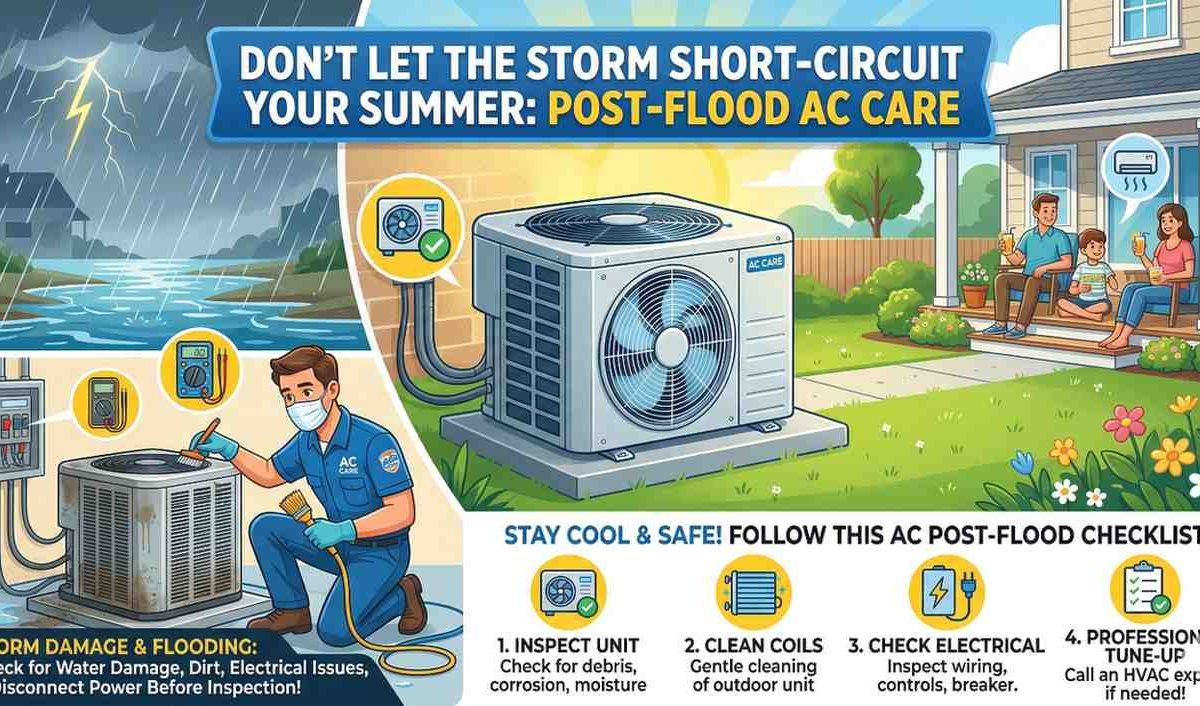
The 2024 floods were a stark reminder that the cooling systems which sustain life in the UAE are vulnerable to the changing global climate. Recovering from such an event requires a nuanced understanding of mechanical, electrical, and biological risks. By prioritizing professional ac cleaning service and leveraging specialized platforms like air-con.ae, residents can ensure that their homes remain safe and comfortable. The shift toward more resilient urban planning through projects like “Tasreef” and the increasing adoption of proactive maintenance schedules reflect a community that is learning to adapt. Don’t let the next storm short-circuit your summer; invest in the expert care and strategic upgrades necessary to weather the changing tides of the Emirates’ climate. In the search for ac service the priority must always be technical excellence, biological safety, and long-term energy efficiency.