The widespread deployment of ductless split air conditioning systems across both residential and commercial sectors has mandated a corresponding evolution in specialized maintenance protocols. Unlike traditional centralized heating, ventilation, and air conditioning systems that distribute air through extensive, often insulated ductwork, split systems operate by drawing air, conditioning it, and redistributing it directly within the breathing zone. This localized, unbuffered cycle implies that the hygiene of the indoor air handler exerts an immediate, direct influence on indoor air quality. During standard operation, air conditioners manipulate thermodynamic cycles, actively causing relative humidity in the air to precipitate as liquid condensation when it crosses the chilled evaporator coils. This continuous moisture, when combined with organic particulate matter that inevitably bypasses primary filtration, establishes a dark, damp microenvironment ideally suited for microbial colonization and the proliferation of harmful biological agents. While basic maintenance handles macroscopic dust accumulation, the eradication of microscopic biological threats requires an entirely different operational approach. Understanding the precise distinctions between standard mechanical cleaning and deep biochemical sanitization is imperative for preventing system-wide mold infestation and securing safe indoor environments.
Fundamental Principles of Standard Maintenance
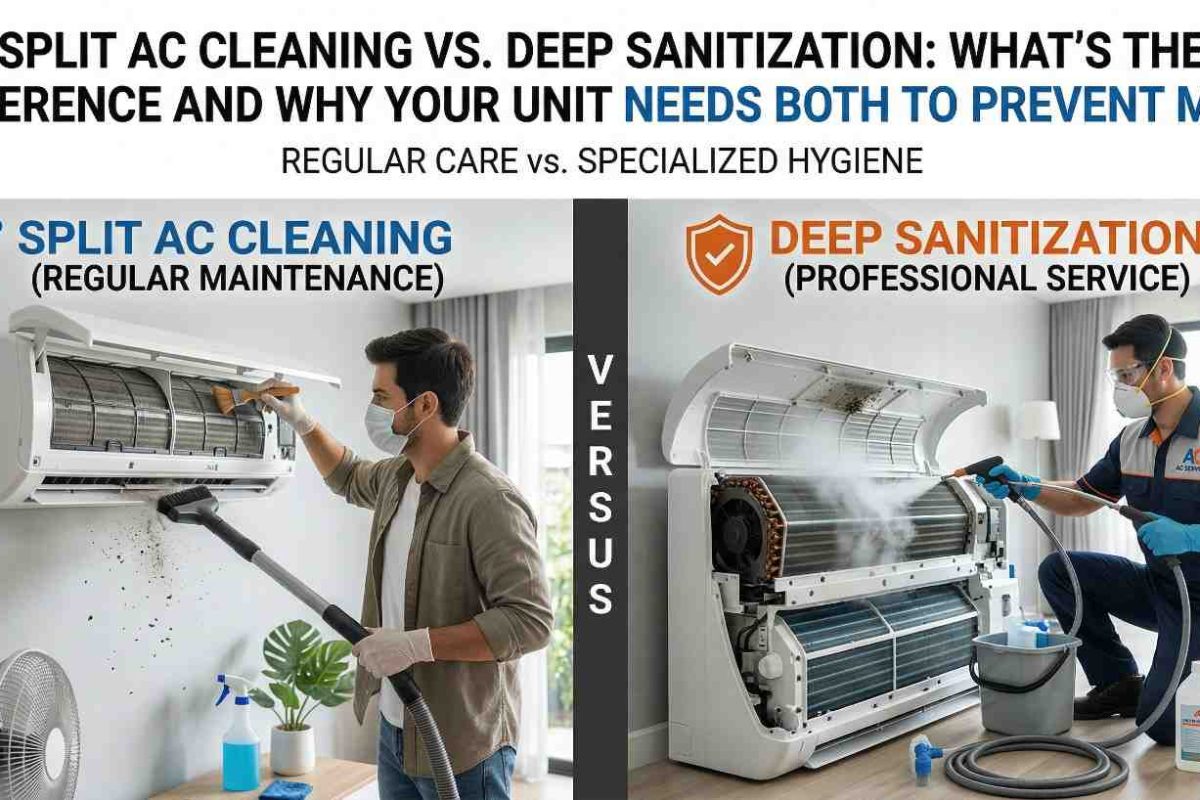
When consumers evaluate professional Split AC Cleaning services, they are typically engaging with the foundational tier of climate control hygiene. This foundational procedure centers predominantly on the mechanical removal of visible, solid waste such as dust, lint, pet dander, construction debris, and other ambient particulates from the highly accessible components of the air handler. Technicians or owners performing this periodic maintenance typically wipe the external body, remove the primary reusable mesh filters, wash them with water to clear trapped debris, and wipe down the air vents and front outlets of the unit. The primary objective of this specific process is to ensure uninhibited airflow and preserve the unit’s exterior appearance while maintaining basic daily cooling efficiency.
From an engineering standpoint, maintaining a high volume of unrestricted airflow is vital to system longevity and operation. When filters or louvers become obstructed by dense dust matrices, the velocity of the air moving across the evaporator coil decreases significantly. This reduction in airflow prevents the coil from effectively absorbing heat, causing its surface temperature to drop below the freezing point of the accumulated condensation. Over time, this atmospheric cooling can lead to severe frost formation, ice buildup, and severe mechanical efficiency penalties. However, research compiled by regulatory bodies suggests that while cleaning the cooling coils and heat exchangers may improve system efficiency, standard cleaning operations have never been conclusively shown to prevent health problems alone, as much of the settled dirt adheres to the surfaces rather than entering the living space. Standard cleaning operates almost exclusively on the surface level. It does not address what is happening deep within the dense geometries of the fins, nor does it affect the internal fan blower wheel or the deep recesses of the condensate drain pan where stagnant water routinely pools.
The Chemical and Biological Architecture of Deep Sanitization
Deep sanitization represents a calculated shift from basic mechanical debris displacement to comprehensive biochemical eradication. This highly specialized procedure requires the partial or complete disassembly of the indoor air handler to grant technicians direct physical access to sensitive internal components such as the evaporator coil, blower fan, and drain line. Once exposed, hospital-grade or EPA-approved disinfectants are applied directly to the internal surfaces. Unlike standard household detergents that simply suspend dirt particles in a solution for rinsing, true sanitizers are formulated with biocidal active ingredients designed to neutralize biological contaminants on molecular contact. These agents actively break down the cellular walls of bacteria and disrupt the metabolic reproductive processes of fungal spores, effectively rendering the colonies inert.
One of the most profound challenges in maintaining ductless systems is the formation of complex biofilms on the evaporator fins and within the drain pan. Biofilms are not merely layers of loose mold; they are sophisticated aggregations of microorganisms embedded within a self-produced matrix of extracellular polymeric substances. This gelatinous shield makes the underlying bacteria and fungal roots remarkably resilient against standard mechanical wiping or light rinsing. Effective deep sanitization utilizes specialized alkaline or acidic degreasing foams and controlled water pressure, frequently in conjunction with anti-mold sprays and medical-grade steam, to physically shear and chemically neutralize these matrices. This ensures that the unit is not merely clean in appearance but also biologically sterile at the time of treatment, creating residual fungistatic protection that inhibits immediate recolonization.
To contrast the target components, chemical agents, and overall functional objectives between standard cleaning and deep sanitization, operations can be synthesized into structured comparative parameters.
| Feature Profile | Standard AC Cleaning | Deep AC Sanitization |
| Primary Objective | Mechanical removal of dust and debris | Eradication of microbial colonies and biofilms |
| Target Components | Filters, exterior casing, accessible vents | Coils, blower wheel, drain pan, internal casing |
| Agents Utilized | Vacuums, soft brushes, water, mild soaps | EPA-approved biocides, steam, anti-mold sprays |
| Execution Frequency | Every 2 to 4 weeks (DIY or professional) | Every 6 to 12 months (Professional only) |
| Effect on Microbes | Displaces loose spores without neutralization | Kills bacteria, mold, and breaks down biofilms |
| Energy Impact | Restores nominal airflow and basic efficiency | Maximizes heat transfer and eliminates insulating barriers |
Biological Contaminants, Biofilms, and Public Health Implications
The dark, damp, and temperature-controlled environment inside an operating split air conditioning unit provides optimal conditions for a variety of opportunistic pathogens. When forced air passes over a colonized evaporator coil or blower wheel, it physically detaches spores and cellular debris, aerosolizing them and distributing them directly throughout the occupied zone. Clinical evaluations have established that exposure to these bioaerosols yields a spectrum of health ramifications ranging from mild allergic reactions to severe systemic infections.
Among the most prevalent fungal colonizers in HVAC systems are species of Aspergillus, Penicillium, Cladosporium, and Stachybotrys chartarum, the latter often colloquially termed “black mold”. Aspergillus spores are light and easily respirable, capable of invading the lower respiratory tract and causing aspergillosis, a severe pulmonary infection particularly dangerous to immunocompromised individuals. Stachybotrys chartarum is notorious for producing trichothecene mycotoxins, which can cause chronic fatigue, headaches, neurotoxic symptoms, and severe respiratory distress upon prolonged inhalation or dermal contact. Beyond fungal growth, bacterial colonization presents equally alarming hazards. Legionella pneumophila, the bacterium responsible for Legionnaires’ disease, can proliferate in systems where stagnant water accumulates in drain pans or where localized aerosols are generated. Inhaling these contaminated water droplets can result in a severe, potentially fatal form of pneumonia.
Prolonged exposure to these polluted airstreams is also associated with a reduction in oxygen quality, causing persistent headaches, dizziness, fatigue, and a marked lack of focus among occupants. For individuals suffering from pre-existing conditions such as asthma or chronic obstructive pulmonary disease, the continuous circulation of these biological irritants inevitably triggers severe exacerbations. Standard cleaning cannot eradicate these embedded pathogens; only precise chemical disinfection yields a sterile environment capable of supporting healthy indoor living.
The clinical relevance of these various microorganisms commonly discovered inside fouled split systems is detailed through medical profiling.
| Microorganism | Typical Habitat in AC | Health Risks and Symptoms |
| Aspergillus | Coils and drip pans | Respiratory issues, allergies, severe invasive lung infections (aspergillosis) |
| Penicillium | Filters and air handlers | Allergic reactions, sinusitis, skin irritation, and respiratory distress |
| Cladosporium | Damp fabrics, wood, coils | Allergic reactions, asthma exacerbation, and general respiratory discomfort |
| Stachybotrys chartarum | Areas with extreme water damage | Chronic fatigue, severe respiratory issues, neurotoxicity via mycotoxins |
| Legionella pneumophila | Standing water in drain pans | Legionnaires’ disease, severe atypical pneumonia, high fever, and cough |
| Pseudomonas | Wet internal surfaces | Skin irritation and opportunistic respiratory infections |
| Mycobacterium avium | Moist internal environments | Respiratory infections, particularly in compromised immune systems |
Thermodynamic Efficiency, SEER Ratings, and the Cost of Neglect
Biological fouling, particularly the accumulation of mold and bacterial slime on heat exchange surfaces, introduces severe thermodynamic inefficiencies that directly translate to financial and mechanical penalties. In a split air conditioning system, the evaporator coil operates as the primary interface where thermal energy is absorbed from the indoor air and transferred to the refrigerant circulating within the copper tubes. Modern ductless mini-split systems are engineered with exceptional energy efficiency, frequently reaching up to 30 Seasonal Energy Efficiency Ratio (SEER) ratings. These ratings quantify the cooling output of an air conditioner divided by its total electric energy input during the same period.
In a perfectly clean system, the heat transfer process is highly seamless. However, when biological films and packed dust accumulate on the fin surfaces, they introduce an additional layer of thermal resistance. Because the biological layer behaves as an insulating barrier, the system cannot absorb heat from the room at its engineered capacity. To compensate for this diminished rate of heat transfer, the system must force the evaporator coil to operate for extended durations. The compressor is forced to run longer and work harder to reach the home’s desired temperature, leading to inflated energy consumption and driving up electrical utility bills by as much as 30 percent in severely fouled units.
The U.S. Department of Energy notes that even a small amount of buildup on a coil can reduce system efficiency by a significant percentage. Furthermore, the continuous mechanical strain placed on the compressor accelerates component wear and tear, precipitating premature system failure and potentially voiding manufacturer warranties that require proof of professional maintenance. This biological buildup also causes the system to cycle on and off too frequently, a phenomenon known as short cycling, which further wastes energy and fails to dehumidify the air properly. Deep sanitization is the only method capable of restoring the original heat transfer coefficient by thoroughly eliminating these insulating organic layers, thus protecting an asset that represents a significant investment and should realistically last between 15 and 20 years.
Regulatory Caveats and the Debate over Chemical Disinfection
While the benefits of sanitization for energy efficiency and pathogen eradication are well-documented by practitioners, regulatory guidelines introduced by agencies like the EPA present important caveats regarding the application of chemical biocides within HVAC systems. According to historical guidance, the use of pesticides or sanitizers in air duct cleaning can cause potentially serious health issues if applied incorrectly, and the agency does not condone this action unless executed by strict protocols. A critical concern involves the use of materials not specifically registered for use in HVAC systems, which can result in worse health effects than exposure to the biological contaminants they are designed to remedy. Many companies offer to sanitize as a paid service or use it as a selling point, claiming the sanitizer has been registered by the EPA, but being registered does not provide carte blanche for use in all parts of HVAC systems.
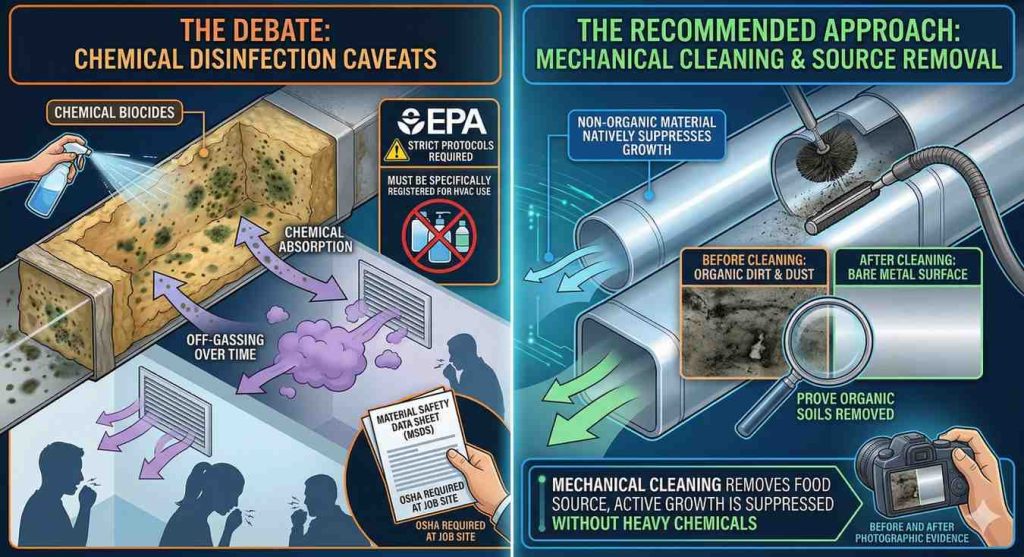
HVAC systems that are to be sanitized contain porous materials that should not be subjected to potential toxins, as these chemicals can absorb into the material and off-gas into the occupied space over time. Neither mold nor bacteria grow on non-organic materials natively; they require the presence of dust and dirt containing organic material to serve as a food source. Therefore, if a system is properly cleaned mechanically, the food source is removed, and biological growth is actively suppressed without resorting to heavy chemical application. To align with safety guidelines and preserve consumer confidence, technicians performing deep sanitization must have the Material Safety Data Sheet (MSDS) available at the job site as required by the Occupational Safety and Health Administration (OSHA). Additionally, cleaners of HVAC systems should be asked to produce photographic evidence showing the condition before and after cleaning to prove that organic soils have been removed rather than simply covered with a biocide.
Environmental Determinants Governing Maintenance Cadence
Establishing a standardized interval for split AC maintenance is inherently complex, as the rate of biological accumulation depends heavily on local environmental variables and operational usage patterns. While a general baseline recommends professional deep sanitization annually and standard filter cleaning monthly, several site-specific factors necessitate a more aggressive schedule. High ambient humidity is perhaps the most significant catalyst for mold growth. In regions where relative humidity consistently exceeds $60$ percent, condensation on the evaporator coil remains wet for extended periods, providing continuous moisture necessary for fungal spore germination.
Additionally, units situated in or near the kitchen are subjected to high concentrations of vaporized oils and grease generated during cooking. These airborne lipids are drawn into the air conditioning unit, where they adhere to the coils and act as a potent adhesive for dust and a dense nutrient source for bacteria and mold. Households with pets or extensive carpeting also experience accelerated fouling rates due to higher ambient levels of dander, hair, and fibers that bypass primary mesh filters.
In demanding environments, increasing the frequency of deep sanitization to every six months is highly recommended. As a general rule of thumb derived from high-usage regions, practitioners recommend scheduling a deep clean in the midst of the summer, anytime between mid-June to mid-July, so that units operate optimally for the peak summer heat. A second cleaning is recommended anywhere from mid-December to mid-January when users are no longer operating the units frequently for cooling. Furthermore, technicians advise that if corrosive chemicals are used during cleaning, the unit should be left running for at least $30$ minutes post-service to allow natural condensation on the coils to rinse the residual solution away.
Next-Generation Self-Cleaning and Continuous Disinfection Technologies
To address the persistent challenges of manual maintenance and ongoing microbial contamination, the HVAC industry has developed several innovative self-cleaning and continuous disinfection technologies. One prominent advancement is the integration of Ultraviolet-C (UV-C) light systems directly within the air handler or ductwork. These germicidal lamps operate at a peak germicidal wavelength, actively destroying the microbial and virus growth that can occur when an HVAC system experiences condensation. Continuous irradiation by UV-C prevents the formation of biofilms on the drain pan and coil fins, substantially reducing the frequency required for chemical deep sanitization while maintaining peak heat transfer efficiency.
Another expanding field of innovation involves photocatalytic coatings, typically utilizing titanium dioxide coatings that break down organic matter when exposed to UV light. When exposed to specific wavelengths of light, these coatings generate highly reactive hydroxyl radicals that actively decompose organic matter, effectively causing the coil to self-sterilize. Recent shifts toward smart home infrastructure have also seen the rise of Artificial Intelligence (AI) powered self-cleaning air conditioners. These advanced systems utilize localized sensors to monitor airflow restrictions and indoor air quality parameters. When dust accumulation is detected, the AI can trigger an automated cleaning cycle, often achieved through a mechanical brush system, electrostatic methods, or frost-washing where filters capture dirt and store it in a compartment. While these technological interventions do not completely replace the need for periodic manual disassembly and deep sanitization, they significantly prolong the operational intervals between servicing and ensure higher baseline air quality.
To compare the efficacy and functional mechanisms of these innovative continuous sterilization technologies, operation data is presented in structured parameters.
| Technology | Disinfection Mechanism | Targeted Contaminants | Operational Lifecycle |
| UV-C Germicidal Lamps | DNA/RNA cellular disruption via continuous light irradiation | Bacteria, viruses, and active mold spores | $9,000$ to $18,000$ hours lamp replacement |
| Photocatalytic $TiO_2$ Coatings | Generates hydroxyl radicals to oxidize biological matter | Organic residues and bio-growth | Long-term coating durability |
| Needlepoint Bipolar Ionization | Forces nano-particulates to group together for filter capture | Viruses, bacteria, and microscopic volatile organic compounds | Maintenance-free solid-state systems |
| AI Self-Cleaning & Frost-Washing | Freeze-thaw cycles and electrostatic mechanical clearing | Accumulated surface dust and localized lint | Continuous automated software cycles |
Strategic Recommendations for Optimized HVAC Hygiene
Analyzing the operational dynamics of ductless split air conditioners reveals that a binary choice between standard cleaning and deep sanitization is fundamentally flawed. Effective mold prevention and operational efficiency require an integrated, multi-tiered maintenance strategy that leverages both protocols in tandem. Standard cleaning handles the daily influx of macroscopic particulates, preserving airflow and acting as the first line of defense against the accumulation of nutrients that feed microbial growth. Deep sanitization intervenes at the microscopic level, penetrating established biofilms and neutralizing spores and pathogens that have evaded physical removal. Without standard cleaning, sanitizers are overwhelmed by thick layers of dust that shield underlying bacteria. Conversely, without deep sanitization, cleaning merely shifts loose spores around, leaving established colonies intact to continue circulating harmful mycotoxins and bacteria into the living environment.
Therefore, to maintain a safe, efficient, and long-lasting cooling system, the following strategic recommendations should be adopted:
- Adhere strictly to a monthly filter cleaning schedule, ensuring that reusable mesh filters are washed with water and fully dried before reinstallation.
- Schedule professional deep sanitization at least once annually, ideally prior to the onset of the peak cooling season, or semi-annually if environmental factors such as high humidity or grease vapors are present.
- Request verifiable proof of cleaning from service providers, including before-and-after photographs of the evaporator coils and blower wheels, and verify that all disinfectants used are registered and approved for HVAC applications.
- Consider the installation of auxiliary continuous-disinfection technologies, such as UV-C germicidal lamps or bipolar ionizers, particularly in environments housing vulnerable populations such as children, the elderly, or asthmatic individuals.
- Monitor the unit continuously for indicators of advanced bio-fouling, such as persistent musty odors, a sudden decline in airflow capacity, or unexplained increases in monthly utility bills.
- Ensure that if the air conditioner is operating but failing to cool properly, or experiencing short cycling, that a certified technician carries out detailed load calculations factoring in square footage, insulation quality, window placement, ceiling height, and local climate to diagnose sizing and operational faults.
By executing this holistic approach, stakeholders can effectively suppress microbial proliferation, guarantee pristine indoor air quality, and secure maximum return on investment through optimized energy performance and extended equipment lifespan.