An inverter split that stops and shows a code is often quoted a new board before anyone has written the code down. Many of those codes name a thermistor or a communication wire. The board is a later part, and only if the sensor and the wire have been measured. Air-Con.ae is the marketing name of Burj Al Qasimiah AC units fix cont. Visits are in Sharjah, from the workshop opposite the cricket stadium in Industrial Area 6. The price is written on site before a sensor or a board is fitted.
Copy the code before any part is named
The indoor display, or the outdoor board’s lamp flashes, is the only honest starting point. A photo of the code and a photo of both nameplates, indoor and outdoor, is worth more than a phone description of “it says error”. Daikin and LG do not share a code list. A number that means a room thermistor on one brand is a fan fault or a pressure fault on another. Ordering “the board for that brand” from a half-remembered code is how the wrong part arrives and the unit still stops.
Write the full code, including any letter, and the model string on the sticker. Indoor and outdoor models on an inverter are a pair. A sensor from a different series can plug in and still read nonsense, or not plug in at all. We do not order from the logo on the front panel. The logo is not the part number.
Codes that are sensors
On many Daikin wall splits, C9 is the suction-air thermistor, the sensor that should read room air at the return, and C4 is the heat-exchanger thermistor on the indoor coil. On many LG wall splits, CH 01 is the indoor room sensor and CH 02 is an indoor pipe sensor. Those four codes are four different components. An LG CH 01 sensor is not a Daikin C9 sensor. The resistance curve, the plug, and the board it talks to are all different. Treating “room sensor” as a universal spare is the same mistake as treating the board as universal.
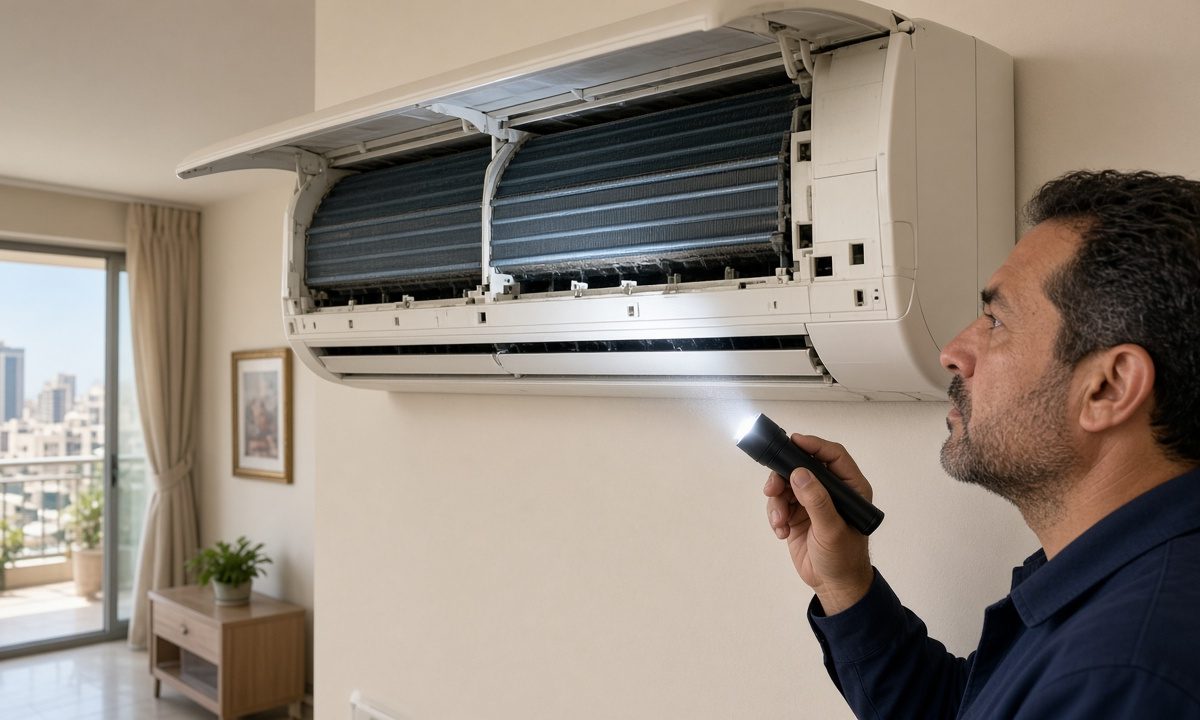
A pipe sensor is clipped to the coil or the suction pipe and then insulated, so it reads refrigerant temperature rather than room air. If it has fallen off the pipe, it hangs in the airstream, the control sees the wrong temperature, and some models then show the thermistor code or simply run badly. Reclipping and insulating it is the repair when the sensor itself still measures correctly. A room sensor sits in the return path of the indoor unit. If it is open-circuit, shorted, or drifted, the unit does not know the room and it stops or hunts.
How a thermistor is tested
These sensors are negative-temperature devices: the resistance falls as the bulb gets warmer. The plug is disconnected from the board so the board is not part of the reading. Resistance is compared with the chart for that model at the temperature of the bulb, measured with a separate thermometer on the same spot. An open circuit or a dead short is the sensor or its lead. A resistance that is plausible but wrong for the temperature is a drifted sensor. A resistance that matches the chart means the sensor is not the fault, and the connector or the board input is what remains.
That order is the whole point. The code says the circuit is unhappy. It does not say the printed circuit board is dead. Replacing the board while a pipe sensor is unplugged, or while the bulb is lying in free air, leaves the code in place and spends the board money. We fit a sensor only when the ohms and the temperature disagree, and the price of that sensor is written before it is fitted.
Communication codes on a long run
Daikin U4, on many residential splits, is a transmission fault between indoor and outdoor. LG CH 05, on many wall splits, is the communication fault on that brand. They are the same class of problem and they are not the same part. The cable, the terminal numbers, and the spare board are all brand-specific. A long pipe run in a Sharjah flat, down a riser or across a roof, is where this cable gets damaged, jointed in a wet box, or pulled in the same conduit as the power cable.
The outdoor unit then looks dead, because it never hears a valid signal, and the indoor unit shows a code that shops read as “outdoor board”. Continuity of each core, correct terminals at both ends, and a joint that is dry come before a board is condemned. Reversed signalling conductors and a break at a ceiling rose are ordinary finds. A new outdoor PCB on a broken core will not answer either. If the cable tests sound and the voltages the manual expects are missing at a healthy sensor, then a board is a fair conversation, still with the model in the photo and the price written first.
Codes that really do point at power electronics
Some codes are not sensors. An inverter power-module fault, a DC peak trip, or a compressor that will not report position is closer to the outdoor drive or the compressor. Those codes still do not get a board ordered from memory. The supply, the reactor, the connectors, and the compressor windings are measured so a loose plug is not billed as a module. Thermistor and communication codes are sensors and wire until the meter says otherwise. Mixing the two groups is how every stoppage becomes a PCB.
What we replace, and what we leave
A sensor that fails the chart is replaced with the part for that model. A sensor that passes is left, and the connector is reseated. A communication cable that is broken or jointed badly is repaired or rerun. A board is ordered only after those tests, against the sticker, and it is not fitted until you have agreed the written price. The compressor is not changed because a room sensor was open. split AC services in Sharjah follow that sequence on Daikin, LG, and the other inverters we see, including Samsung, Gree, and Midea, each with its own list.
- Photograph the code and both model plates before the display is cleared.
- Identify whether that code, on that brand, is a thermistor, a cable, or a power stage.
- Measure the sensor off the board, against the chart, at a known temperature.
- Prove the interconnect on a long run before an outdoor board is discussed.
- Write the part price on site, and fit nothing until it is agreed.
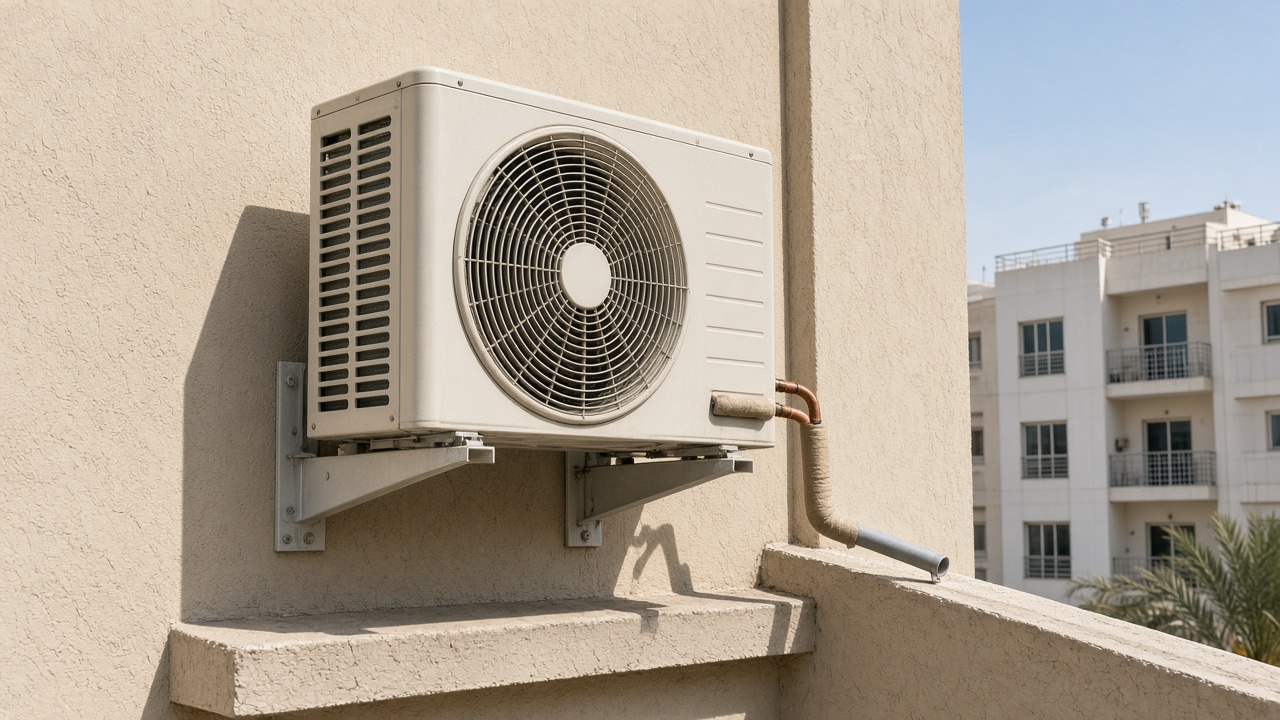
Why the brands cannot share a drawer
A drawer of “inverter sensors” without model numbers will fit almost nothing correctly. Daikin C4 and LG CH 02 can both be described as pipe sensors in loose speech, and they are still different parts. The same is true of room sensors. We match the spare to the sticker at the workshop in Industrial Area 6, or we collect it against that sticker. Guessing a plug because it looks close risks a board input as well as a wasted sensor. If the code returns after a correct sensor is fitted and proved, the note says so, and the board conversation starts from that evidence rather than from the first glance.
Clearing the code by pulling power, without the test, is not a repair. Many units will run until the sensor is read again and then stop in the same way. If the flat is without cooling at night and the code is on the display, emergency AC repair in Sharjah is the right call only when people cannot wait. Bring the photo of the code. A night visit can make the unit safe and identify the sensor. It does not become a reason to fit an unknown board in the dark.
What to send
Send the code, the indoor sticker, and the outdoor sticker. Say how long the pipe run is if you know, and whether the unit stops at once or after it has been cooling. Call +971 50 257 5128. The work is Sharjah only. You get the price in writing on site before a sensor, a cable, or a board is fitted, and a code that names a thermistor is not sold to you as a dead board.
If a part has actually failed, that visit is AC repair in Sharjah.
A sensor that is reading the wrong air is AC thermostat repair in Sharjah.