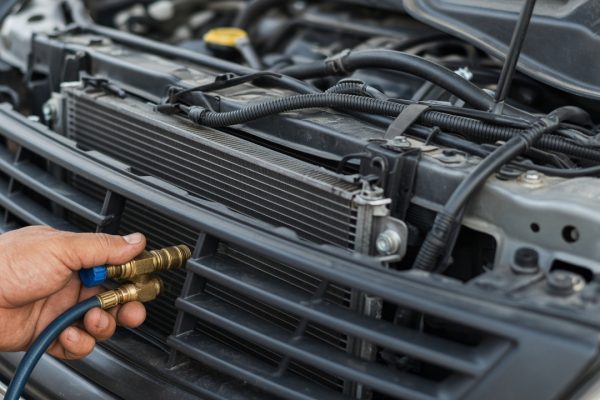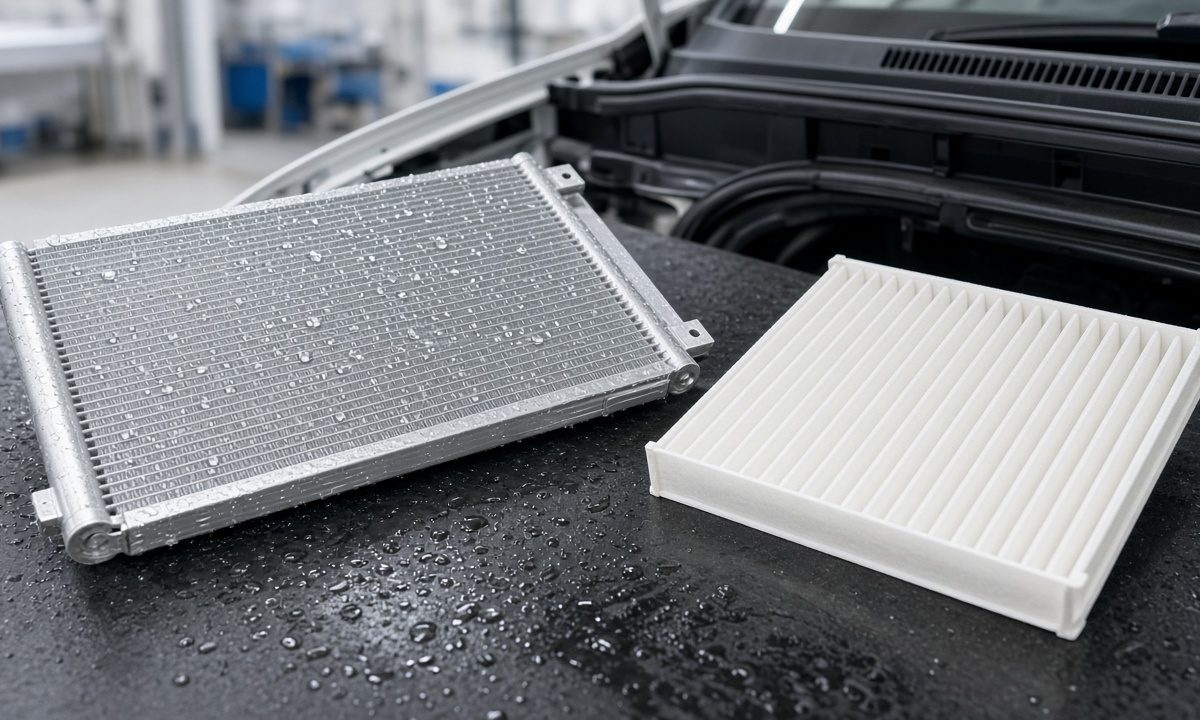
A musty smell when the fan starts is almost always water, dust, and a filter that has stayed wet. It is not the smell of refrigerant. The gas in a car air conditioner is effectively odorless, so a cabin that smells of wet cloth, leaves, or a closed drain is not evidence of a leak. Air-Con.ae, the marketing name of Burj Al Qasimiah AC units fix cont., replaces the cabin filter and dries the box before anyone talks about dye. Dye is for a joint that is actually losing oil. The workshop is in Industrial Area 6, opposite the cricket stadium, where the filter, the cowl, and the evaporator drain can be dealt with together.
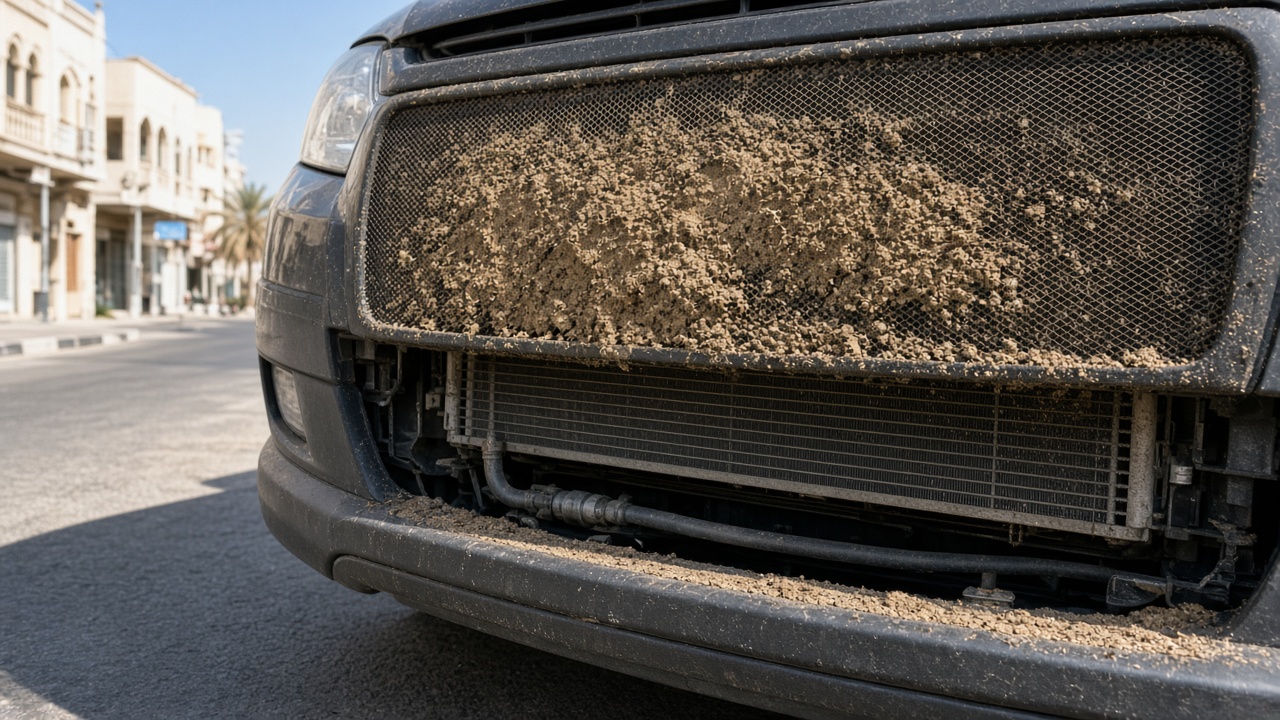
Sharjah gives this fault two ingredients. Fine dust loads the filter until it holds moisture like a sponge. Leaves, seed pods, and more sand collect in the cowl under the windscreen and block the drain that should have kept that area dry. The blower then pulls the smell into the cabin the moment you start the car, and it is strongest for the first minute, which is the classic pattern of a wet evaporator rather than a gas leak.
Where the water is sitting
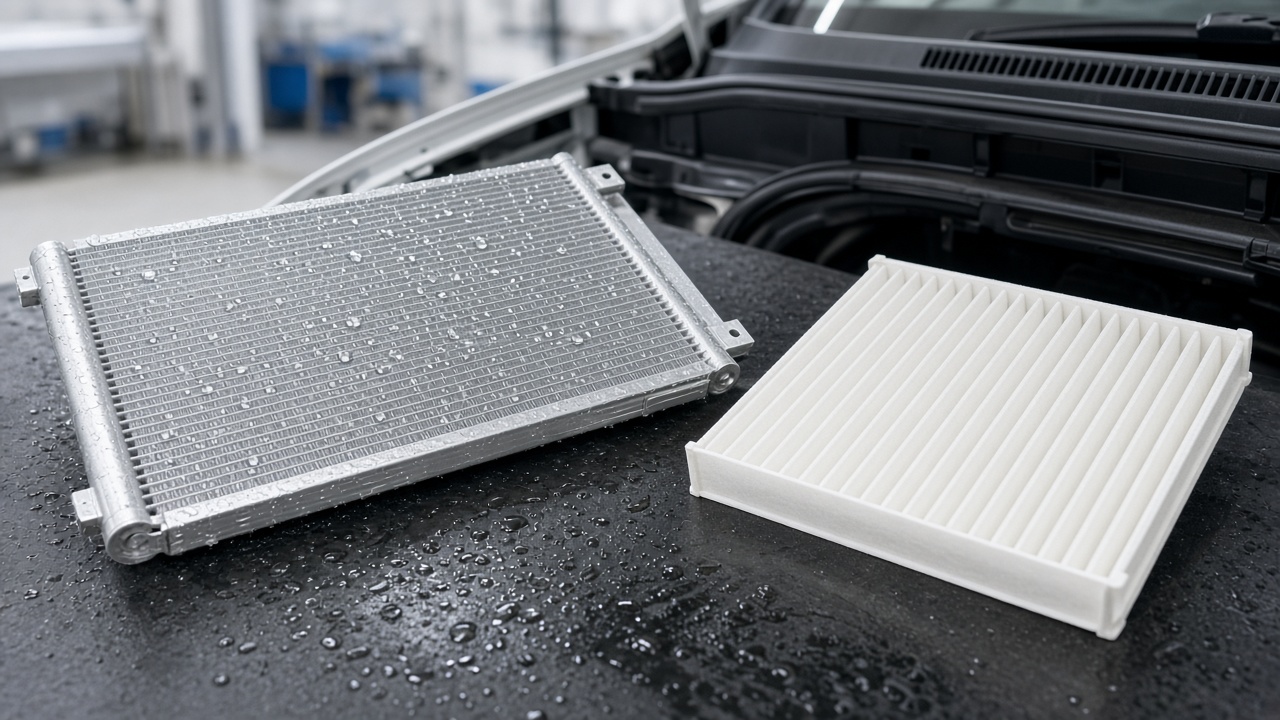
The cabin filter is usually behind the glovebox. On a car that has not had one in a long time it comes out heavy, grey, and sometimes damp enough to mark the housing. That dampness is not a mystery refrigerant. It is condensate and cowl water that the blower has been pulling across a choked element. A new filter in the same wet housing smells again within days. The housing and the evaporator face have to be dried, and the reason they were wet has to be opened.
Above the filter, the cowl under the windscreen is a tray. It should drain to the ground. When the drains plug with leaves and sand, the tray holds water and that water finds the fresh-air intake. Al Majaz and Al Khan cars parked under trees bring the leaves. Industrial Area cars bring the sand. Either one turns the intake into a damp box. We clear the cowl drains until water poured in the tray leaves under the car, not into the blower.
Mould on the evaporator
The evaporator is supposed to be wet while the system is cooling. It is not supposed to stay wet and dirty with the fan off, in a box that cannot drain. Dust stuck to that wet coil grows a musty film. Each start blows a pulse of that air at the driver. We clean what can be reached from the filter opening and from the drain side, we make sure the evaporator drain under the bulkhead is open, and we run the fan to dry the box. A blocked evaporator drain also wets the passenger carpet. If the carpet is damp, we say so. A perfume spray in the vent hides the smell for a day and leaves the drain blocked.
Recirculation makes the smell worse once the box is contaminated, because the same air is sent across the coil again. Fresh air, after the cowl is actually clear, is how the box dries. We do not set recirculation and call the job finished because the first minute seemed milder.
What we do before dye is mentioned
The filter comes out and is not put back. The cowl drains are cleared. The evaporator drain is proved by watching water leave under the car while the system runs. The box is dried with the fan, and a new filter goes in only once the housing is not sitting in water. Then the system is run and the cabin is smelled again at the vent, not judged from a driveway conversation. If the musty pulse is gone, there is no leak to chase. Dye, a gas fill, and a new compressor were never the tools for a wet filter.
- Musty only in the first minute, filter wet, cowl full: filter, drains, dry the box. Stop there if the smell goes.
- Sweet or oily smell plus a damp carpet: still clear the drain. Look for a heater core only if the drain is open and the carpet keeps wetting with the air conditioning off.
- No smell left, and pressures are healthy: dye is not added to a system that is not leaking.
A basic filter and check is often AED 80 to AED 150. If the glovebox and the cowl both have to come apart, that extra labour is written before we continue. We do not discover a second invoice after the clips are broken. The price of a new filter is included in the figure you approve, not added because the old one happened to be dirty. In Sharjah the old one is dirty.
When an oily fitting really is a leak
Refrigerant does not announce itself as a musty cabin. A leak announces itself as oil. Compressor oil travels with the gas and leaves a wet, dusty film at the point of escape: a service port cap, a hose crimp, a condenser joint, or the compressor shaft. The film is oily under a finger, not a dry brown sand. Pressures on a system that has been leaking sit low, and the vent stays warm even after the filter is new and the box is dry. Those two facts together, oil at a fitting and a system that no longer cools, are a leak. The smell in the cabin is still not the evidence. The oil and the gauges are.
Dye belongs after that finding, or when a slow leak has to be watched because the oil film is too thin to trust. It does not belong at the start of a smell complaint. Ultraviolet dye in a system that only had a wet filter does not dry the box, and it gives the next person a green story for a fault that was never a leak. If a previous top-up already put dye in, we will use the lamp on the oily joint we can see. We will not add a second dose to “be sure” while leaves are still in the cowl.
A fitting that is oily is repaired, not tightened over a damaged seal and refilled. The joint, the vacuum, and a weighed charge are one quote. The filter and the dry-out are another, and on a car that both smells and fails to cool you may need both. You will see them as separate lines. A compressor is quoted only if it is noisy, seized, or has sent metal through the oil. An oily service port is not a compressor.
Smell that remains after the box is dry
If the musty air is gone and a different smell remains, we look again rather than reaching for dye. A hot, sweet smell with a wet carpet and an open evaporator drain can be the heater core, which is engine coolant, not refrigerant. That is a cooling-system repair, and we will say so instead of charging the air conditioner. A smell of burning with the fan on can be a blower resistor. An oily smell only when the air conditioning clutch engages, with dye or oil at a joint under the bonnet, is the leak case above. The order stays the same: dry box first, then the fitting you can see, then dye if the fitting is not already obvious.
What to say when you book
Call +971 50 257 5128 and say whether the smell is musty at start-up, whether the passenger carpet is wet, and whether the air is still cold. Cold air with a musty start is the filter and the box. Warm air with an oily joint is a leak, and we want both facts if you have them. The car comes to the workshop in Industrial Area 6, opposite the cricket stadium, so the cowl and the underside drain can be proved, not sprayed from the kerb.
Nothing is fitted before the price is written down. A gas refill after a repaired leak is typically AED 150 to AED 350 depending on the charge. A smell visit that ends at the filter should not become that refill. The work is covered on our car AC services in Sharjah page. If a previous shop added gas because of the smell, say so. We will still dry the box first, and we will only open the gauges if the cooling, the oil, or the pressures give us a reason.