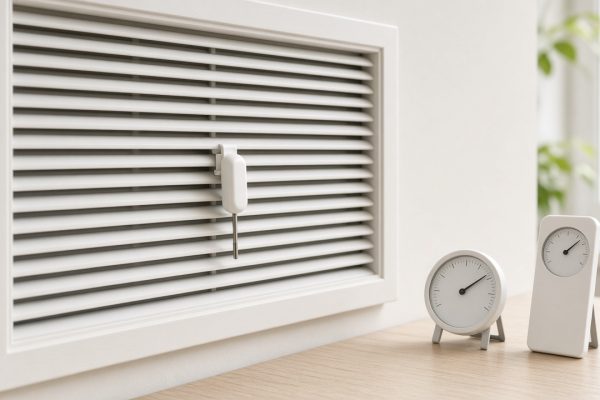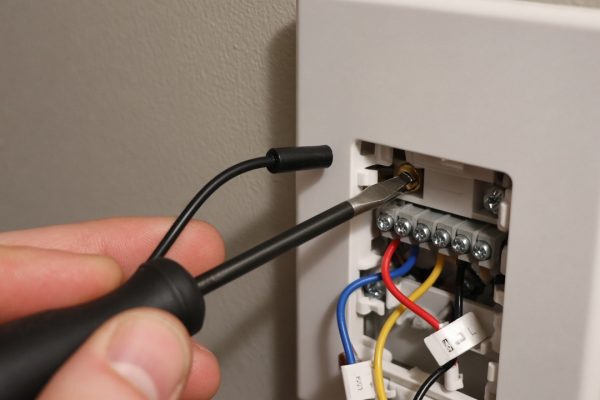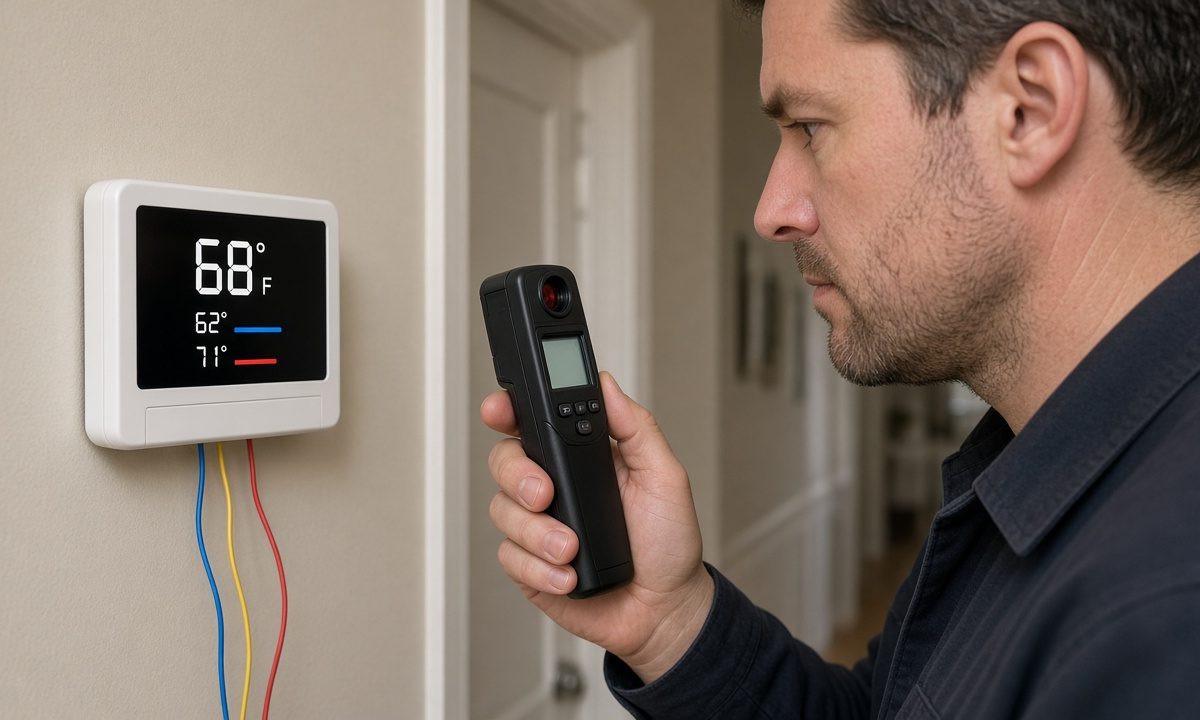
The figure 24 on a split or a wall thermostat is often the temperature you asked for, not the temperature at the sofa. When that figure stays on the display and a thermometer at chair height reads 30, the machine has usually stopped because its sensor is already satisfied. The sensor is sampling a different stream from the air you are sitting in. Air-Con.ae, the marketing name of Burj Al Qasimiah AC units fix cont., follows that mismatch on wall splits and ducted systems in Sharjah. A reseat or a new sensor is priced in writing on site before the part is fitted. A new remote does not move the sensor.
Apartments in Al Majaz and Al Nahda produce this call when the jet bounces off a bulkhead and the intake swallows it again. Villas in Muwaileh produce it when a duct probe has been pushed into a supply boot. The compressor is usually obeying a sensor that already thinks the work is finished.
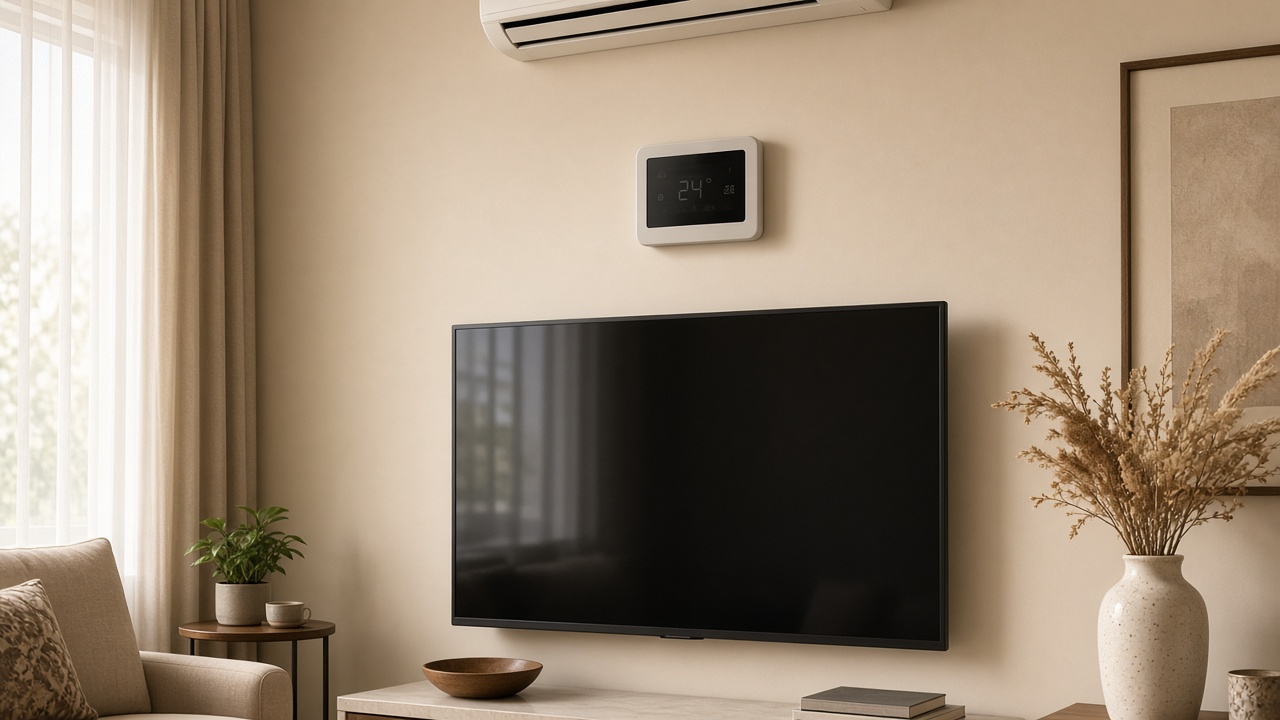
What the number on the display is
On a wall split the handset usually shows the setpoint. You choose 24. The indoor board compares that choice with a thermistor in the return path behind the coil, or with a remote bulb if one was added later. When the thermistor’s own air reaches 24, the board eases off or stops, even if the rest of the room is still climbing through the afternoon. The display has not failed. It was never a thermometer for the chairs.
Some ducted controllers do show a measured temperature. If that measured figure is 24 and a second thermometer in the same air also reads about 24, the element is honest and the place is wrong. If the thermometer beside the sensor already reads 30 while the display insists on 24, the element has drifted. Those two results are different jobs. We do not order a controller from a photograph of the handset until we know which result we are looking at.
The sensor in its own supply
Supply air from a split that is actually cooling is far colder than the room. A healthy vent in a Sharjah afternoon is often around 12 to 16 degrees once the coil is wet. That air is supposed to mix into the room. It is not the sample the controller should treat as the whole room. A bulb in the discharge, a remote sensor tied to a supply grille, or a duct probe in a boot will reach 24 in a few minutes. The unit stops, the jet collapses, and the occupied air drifts back toward 30. The sensor warms and the cycle starts again.
Painting and gypsum work cause the same fault. The sensor lead is long, and the person who closed the ceiling pushed the bulb toward the nearest hole, which was the supply. The plug is still seated. We find the bulb with the grille down or the indoor cover off.
A hot wall or the shelf above the television
The other bias is the one people create when they lift a sensor “out of the draught” and set it on the nearest solid surface. A west wall in a Sharjah flat stores heat. A television under the indoor unit adds a plume that the intake then swallows. The sensor reads hotter than the air at sitting height. On a controller that displays room temperature, the figure sits several degrees above a thermometer on the table. The unit runs long, or it never reaches the number on the screen, because it is trying to cool a pocket it cannot change.
A sensor pulled out of the supply and laid above the television has only swapped a cold error for a hot one. We do not call a move finished until the sensor’s air and the occupied air agree. A window reveal, a return that sees a hob, and the top of a wardrobe on an outside wall in Al Khan are the same sort of mistake.
Two thermometers, then a decision
One thermometer stays with the sensor. The other stays where people sit, out of the jet and out of the sun. We start the unit from a warm room and write both readings when the compressor starts, when the display claims the setpoint, and again after the machine has rested. If the sensor thermometer and the display agree, and both are well below the chair, the element is telling the truth about the wrong place. The repair is to move it. If the sensor thermometer and the display disagree once the air around the element has settled, the element is tired or it is not fully in its pocket. Moving a bad element only relocates the lie.
- Sensor and chair within about a degree, and the room really is 30: look at filter, coil, and outdoor airflow before blaming the control.
- Sensor at 24, chair at 30, display matching the sensor: move the sensing point out of the cold stream.
- Thermometer at the sensor already at 30, display still at 24: replace the element with the part that matches the board.
A unit that stops while the chair reading is still rising is obeying the sensor. A unit that keeps running while the chair is already cool is obeying a hot bias. A choked filter can hold a room at 30 as well, so the coil is still looked at when both thermometers agree.
Where the sensor goes, or what replaces it
Relocation is the job when the element is accurate and the place is wrong. On a ducted system the bulb goes into return air that has actually come from the rooms, clear of a supply leak that could wash it, and out of the roof void. On a wall split the factory sensor usually has a fixed pocket in the intake. If that pocket is honest and one corner of the room still lags, the useful change may be the deflector angle or a remote bulb on a lead, not a new handset. The lead is dressed so the next ceiling close cannot push it back into the supply.
Replacement is the job when the element has drifted. The part has to match the board. A thermistor with the wrong resistance curve will read 24 in air that is 30 for a new reason. We take the model from the indoor plate and write the sensor price before it is fitted. If the board will only accept the original part and that part has to be ordered, we say so. We do not leave a guessed resistor in the plug and call it a repair.
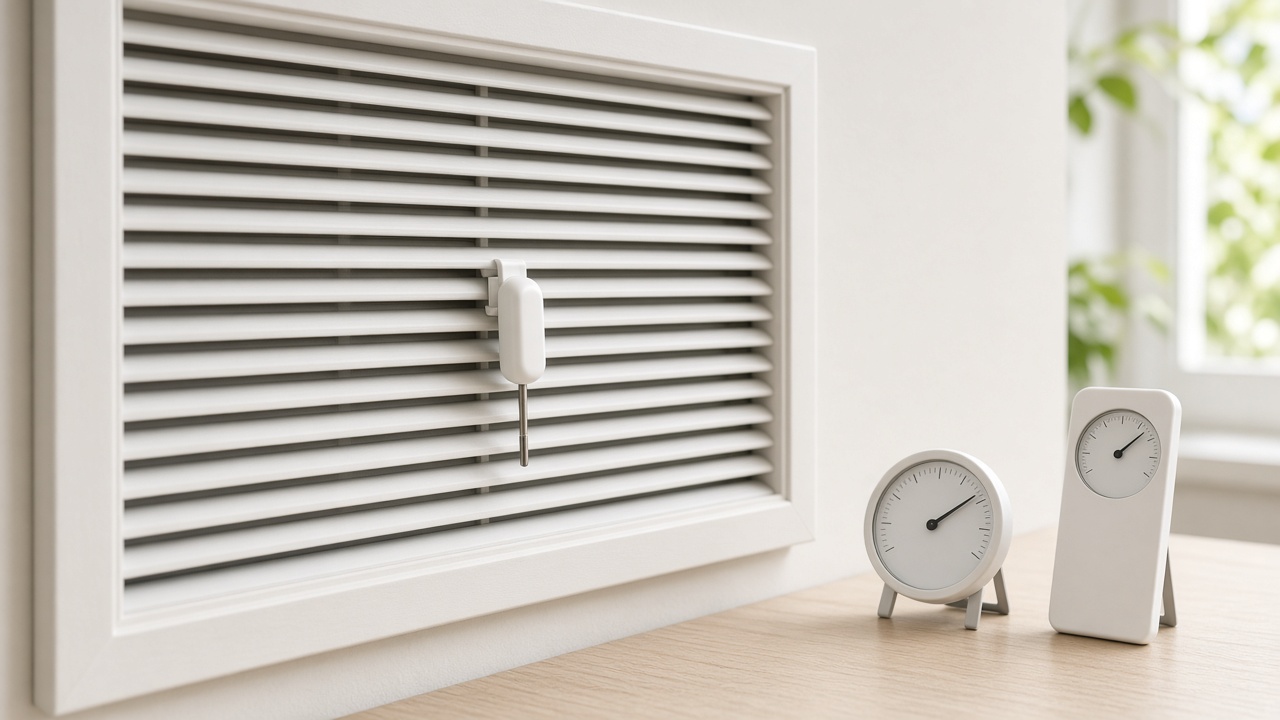
A new remote leaves the bias where it was
The remote sends mode, fan speed, and setpoint. It does not measure the sofa. A new handset pointed at the same indoor unit sends 24 to the same thermistor. If that thermistor sits in the supply, the new remote will still look correct while the room is 30. If the old remote was already changing the setpoint on the indoor display, the handset was never the fault. We replace a remote only when it will not send, or when the indoor unit does not acknowledge it, and we prove that before the old one is thrown away.
Flat batteries, a locked setpoint, and fan mode are checked in the same few minutes. They do not explain a display that tracks a supply jet. We write which of them we found so the next visit does not open with another handset.
What a finished visit looks like
The two thermometers should stay close through a full cycle, and the room should actually fall. We leave when the chair reading has moved and the unit has stopped for a reason you can see on both instruments. If a west room in Al Taawun cannot reach 24 at 3 p.m., an honest sensor will show that limit. Holding a true 26 is a finished diagnosis.
Call +971 50 257 5128 with the district, whether the machine is a wall split or ducted, and both thermometer readings. The workshop is in Industrial Area 6, opposite the cricket stadium, and the test is still done in the room. Diagnosis is typically AED 150 to AED 250, and a sensor we carry is typically AED 150 to AED 400 including the part. The control work is on our AC thermostat repair in Sharjah page. The price is written before a sensor is fitted.
The wall unit and the outdoor ledge unit are covered as split AC services in Sharjah.
If a part has actually failed, that visit is AC repair in Sharjah.