A ceiling cassette that stops in the middle of trading leaves a Sharjah shop warm while people are still at the counter. The grille looks the same. The fault is usually in the condensate pump, the float that protects it, or a breaker in the distribution board. Those are three different repairs, and none of them should be guessed from the sales floor. Air-Con.ae is the marketing name of Burj Al Qasimiah AC units fix cont. The workshop is opposite the cricket stadium in Industrial Area 6. Work is in Sharjah, and the price is written on site before a pump or a board is fitted.
What the cassette is doing when it “just stops”
A four-way cassette hides the coil, the fan, and a small drain reservoir above the grille. Condensate is pumped up to a point in the ceiling that a gravity hose cannot reach. A float in that reservoir is the safety. When the reservoir is full, the float opens and the cassette is not allowed to keep cooling, because the next litre would come through the grille onto the floor. From the shop it looks as if the unit has died. From the reservoir it looks as if the safety has worked.
Staff often cycle the breaker or the controller. The unit may start, run for a short time, and stop again once the float lifts. That pattern is a pump that is not emptying, not a compressor that has suddenly become small. A breaker that trips at once and will not stay in is a different pattern. It is an electrical fault, and resetting it through the afternoon heats the wire. The two patterns need different temporary steps, and they need different parts.
A pump that has failed
The pump motor can open-circuit, or the impeller can seize with the slime that grows in a warm reservoir. A faint buzz and no water at the outlet is an impeller or a blocked discharge. Silence, with the float up and the reservoir full, is often a dead motor. Either way the reservoir fills, the float opens, and cooling stops. Fitting a board because the display went blank, or because an error lamp came on, does not empty the reservoir.
We drop the grille, look at the reservoir, and run the pump into a hose we can see. Water must move. A pump that moves water, with a hose that then rises into a blocked main, will fail again. The hose is part of the test. A new pump on a blocked riser is a second pump next week. The model of the pump is read on its label. Cassette pumps are not one shape. The price of the correct one is written before it is fitted, including during trading, when the pressure to “just put something in” is highest.
A float that is open
The float is supposed to open when the water is high. That is not a fault. It is the float doing what it was fitted for. The fault is whatever filled the reservoir: the pump, the hose, or a cassette installed so the pump outlet has no continuous route away. A float that stays open after the reservoir has been emptied and wiped is a failed switch, and that switch is the part. It is cheaper than a board and it is still not bridged.
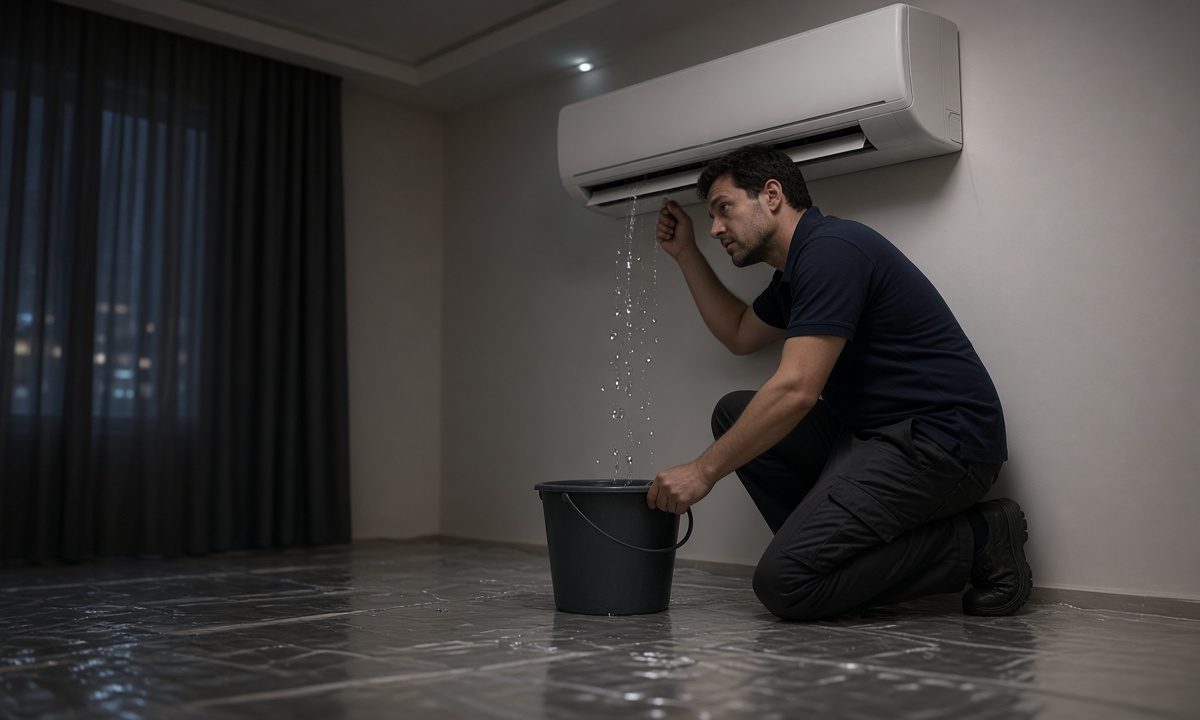
Bridging the float, or tying it down so the shop can finish the day, lets the reservoir overflow through the grille or into the ceiling void. Goods, the floor, and the shop below take the water. We will not do that to keep a till running. The safe state during the wait is the cassette off, not the cassette forced on. emergency AC repair in Sharjah on a trading floor still includes that refusal.
A tripped breaker in the distribution board
The third common stop is not in the ceiling at all. The breaker feeding that cassette is off, tripped by a shorted pump, a shorted fan, or a loose connection that has started to heat. The controller is dark. People replace batteries in a remote that was never the supply. At the board, one breaker sitting between its neighbours is the clue. If it trips again the moment it is closed, leave it off. Holding it in is how a pump fault becomes a burnt conductor.
We identify the breaker, then we separate a shorted pump from a shorted fan or a damaged cable. A pump that has gone to earth will trip the breaker and also leave the reservoir full, so you can see both signs at once. The pump is still the part only after the trip is explained. A breaker that tripped because the terminal was loose is a connection repair, not a new pump. Opening the board on a wet cassette, with water in the void above the panel, waits until the water is stopped and the board is dry.
Safe steps while the shop is open
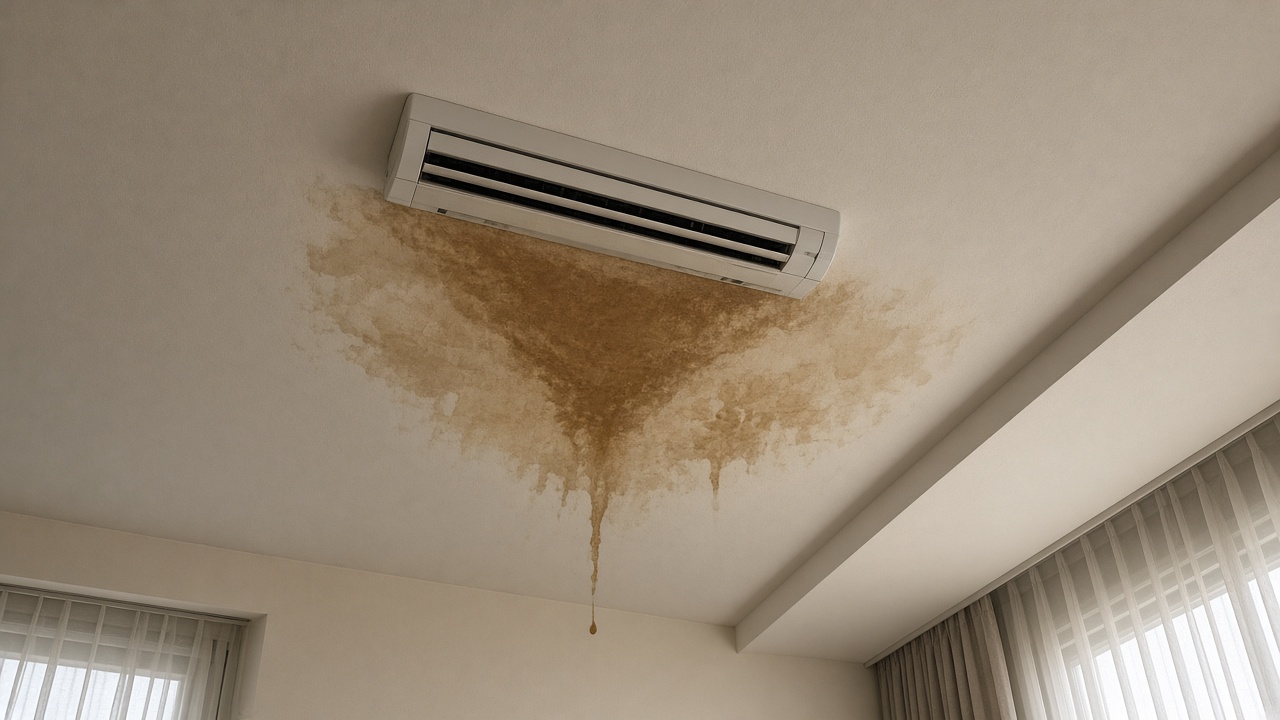
Switch the cassette off at its controller so it is not trying to start against the float. Do not bridge anything. Do not keep resetting a breaker that trips immediately or smells warm. Move stock away from a wet tile. Photograph the display, the grille, and the distribution board if you can see the tripped breaker without touching a wet panel. A temporary hose arranged by us, with a real fall into a drain and someone watching it, is a technician’s step for a short gap. It is not a float tie, and it is not left overnight as the repair.
- Controller off, so the compressor is not short-cycling on the float.
- No link across the float and no breaker held in by force.
- Stock moved off a wet patch of floor or a stained tile.
- Photos of the code, the cassette, and the breaker, sent before we arrive.
- A written price before a pump or a board is taken out of the van.
Pump, float, or board
The order is reservoir, pump, hose, float, then the board. A board is quoted only when the pump moves water, the float closes in an empty reservoir and opens when lifted, the breaker stays in, and the cassette still will not run. Inverter and fan boards on cassettes are model-specific. The sticker inside the casing is photographed before one is ordered. A board fitted because the shop was warm, with a full reservoir still above the grille, will not stay running.
Compressor faults exist and they are not the midday pattern described here. A compressor that has failed does not refill the reservoir and then stop on the float. If the electrical tests point at the outdoor unit, we say so, and that part is a separate written quote. Most trading-hour stops of this type never get that far. They get a pump or a cleared hose. The rest of the shop’s cassettes are not dismantled to pad the visit. If they share a drain riser, that riser is mentioned, because one blocked stack will trip the next float tomorrow.
Trading around the tile
We can work one grille while the shop stays open if people can be kept out from under the ladder. Water in the reservoir is lowered in a controlled way so it does not tip onto the counter when the grille comes down. If the ceiling void is full and dripping, the area under it is cleared first. You approve the pump price before it is fitted, even if the queue is at the door. A wrong pump fitted in a hurry is a second shutdown. Where the cassette is one of several on a maintenance list, the visit is noted against that list so the next AC maintenance in Sharjah round includes the hose, not only the filter.
What to say on the call
Say it is a cassette, the shop is open, and whether the controller is dark or showing a code. Say if a breaker will not stay up. Call +971 50 257 5128. The van from Industrial Area 6 carries common pumps and still may not carry yours, which is why the label matters. You get the figure on site before the pump or the board is fitted. Leave the float in circuit. A shop that finishes the day dry, with the cassette off, is in a better state than a shop that finishes with water on the floor and a bridged safety.
If a part has actually failed, that visit is AC repair in Sharjah.