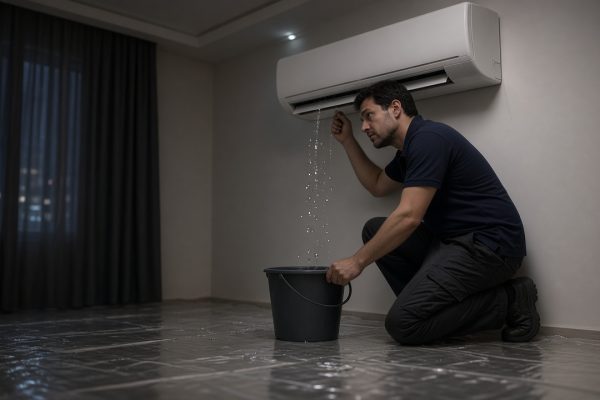
Water coming through a ceiling in Sharjah is usually an air handler or a split that is still making condensate while the drain is blocked. The first useful act is to stop that machine producing water. Mopping under a unit that is still running only clears what has already arrived. Air-Con.ae, the marketing name of Burj Al Qasimiah AC units fix cont., takes these calls across Sharjah from the workshop opposite the cricket stadium in Industrial Area 6. The price of any part is written on site before it is fitted.
The isolator, if you can reach it
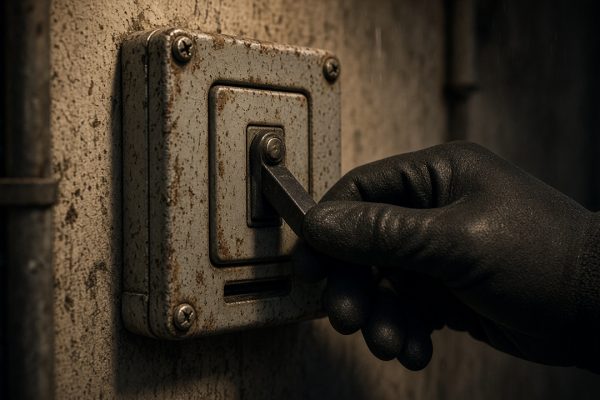
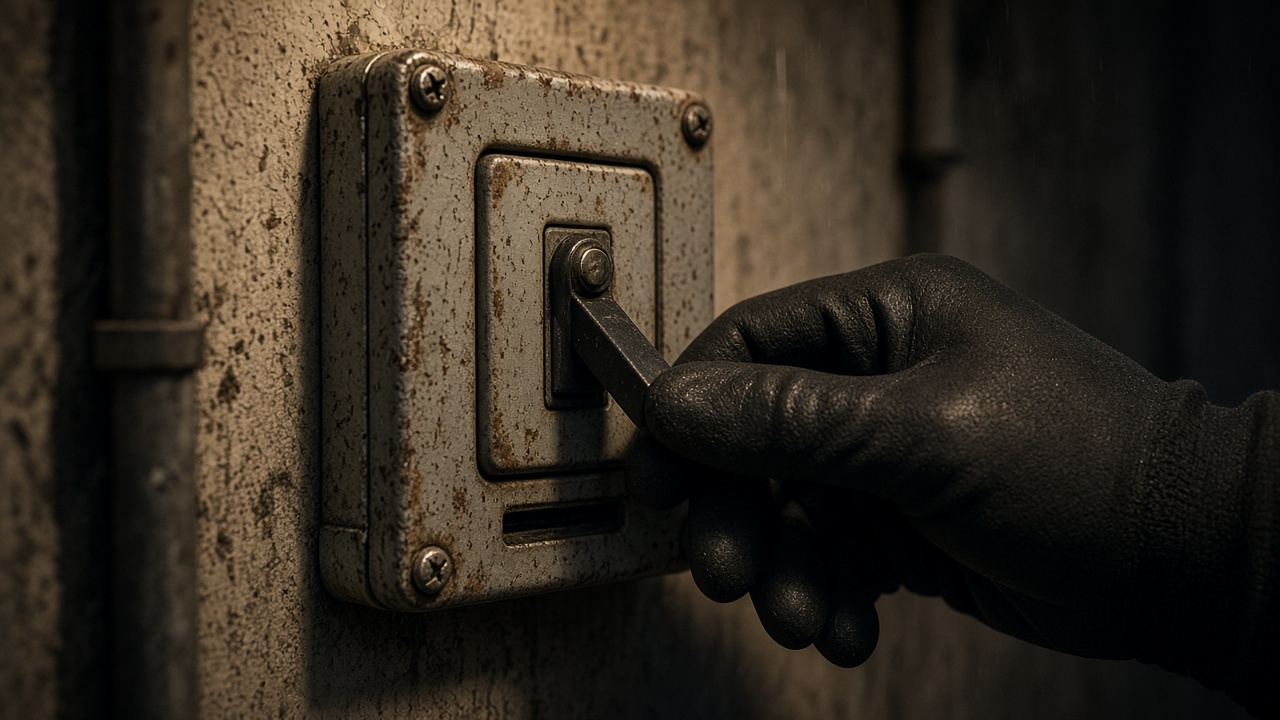
The outdoor isolator is the local switch for that condensing unit, a rotary or a switched disconnect on the wall or the ledge beside the cabinet. Opening it stops the compressor. A compressor that is stopped stops making cold coil, and a coil that is not cold stops making new condensate. The fan indoors may still move air on some systems, but the flood of new water ends. If you can reach that switch safely, and you are sure it belongs to the unit above the stain, that is the first switch to open.
Do not open the whole flat at the distribution board if this isolator is in reach. The fridge, the lights, and the other rooms do not need to go off to stop one coil. A whole-flat shutdown in a Sharjah afternoon is a second problem piled on a leak. The isolator is the smaller, correct action. Label it if you can, or remember which cabinet you switched, so the other units are not left off by mistake. If several outdoor units share a roof, the wrong switch leaves the leaking one running.
When the isolator is not the right thing to touch
If water is running into a socket, a switch, or the distribution board, do not put a hand on a wet device. Step back and open a breaker that is dry and upstream, which may then have to be the AC breaker or, if you cannot tell, the main switch for the flat. A wet board is an electrical fault as well as a leak. We would rather the flat be dark than have someone operate a switch that is dripping. Call us after you are clear of the water, and say that electrics got wet. We isolate the AC. We do not re-energise a wet board to prove a drain.
If you cannot reach the outdoor switch
Use the breaker in the distribution board that feeds that AC, not every breaker in the row. In many Sharjah flats each outdoor unit has its own breaker, often labelled badly. Switching one suspected AC breaker and seeing whether the indoor display dies is a fair test if the board is dry. Switching the main switch kills the flat and still may not tell you which unit was the source. If you truly cannot tell which breaker it is, and water is active, the main switch is acceptable until someone who can identify the circuit arrives. It is the fallback, not the first choice, whenever the outdoor isolator can be reached.
Leave the unit off. A reset “to see if it has stopped dripping” starts the compressor and starts a new batch of condensate into a drain that has already failed. The pause you want is long enough for us to clear the pan, not a minute of quiet followed by another start. Indoor buttons and remotes are not a substitute for the isolator. Some boards keep the float logic and the compressor request in a state that still produces water if outdoor power remains.
Photograph the stain and the indoor unit
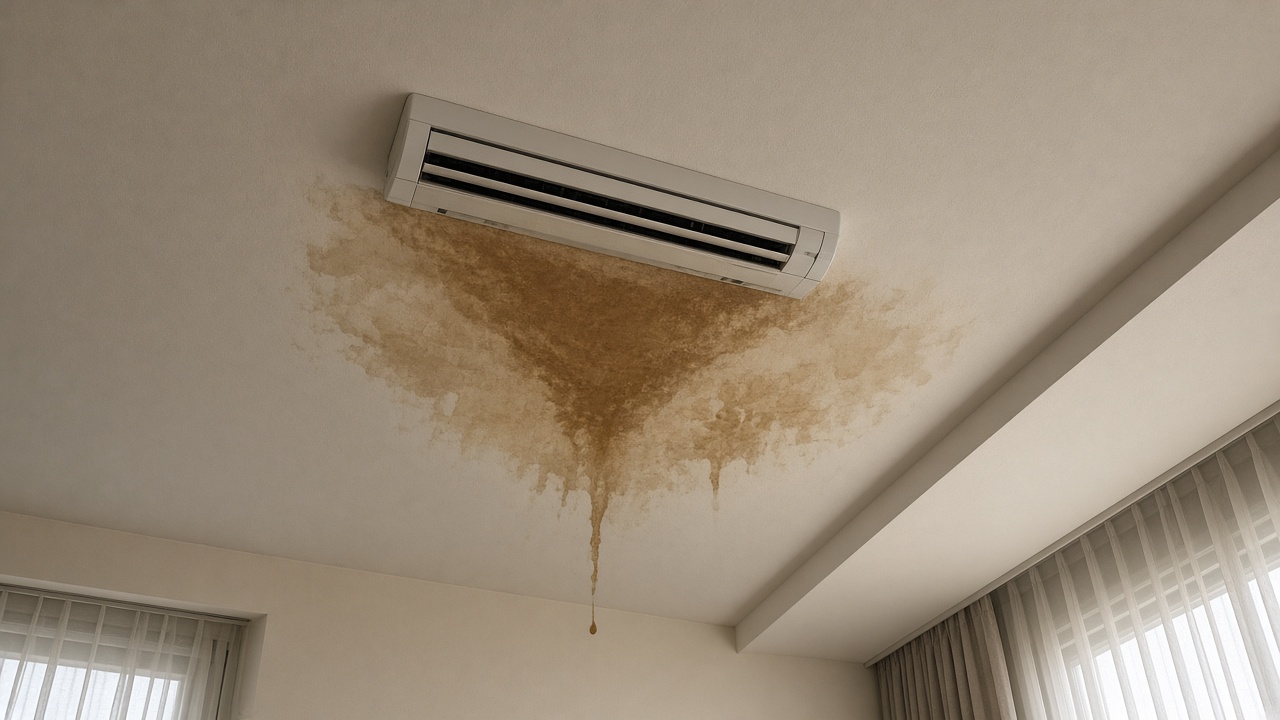
Before a mop goes on the ceiling, photograph the stain and photograph the indoor unit. The stain photo should show which room, how wide the mark is, and whether a drip is active or the mark is dry. The unit photo should show which machine, any ice on the coil or the pipe, any code on the display, and water at the casing if there is any. Those two pictures stop a long argument about which handler, in a house with more than one, fed the ceiling.
Mopping first smears the edge of the stain, soaks the gypsum further, and removes the only map of where the water arrived. It does not stop the production. If a bucket is catching a drip, leave the bucket and the photo. A bucket is not a repair, and it is also not a reason to keep the unit running. On a emergency AC repair in Sharjah those photos tell us whether to bring drain rods, a pump, or a handler trap kit from Industrial Area 6.
Why the flat below gets a second leak
Water that has overflowed a pan does not all stay in your ceiling. It finds the slab joint, a conduit, a pipe sleeve, or a crack, and it travels. While the unit keeps running, new condensate keeps entering that path. The flat below then sees a leak that was not there an hour ago. Mopping your ceiling collects water that has already come through the paint. It does not collect the water still leaving the pan and still tracking through the structure. Their ceiling is a second outlet of the same overflow, fed by a machine you have not stopped.
Stopping the compressor stops the new supply. Water already in the slab can still drip for a while. That is residual, and it slows. Water that keeps the downstairs stain growing, at the same rate, means the unit is still condensing. People downstairs are right to be angry if the machine upstairs is left on while both flats mop. One isolator, opened, is the thing that protects both ceilings. Tell the neighbour you have switched that unit off, and do not switch it back to “test” before the drain is cleared.
- Outdoor isolator for the unit over the stain, if you can reach it and the board is dry.
- The single AC breaker if the isolator is out of reach, not the whole flat as a first move.
- Hands off any switch that is itself wet. Use a dry upstream breaker and stay clear.
- Photos of the stain and of the indoor unit before the mop.
- The unit left off so the flat below is not fed a new stream.
What we do when we arrive
We confirm the right unit is dead, empty the pan, and clear the drain. A handler above gypsum gets the trap checked, because a draw-through pan under blower suction will not empty through a dry or shallow trap. A wall split gets the hose checked for a rise or a kink. Ice, if the coil was frozen, is melted only into a pan that can take it. We pour a measured amount and watch the outlet. The unit is not returned to service on a pour that comes back into the pan.
The ceiling board is not replastered by us. Stopping the next litre is the AC work. A pump, a remade trap, or a length of hose with proper fall is quoted in writing before it is fitted. If the downstairs flat is reachable, the active drip there should have slowed once our unit is off. If it has not, there is another source, and we say so rather than selling a pump for a pipe that is not ours. Gas is not the cause of a pan overflow. Low charge does not pour water through a ceiling by itself. A blocked drain does.
After the pour holds
Power goes back only when the pour has left by the outlet and the pan stays level. A wet isolator or a wet indoor board stays off even if the drain is clear. Those are dried and tested on a follow-up, not energised because the pan looks empty. The photos you took are the record of which ceiling and which unit. Keep them with the invoice. A later stain in the same place is compared with that record instead of being treated as a new mystery. Regular clearing of a drain that has already overflowed once belongs on a AC maintenance in Sharjah visit, not on another night of mopping.
Who to call
Call +971 50 257 5128, say which district of Sharjah, and say the ceiling is dripping. If you have already opened the isolator, say so. Send the two photos. Parts that are not on the van are brought from the workshop in Industrial Area 6, and you see the price before they are fitted. Leave the unit off until that pour has been witnessed. The flat below stays drier because the coil is not still working against a blocked drain.
If a part has actually failed, that visit is AC repair in Sharjah.