A white filter does not mean the indoor coil is clean. The mesh stops hair, lint, and the coarse grit you can see on the plastic. The greasy grey felt that chokes a Sharjah split sits on the aluminium fins behind that mesh, where the metal is wet. People rinse the filter in the sink, slide it back, and the louvre still feels soft. By the next hot afternoon the larger copper line is sweating ice. That sequence is an airflow fault. It is not proof the refrigerant has been used up.
The marketing name on the booking is Air-Con.ae. The company is Burj Al Qasimiah AC units fix cont., working only in Sharjah from the Industrial Area 6 workshop opposite the cricket stadium. The same felt shows up in Al Nahda bedrooms where the filter is washed every Friday, in Al Majaz flats that run all night with the windows shut, and in small offices near the industrial streets where the dust is fine enough to pass a tired mesh. AC cleaning in Sharjah on this fault means the coil face and the blower, not another rinse of the plastic frame.
What sticks to a wet fin
The felt you can peel
The evaporator fin is colder than the room. Moisture in the air condenses on it, and any dust small enough to pass the filter lands on a wet surface and stays. Over weeks it mats into a sheet you can lift with a fingernail. The sheet bridges the gaps the air is supposed to use. The filter in front of it can be spotless because it was washed yesterday. We take the filter out and look at the fin face with a torch before anyone talks about gas. If the fins are a uniform grey and the torch does not glint off bare metal, the coil is the restriction.
Why the line ices while the charge is still there
Less air across the coil means less heat reaching the refrigerant. The evaporating temperature falls. Once the fin surface is below freezing, condensate turns to ice instead of running to the pan. Ice then blocks still more of the fin, so the airflow collapses further and the frost creeps out onto the insulated suction line. The compressor is running the whole time. The system can be fully charged and still do this. Adding refrigerant on top of a felt-covered coil does not open the fins. When the ice later melts, the extra gas is still in the pipes and the head pressure on a hot roof is higher than the machine was built for.
A rinse that packs the dirt in
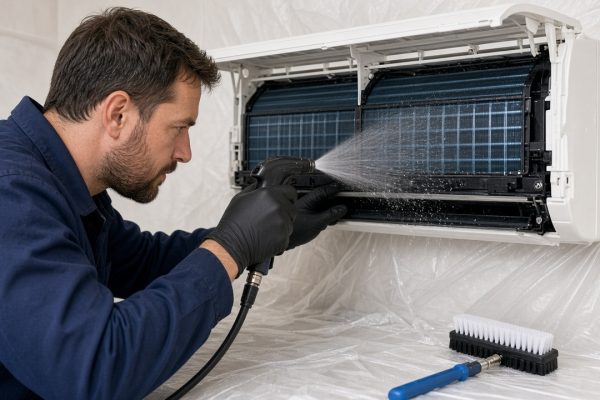
The felt sits on the inlet face, the side the room air hits. A hard rinse from the room side drives that mat into the fin channels. From the blower side you often cannot see it, so the coil looks improved and the air stays weak. The next wash hits the same face and packs the plug tighter. Water aimed at the motor or the board becomes a second fault: a dead fan or a board that will not power. High pressure also folds the fins flat. Folded fins are their own restriction, and they need a fin comb, not another blast.
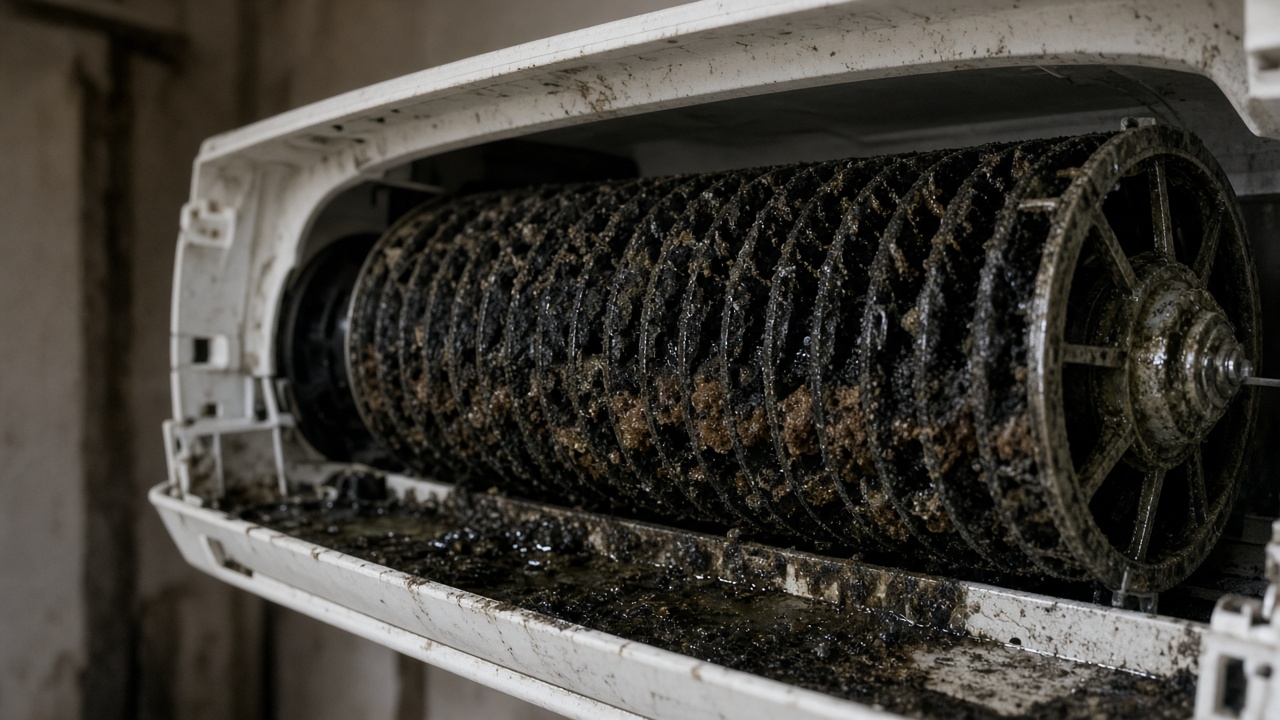
What a proper coil wash does
The wall and floor are covered and the power is off at the isolator. The filter is out. A foaming cleaner made for indoor evaporators goes on the inlet face so the foam grows back out of the fins and carries the dirt down into the drain pan. It is not an acid cleaner meant for a black outdoor condenser, and it is not a degreaser we would use on a kitchen unit. Those are different chemicals and different prices. The board and the fan motor stay shielded. Where the casing allows, we see the water leave by the drain, which is cleared first so the wash does not overflow onto the wall. Dirt is supposed to exit with that water. It is not supposed to travel deeper into the fin pack toward the wheel.
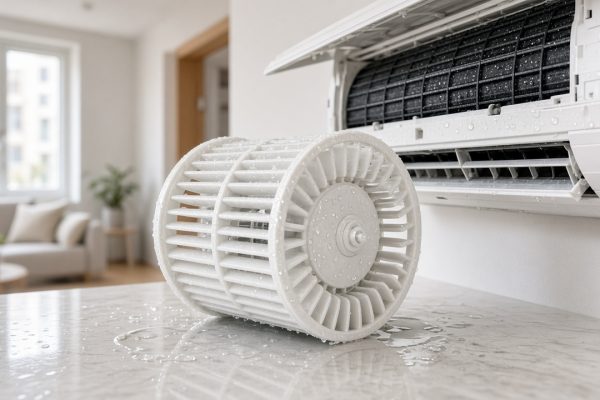
Bent fins are combed after the foam has lifted the loose felt, not before, or the comb just smears the mat. The blower barrel is inspected at the same time. A coil wash in front of a bridged wheel leaves the airflow short, and the line ices again within a day. The wheel is cleaned in place if the blades are only filmed. It comes out if the channels are solid. That judgement is made while the unit is open, and any part, such as a new wheel or a pump, is written on site before it is fitted.
- Filter mesh stops the coarse dust. The wet fins catch the fine dust.
- Foam has to carry dirt out to the pan, not drive it deeper into the pack.
- The drain is open before wash water is introduced.
- The board and the motor stay dry.
- A bridged blower is cleaned in the same visit or the ice returns.
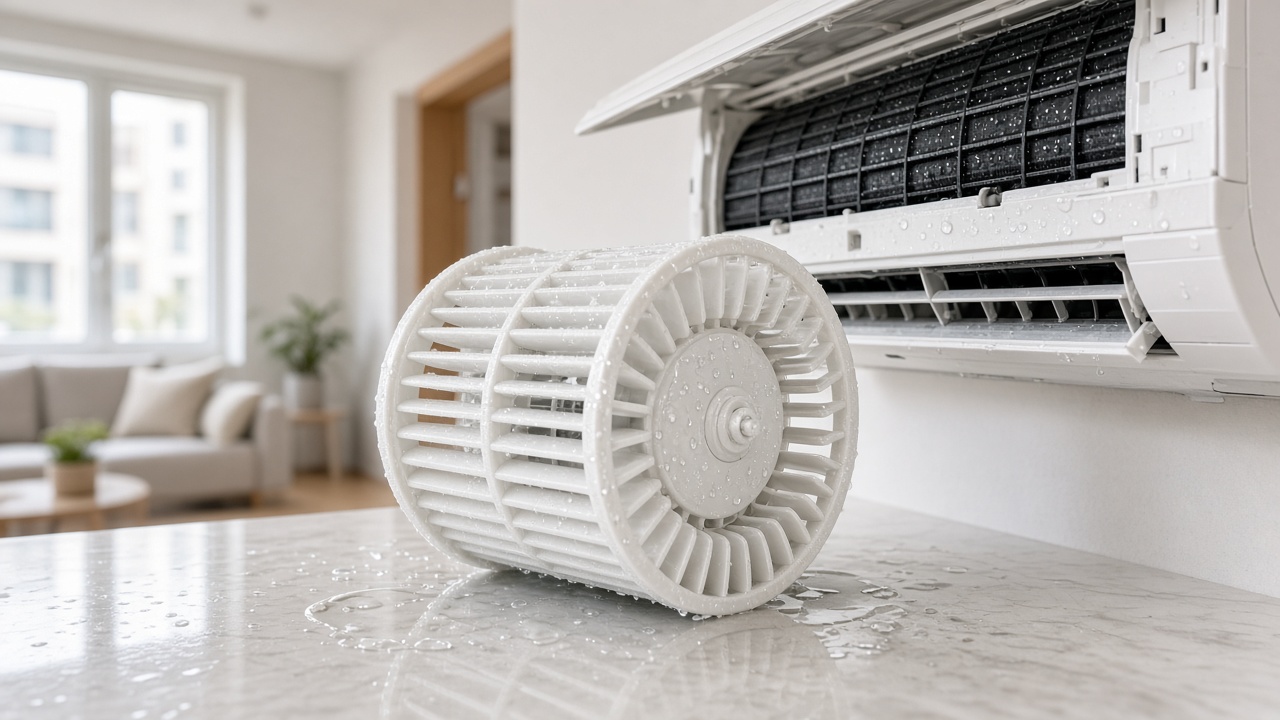
Fins, combs, and the outdoor coil
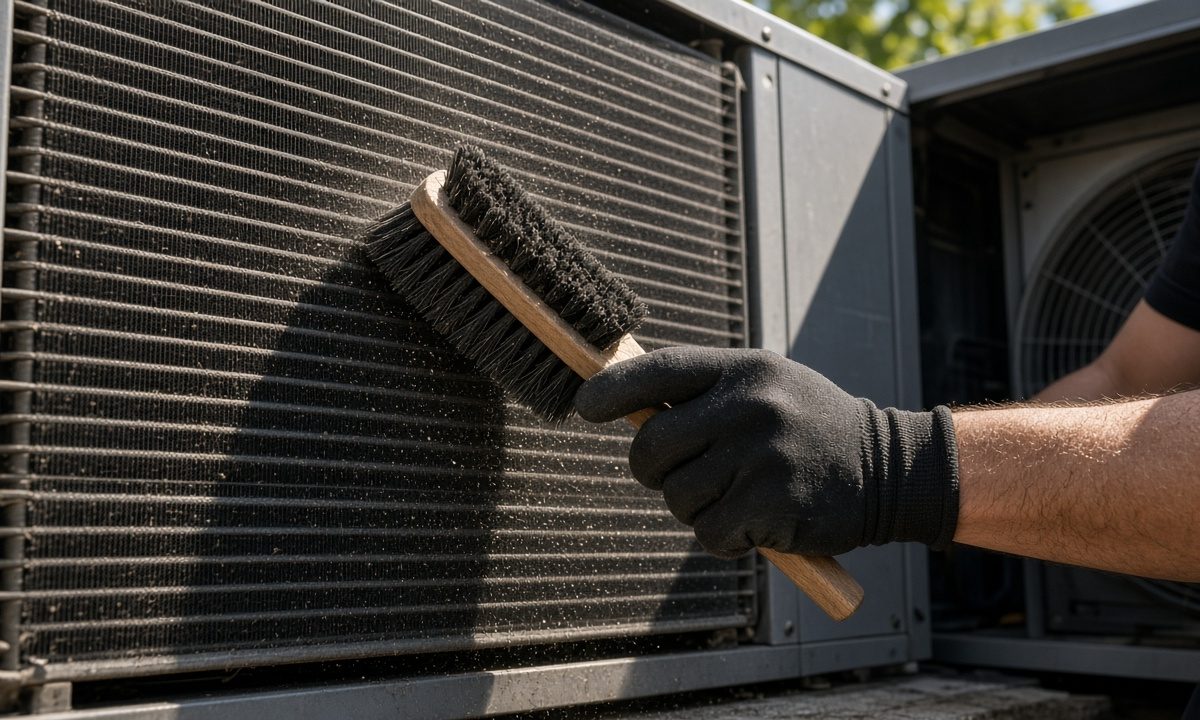
Indoor fins sit close together. A fin comb with the wrong tooth spacing bends the neighbouring fin and closes the gap the wash just opened. We match the comb to that coil. Fins flattened by an earlier hard rinse stay flat until they are lifted, and they restrict air even after the felt is gone. The outdoor condenser is washed differently, and only when it is actually packed. Street dust sits on the face that sees the road, and the water is driven from the fan side outward so the grit leaves the fin pack instead of being driven deeper into it. That wash uses a cleaner suited to a dry, dusty condenser. It is not the bedroom evaporator foam, and the two bottles are not swapped to save a trip back to the van.
A shop coil near Industrial Area 6 often carries an oily film from a kitchen exhaust or from traffic. Ordinary evaporator foam beads on that oil and runs off into the pan without lifting it. The degreaser for an oily coil is a different chemical, with more protection of the surrounding area and more time, so it is priced as its own line. The figure is written down before that chemical is opened. A bedroom split in Al Nahda does not get the kitchen chemical, and a cafeteria split does not get a quick household rinse and a promise that the oil will leave on its own.
After the fins are metal again
The unit is run only once the ice is gone. Fan-only comes first if the coil is still frozen, because starting the compressor against a block of ice sends liquid toward it. When the fins are clear and the air at the louvre is strong, the large copper line should sweat, not grow a sleeve of ice. Supply air should feel distinctly colder than the air entering the unit at the same fan speed. We write both temperatures down. If the line still ices with a clean coil, a clean wheel, and strong air, the charge may actually be low, and the next step is a leak check rather than a second wash. If the line only sweats and the room starts to come down, the felt was the whole fault.
Where this gets mistaken for gas
In Al Majaz the coil stays wet for long hours because the air holds more moisture, so the felt binds faster than in a drier room. In Al Nahda the filter is often washed on a schedule while the coil has not been opened for a year. Near Industrial Area 6 the dust is finer and oilier, and a household rinse beads on it instead of lifting it. A closed apartment makes the same felt with the windows shut and the split on from afternoon until morning. None of those rooms need a cylinder first. They need the fin face opened so air can carry heat again. Call +971 50 257 5128 and say whether the line is iced, whether the filter was just washed, and which district the flat is in. The price of any extra part is on the page before it is fitted. Sharjah only.
How to tell the coil was the restriction
After the fins are open, the indoor fan should move a hard stream at the same speed that felt weak an hour earlier. Hold a strip of paper at the louvre before and after if you want a simple check. The paper that barely lifted should stand out. The larger copper line should sweat along its insulation, not grow ice, once the compressor has run for ten minutes with the door of the room shut. If ice returns on a clean coil and a clean wheel, stop and treat it as a charge problem.
Keeping the same fault from returning is AC maintenance in Sharjah.