A pre-summer service that only rinses the filter leaves the machine in the state that fails in May. The filter is the screen you can see. The evaporator fins, the blower wheel, the drain, the capacitor, and the isolator terminals are where a Sharjah summer actually breaks the unit. Air-Con.ae, the marketing name of Burj Al Qasimiah AC units fix cont., writes those checks down. A visit with no readings is a wipe. Any part the readings justify is priced on site before it is fitted.
What a filter-only visit misses
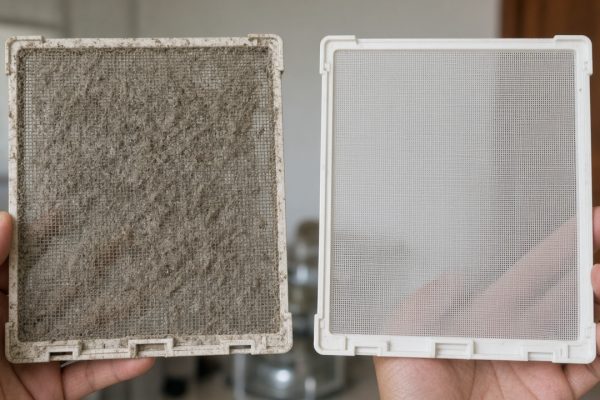
The filter stops the coarse dust. Fine dust passes it, sticks to a wet evaporator, and fills the gaps the air is supposed to use. The blower wheel picks up the same film until the blades are paddles of dirt and the motor is moving less air than the coil was built for. From the room the symptom is weak cooling, then a coil that ices, then water on the wall when the ice melts. None of that is visible with the filter in your hand and the casing still closed.
Al Nahda and Al Majaz flats that “had a service” in March and are warm by June are usually this. The sticker is on the side panel. The wheel was never seen. Industrial Area units are worse because the dust is finer and sometimes oily, and a washed filter is dirty again in weeks. The pre-summer visit has to assume the coil and the wheel need a look, not a promise that the filter was enough.
The checks that belong on the visit
Coil and blower
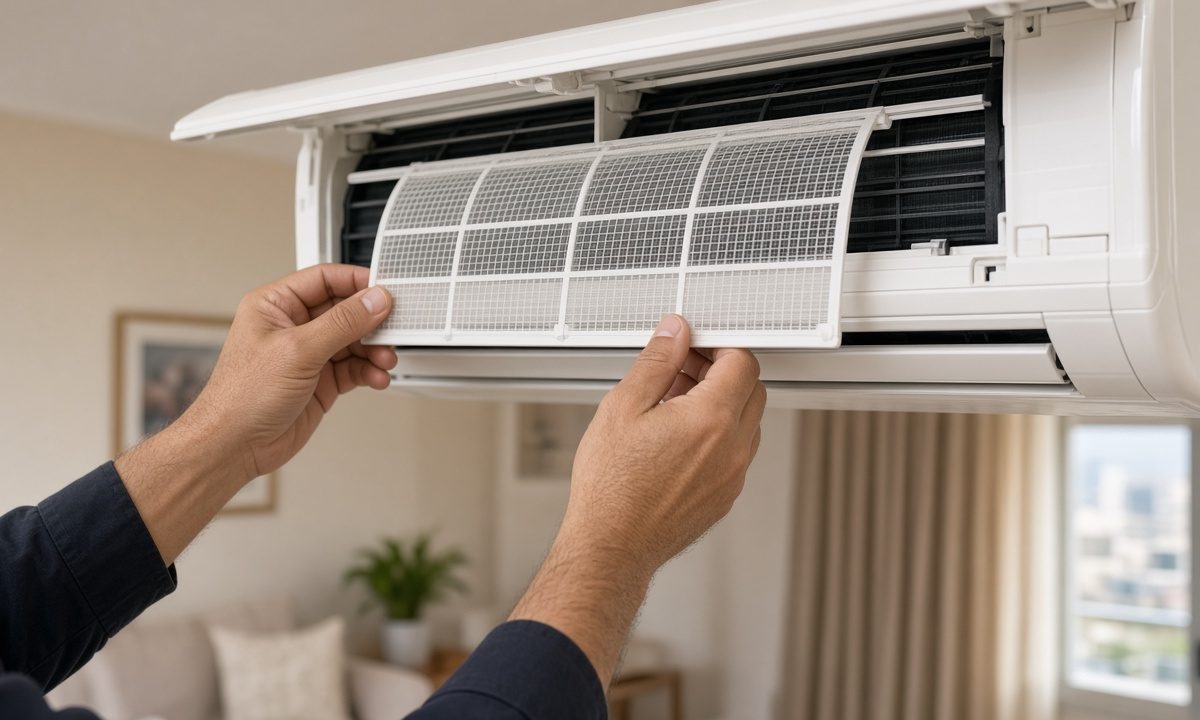
Power is isolated before the casing is opened. The evaporator is inspected with the filter out. If the fins are matted, they are washed so the dirt leaves downward into a covered drain, not sideways into the motor or onto the wall. A coil that still will not pass air after a wash is photographed. Painting over bent fins with more chemical does not open them. The blower wheel is turned by hand. If the blades are coated, the wheel is cleaned until the metal shows. A new filter on a loaded wheel is the filter-only visit again, just with a cleaner screen.
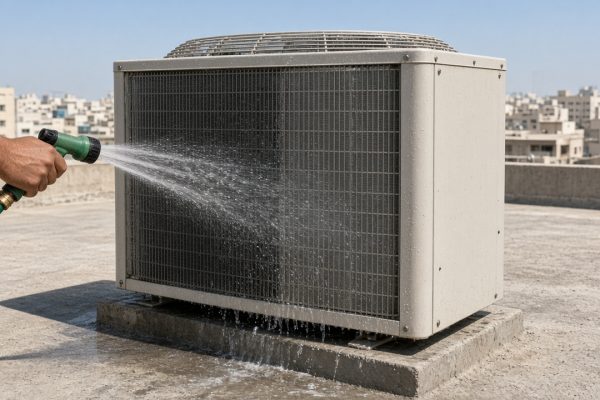
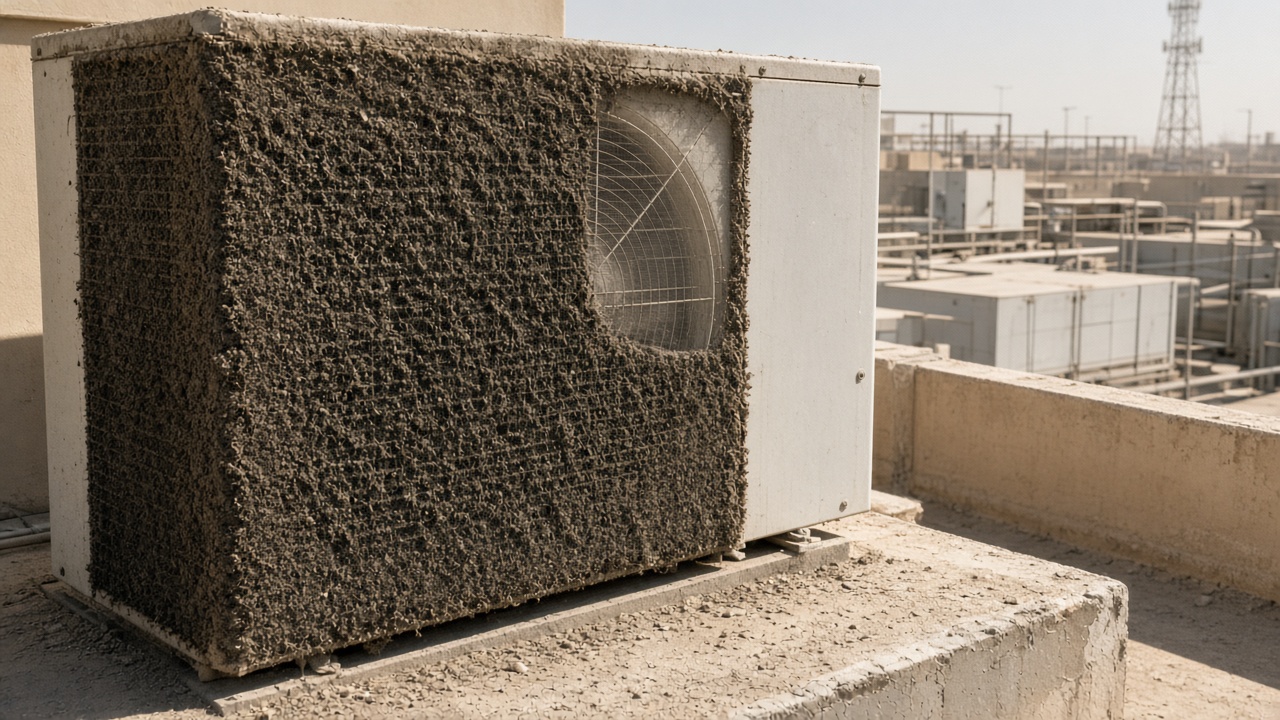
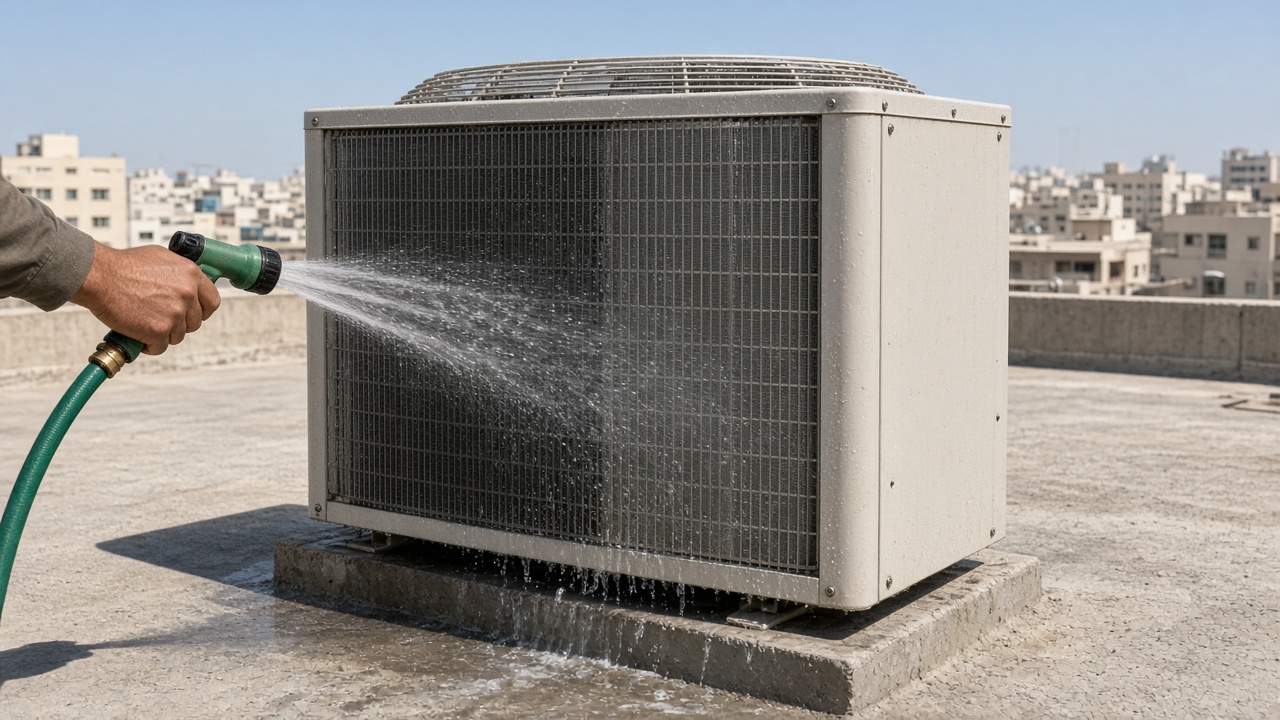
The outdoor coil is the other half. On a Muwaileh roof or an Al Qasimia ledge it has been collecting dust since the last cool month. We wash it so air can cross the fins, and we check that the fan is not blowing the unit’s own hot air straight back into the coil. A clean indoor coil behind a blinded outdoor coil still loses the afternoon. University City plant decks and Aljada balcony recesses are tight enough that this recirculation matters as much as the dirt.
Drain
The pan is opened, not sniffed from the filter slot. Slime at the spigot is removed. The hose is checked for a belly and for a kink behind the casing, which is common after the unit was pushed back to the wall. A measured pour goes into the pan and has to arrive at the outlet without the pan rising. A pre-summer drain that is only “looked at” from the ledge spout is how Al Nahda walls get stained in the first humid week. The pour is the record that the line was open on that day.
Capacitor reading
On a fixed-speed O General or Gree unit the run capacitor is measured in microfarads and written next to the rating on the case. The capacitor is discharged and the power is off. A bulged case is failed even if the number is still close. A number well below the rating is a part we quote, because that is the component that starts the “fan runs, air is warm” calls once the roof is hot. A Daikin or LG inverter may not use that same capacitor. We do not invent one. We read any fault history the controller will show, and we still look at the outdoor electrical terminals.
Amp draw
With the unit running and the coils in the state we are leaving them, a clamp meter reads the compressor current. That number is compared with the nameplate, not with a guess. High amps on a clean coil and a good capacitor are a reason to stop and talk, not a reason to add gas. Normal amps and a normal supply-air drop are the sign the circuit is doing its job. Those two readings, taken in April, are what make a June complaint diagnosable. Without them every warm room looks like low gas.
Isolator terminals
The local isolator on the roof or the ledge is opened and the terminals are looked at. Discolouration, a lug that turns under the screwdriver, or a connector that has heated are repaired before they become the trip that takes the room out on a Friday afternoon. Rolla shop roofs cook these terminals because the isolator sits in the sun on a metal box. Tightening a clean screw is not the same job as cutting back a cooked conductor and remaking the lug. If the cable is damaged, that price is written before we cut it.
Supply air against return air
A thermometer in the return and one in the supply, once the unit has run long enough to settle, gives the drop the coil is actually producing. Both numbers go on the sheet, with the outdoor temperature that day. A drop of only a couple of degrees on a clean wheel and a clean outdoor coil is not a finished service. It means the circuit is not pumping useful heat, and the next conversation is charge or a compressor, quoted separately. A solid drop with amps near the nameplate is the reading that says the filter was not the whole job. Taking it only after the room already feels cold hides a machine that is barely coping.
What the visit is not
It is not an automatic gas top-up. Low charge is a leak, and a leak is a repair with a vacuum, not a seasonal extra. If the amps, the temperatures, and a clean coil say the charge is suspect, we stop and quote that repair. We do not “add a little” because the month is April. It is also not a compressor replacement dressed up as maintenance. A capacitor out of range is a capacitor. A compressor that is grounded is a different conversation, and it is not hidden inside a service price.
- Filter removed, and the evaporator fins actually seen.
- Blower wheel cleaned if the blades are coated.
- Outdoor coil washed and checked for air that short-circuits back in.
- Drain poured, not poked at the spout only.
- Capacitor microfarads, running amps, and isolator terminals written down.
What you should have in your hand afterwards
The note names the rooms, the readings, and what was left undone on purpose. A capacitor that was in range is a number, not the word “checked”. A drain that passed the pour says the volume and that it left at the spout. A wheel that was too solid to finish in the time is quoted as a clean, not waved through. You can compare that sheet with the next visit. A capacitor that was healthy and is now low is a trend. A capacitor that was never measured cannot trend.
Flats in Al Nahda, living rooms in Al Majaz, and villa splits on Muwaileh roofs take the same list. A small office adds the cassette above the desk, which is the same coil, wheel, and drain in a ceiling. The AC maintenance in Sharjah visit is this list, done before the weather removes the margin. Call +971 50 257 5128 and say how many indoor units, and whether the outdoor units are on ledges or a roof. The workshop is in Industrial Area 6, opposite the cricket stadium, and the work is in Sharjah only. Book it while the unit can still be run and measured, not on the first afternoon it trips.
A coil or blower that is only dirty is AC cleaning in Sharjah.
If a part has actually failed, that visit is AC repair in Sharjah.