An air conditioner is far more than a luxury item it is critical infrastructure for daily life. To keep your home or workspace at a comfortable temperature, your cooling system relies on a continuous loop of chemical refrigerant, commonly referred to as AC gas. This specialized fluid absorbs indoor heat and expels it outside.
Because an air conditioner operates as a closed system, the chemical fluid should never drop or run out on its own. If your system is low on gas, it means a structural breach has formed somewhere within the copper lines or coils. Dealing with an ac refrigerant leak dubai sharjah homeowners and property managers must realize that ignoring this problem doesn’t just mean dealing with slightly warmer indoor air. Over time, letting it go can lead to severe system damage, high energy bills, and unexpected safety risks.
The Compounding Consequences of an Untreated Leak
Leaving an ac gas leak problems uae issue unaddressed triggers a destructive chain reaction throughout your entire mechanical setup. A tiny pinhole leak in a copper line can quickly grow into a major financial headache if it isn’t caught and repaired early.
[Pinhole Gas Leak] ➔ [Low Cooling & Long Cycles] ➔ [System Ice Up / Overheating] ➔ [Compressor Burnout]1. Drop in Cooling Performance and High Utility Bills
The most immediate sign of a leak is a steady decline in cooling performance. When you experience an ac not cooling due to gas leak uae systems must run for much longer periods to lower the indoor temperature even slightly. Because the system struggles to reach your thermostat’s target temperature, the compressor runs continuously. This causes a major drop in performance and a noticeable spike in your monthly DEWA or SEWA utility bills.
2. Evaporator Coil Ice Buildup
It might seem strange that a lack of cooling fluid can cause an air conditioner to freeze, but that is exactly what happens. When chemical fluid levels drop below design specifications, the pressure inside the indoor evaporator coil drops along with it. This causes the coil’s surface temperature to fall below freezing. As warm, humid indoor air passes over the freezing metal, the moisture instantly condenses and turns to ice, blocking airflow entirely.
3. Severe and Expensive Mechanical Failure
The ultimate risk of ignoring an issue for too long is severe ac compressor damage from gas leak uae systems encounter. The cooling fluid doesn’t just lower the air temperature; it also carries a specialized synthetic lubricant that keeps the compressor’s internal moving parts running smoothly. When gas leaks out, that vital lubricant escapes with it. Operating a compressor without enough oil creates intense friction and heat, which can quickly seize or burn out the motor, requiring a highly expensive replacement.
Common Low Refrigerant AC Symptoms Dubai Property Owners Should Watch For
Recognizing low refrigerant ac symptoms dubai residents experience early can save your system from a total breakdown. Keep an eye out for these common warning signs during regular use:
- Warm Air from the Vents: If the air coming out of your supply grilles feels lukewarm or matches the room temperature despite setting the thermostat to high cooling, the system likely lacks the chemical fluid needed to absorb heat.
- Hissing or Bubbling Noises: Because the cooling loops run under high pressure, a structural crack often produces an audible hissing sound. If the leak is near liquid lines, you might hear a distinct bubbling or gurgling noise when the system starts up.
- Ice on the Lines: Visible ice sheets on the indoor evaporator face or a thick buildup of frost on the outdoor service valves are clear signs of an active fluid drop.
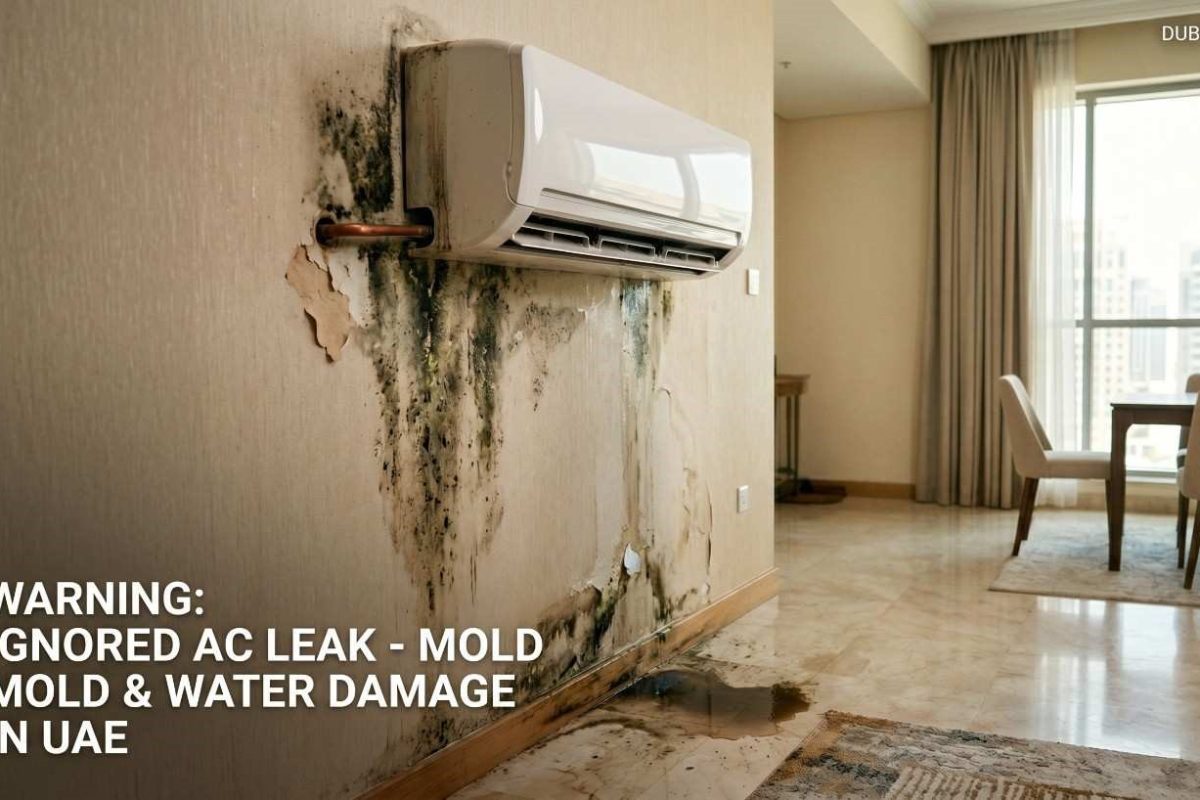
- Persistent Water Pools: When frozen coils melt during the system’s off-cycle, the sheer volume of water can quickly overwhelm your condensate drain pan, leading to water leaks on your walls or ceilings.
Split vs. Central Systems: How Leaks Differ Across Property Layouts
The impact and detection of an air conditioner gas leakage dubai sharjah property owners experience can vary widely depending on the architecture of the cooling system.
Split AC Gas Leakage Sharjah
In standard residential apartments, a split ac gas leakage sharjah typically occurs within the flared brass flare-nut connections or along the insulated copper pipes that connect the indoor high-wall unit to the balcony-mounted condenser. Because these lines are relatively short and visible, finding and sealing the leak is usually a fast, straightforward process.
Central AC Refrigerant Leak Dubai
For large villas, commercial spaces, or warehouses, a central ac refrigerant leak dubai poses a much bigger diagnostic challenge. Central ducted networks often feature long copper line runs hidden behind drywall, inside ceiling voids, or within structural shafts. Locating a leak across these extensive pathways requires advanced electronic sniffers or specialized UV dye testing to pinpoint the source without opening up your walls unnecessarily.
The Standard Repair Process: Why Simply Topping Off Gas Isn’t Enough
A common misconception is that a low system simply needs a quick boost from an ac refrigerant refill dubai service provider. However, adding fresh gas to a leaking system without fixing the underlying breach is an ineffective approach. The new gas will simply leak right back out into the air, wasting your money and harming the environment.
A long-term, professional repair requires a methodical approach:
1. Comprehensive Leak Detection
First, technicians use specialized tools to pinpoint the breach. Methodologies include electronic halogen sniffers that detect trace gases in the air, or introducing a fluorescent UV dye into the system to locate the leak under a specialized light.
2. Physical Structural Repair
Once located, the damaged section of copper tubing must be physically cut out and replaced. Technicians use high-temperature oxygen-acetylene torches to braze the new joint, ensuring a permanent, high-pressure seal.
3. Pressure Testing and Deep Vacuuming
After brazing, the system is pressurized with dry nitrogen gas and monitored to ensure the joint holds under stress. Once verified, a specialized deep vacuum pump is connected to pull out moisture and non-condensables, preparing the system for a clean recharge.
4. Precision Gas Charging
Finally, the system is filled with fresh refrigerant according to the exact weight specifications listed on the manufacturer’s identification plate, restoring it to peak cooling efficiency.
Brand Specifics and System Responses to Gas Pressure Drops
| System Framework | Common Leak Location | Primary System Failure Response | Diagnostic Resolution |
| High-Wall Split AC | Indoor Evaporator U-bends / Flare Connections | Coil icing, indoor unit water dripping, lukewarm air output | Cut out cracked copper bends, re-braze joints, clear drain line. |
| Ducted Inverter AC | Thermal Expansion Valve (TXV) / Outdoor Joints | Auto-shutdown, blinking error lights, communication faults | Electronic sniffer testing, valve replacement, precise weight recharge. |
| Central Package Unit | Outdoor Condenser Coil Base / Compressor Fittings | High-temperature cutoff, complete compressor seizure | UV dye tracking, structural coil repair or replacement, oil flush. |
Refrigerant Leak Health Risks UAE: Safety and Environmental Impact
Beyond financial and mechanical concerns, letting an ac refrigerant leak dubai sharjah go unresolved introduces real safety and environmental considerations for your property.
Indoor Air Quality and Health Risks
While modern residential refrigerants like R-410A or R-32 are non-toxic in small, open-air amounts, a major leak inside a confined, unventilated bedroom or small apartment can lead to refrigerant leak health risks uae residents should avoid. Inhaling highly concentrated cooling gases can cause dizziness, headaches, nausea, or mild skin irritation.
Environmental Responsibility
Older systems running on R-22 gas contribute directly to ozone depletion if allowed to vent into the open air. Modern alternatives, while safer for the ozone layer, are still potent greenhouse gases. Ensuring your system is completely leak-free is an important part of reducing your property’s overall carbon footprint.
Proactive Maintenance Steps to Prevent System Breaches
The most effective way to manage leaks is to prevent them from forming in the first place. Incorporating routine ac maintenance to prevent gas leaks sharjah properties require into your seasonal home care schedule offers excellent protection:
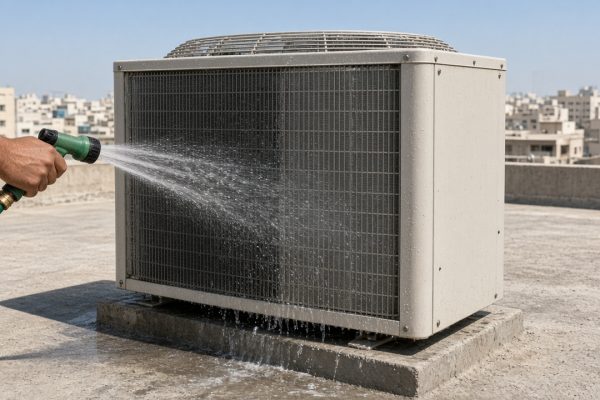
- Regular Coil Cleansing: Removing corrosive dust and salt crusts from your outdoor condenser coils prevents formicary corrosion a chemical reaction that creates microscopic pinholes in copper tubes.
- Vibration Isolation Checks: Technicians check that rubber isolation pads beneath your compressor are intact, preventing metal-to-metal friction that can wear down adjacent copper lines over time.
- Line Support Inspections: Ensuring structural line clamps are secure prevents loose pipes from rubbing against concrete walls or metal brackets during system startups.
Trust Air-Con.ae for Professional Leak Detection and Repair
If you suspect your system is low on gas or notice frost building up on your lines, avoid the temptation to apply temporary tape fixes. At Air-Con.ae, we provide lasting solutions for hvac refrigerant issues uae systems encounter, handling everything from precise diagnostics to full system recharges.
Our experienced teams utilize advanced professional ac gas leak detection dubai equipment to quickly find and fix structural breaches. Whether you need an emergency ac repair for gas leak uae service to handle a sudden heat emergency, a detailed refrigerant leakage repair dubai service, or a reliable ac repair and gas charging sharjah solution, we are ready to assist.
We don’t just add gas and leave; we locate the source of the leak, complete a high-temperature brazing repair, run a proper pressure test, and complete a precision ac gas refill sharjah or hvac gas leakage repair dubai to restore your unit’s original performance. We back all of our repair work with clear, transparent pricing and dependable service guarantees.
Keep an untreated leak from causing a costly compressor breakdown. Contact the team at Air-Con.ae today to schedule an expert leak inspection or book a preventative maintenance call for your property.
Frequently Asked Questions (FAQs)
Q1: Can I run my air conditioner while it has an active gas leak?
It is highly recommended to turn the system off once you notice a leak. Running an AC with low gas forces the compressor to run hot without proper lubrication, which can quickly lead to severe internal motor damage or a complete system burnout.
Q2: How long does a professional leak detection and repair service take?
For a standard split unit, finding and repairing a common leak usually takes 2 to 4 hours. For larger central ducted systems with hidden copper lines, the process can take a full afternoon or up to a day to complete deep testing, brazing, vacuuming, and recharging.
Q3: Why can’t a technician just top off my AC gas without a repair?
Topping off a leaking system without fixing the breach is a temporary fix. The gas will continue to escape, which wastes money, harms cooling efficiency, and can damage your compressor. A proper repair must always fix the leak before adding new gas.
Q4: What is formicary corrosion, and how does it cause AC gas leaks?
Formicary corrosion is a type of copper degradation caused by a reaction between moisture, airborne dust, and common household chemicals or ambient humidity. It creates tiny, microscopic tunnels through the copper tube walls, resulting in slow, persistent gas leaks.
Q5: How can I tell if my system is running on R-22 or R-410A refrigerant?
You can find your refrigerant type printed on the manufacturer’s specification sticker, which is usually located on the side of your outdoor condenser cabinet. Systems installed after 2015 generally use R-410A or R-32, while much older units may still run on R-22.